By: Devane Sharma
Index
- Strengthening Farming Practices Through Knowledge and Capacity Building
- Women’s Participation as a Driver of Household and Community Resilience
- Supporting the Next Generation of Sustainable Farmers
- Regenerative Agriculture in Practice
- From Partnership to Landscape-Level Impact
- About the Rokan Hulu Landscape and Livelihoods Initiative (ROHULLI)
The Rokan Hulu Landscape and Livelihoods Initiative (ROHULLI) is a leading multi-stakeholder partnership advancing smallholder inclusion, regenerative agriculture, and landscape-level sustainability in Indonesia
For many independent smallholders in Indonesia-who typically manage plots around 2 hectares in size, oil palm cultivation forms the backbone of household incomes, local livelihoods, and rural economies. Yet despite their important role in global agricultural supply chains, many smallholders continue to face structural challenges that limit their ability to improve productivity, strengthen resilience, and adapt to evolving sustainability expectations.
In Rokan Hulu Regency, located in Riau Province, these challenges are especially relevant. Farmers often manage relatively small plots of land while navigating fluctuating commodity prices, rising production costs, and limited access to agricultural training or technical support. Many have historically relied on traditional farming methods and informal knowledge-sharing, with limited exposure to more structured guidance on soil management, fertiliser optimisation, regenerative agriculture, or long-term business planning.
At the same time, building more resilient agricultural landscapes has become increasingly important amid growing global challenges such as climate change, food security, and pressure on natural resources. With the global population projected to approach 10 billion by 2050, strengthening sustainable agricultural production systems will play an important role in supporting future food supply and rural livelihoods. For smallholders, this means having access to the knowledge, tools, and support needed to improve productivity while safeguarding long-term environmental and community resilience.
Addressing these interconnected challenges requires more than isolated interventions. It requires collaboration across stakeholders, long-term investment, and practical support that reaches farmers directly.
This forms the foundation of the Rokan Hulu Landscape and Livelihoods Initiative (ROHULLI)— a multi-stakeholder collaboration involving Musim Mas, Ferrero, Preferred by Nature, Agriterra, and Sustainable Agriculture Network (SAN), supported by the Danish government through the Danida Green Business Partnerships (DGBP) programme.
The initiative seeks to strengthen smallholder inclusion, improve sustainable agricultural practices, support regenerative approaches, and enhance farmer livelihoods through a landscape-based model that combines technical expertise, cooperative strengthening, community engagement, and supply chain collaboration.
While partnership frameworks and sustainability strategies often operate at a high level, their true impact can best be understood through the experiences of the farmers themselves.
Strengthening Farming Practices Through Knowledge and Capacity Building
For many smallholders in Rokan Hulu, farming knowledge has traditionally been built through experience and community learning rather than formal agricultural training. While this generational knowledge remains valuable, farmers often lacked access to more structured guidance on improving productivity, reducing inefficiencies, and adapting to evolving sustainability expectations.
One independent smallholder farmer, Sarjono Trisupo, involved in the programme explained that oil palm cultivation has long been part of his family’s livelihood. As the son of farmers, he grew up helping on independently managed family plantations and has spent more than two decades involved in oil palm cultivation.
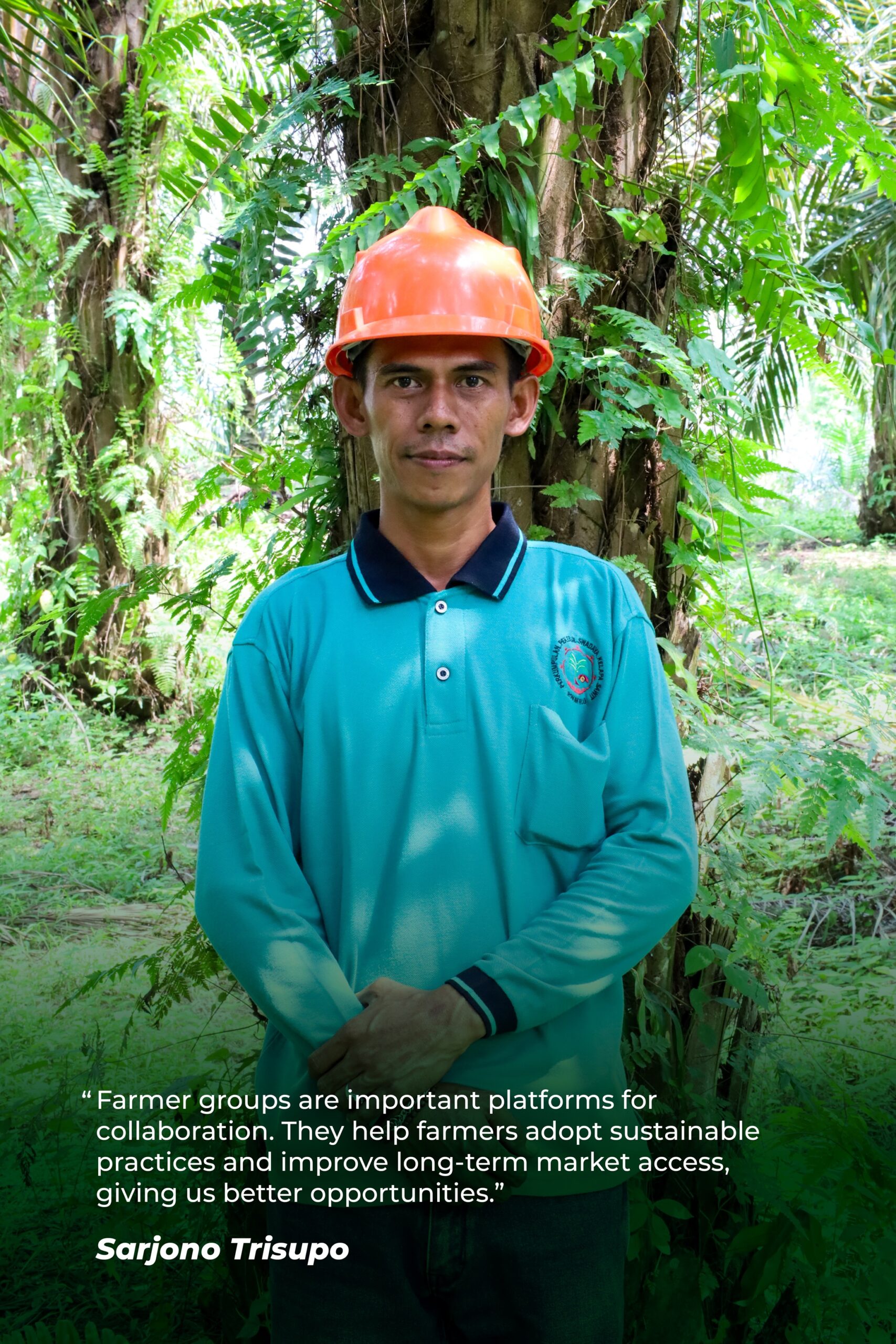
Like many farmers in the region, much of his early experience was self-taught. Over time, however, participation in farmer groups and mentoring programmes helped introduce more structured approaches to sustainable plantation management.
Through ROHULLI and previous mentoring support, he received training on topics such as fertilisation, harvesting, integrated pest management, environmental sustainability, workplace safety, and responsible plantation management practices. Joining an RSPO-certified farmer group in 2019 also provided opportunities to continuously improve plantation management and strengthen understanding of sustainable cultivation practices.
Beyond technical training, farmer groups have also become important platforms for collaboration and knowledge-sharing.
One example is PPSKS, the Rokan Hulu farmer association supported by Musim Mas under its Independent Smallholder Programme. As an RSPO- and ISPO-certified farmer organisation, PPSKS provides a practical example of how organised smallholders can strengthen access to training, certification, market opportunities, and more sustainable farming practices.
According to Sarjono, collaboration between independent smallholders, local stakeholders, and government institutions plays a significant role in helping farmers adopt more sustainable practices and improve long-term market access.
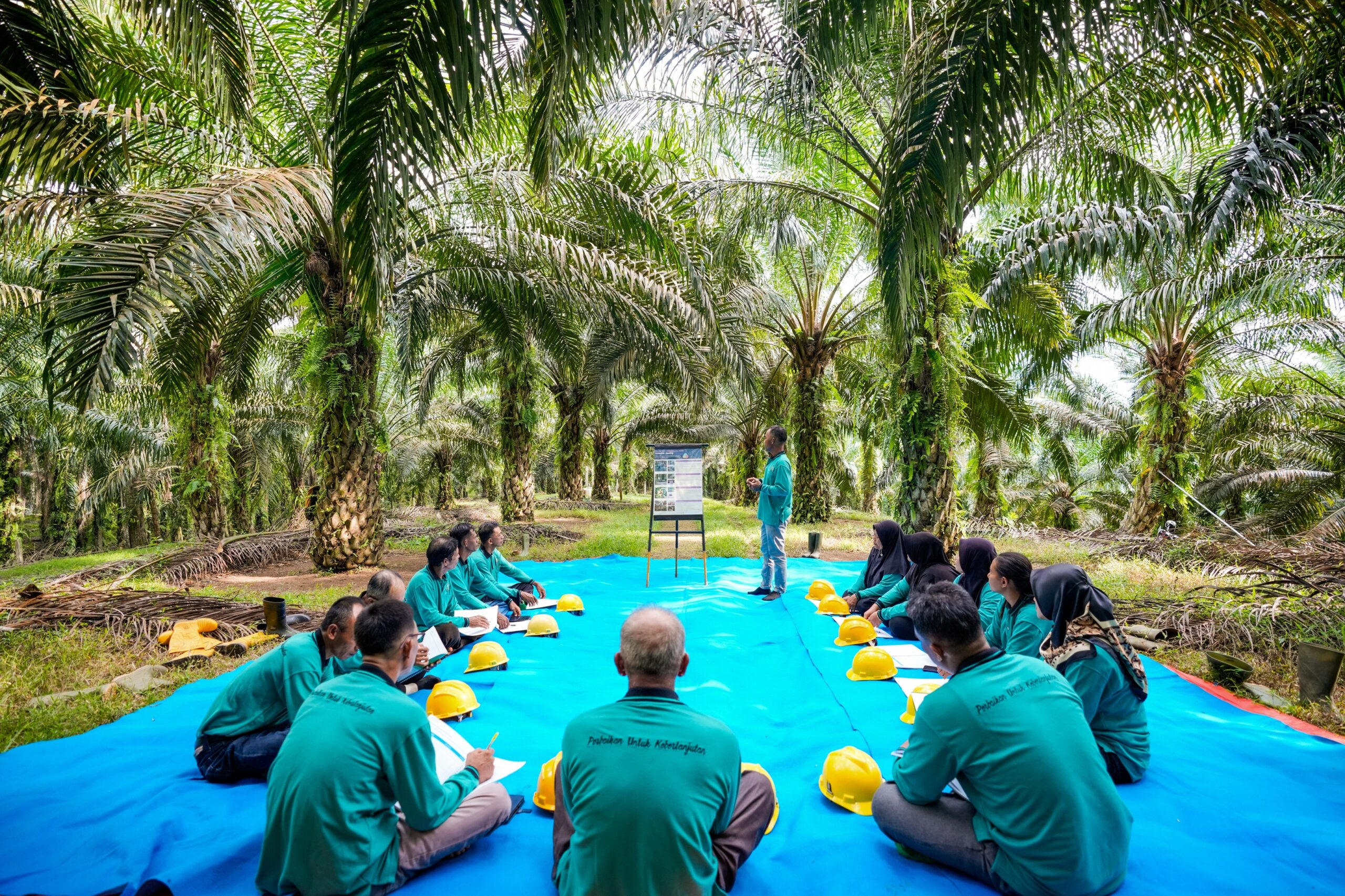
“Independent farmers through groups will be more successful by collaborating with the government and other stakeholders to improve their premiums in a more responsible and sustainable manner,” Sarjono explained.
For many farmers, sustainable agriculture is not only about environmental stewardship, but also about building long-term resilience and ensuring future opportunities for their families and communities.
Women’s Participation as a Driver of Household and Community Resilience
Within many smallholder households in Indonesia, women play critical yet often under-recognised roles across farming activities, household financial management, nutrition, and caregiving responsibilities. However, women do not always have equal access to agricultural training opportunities or participation in formal decision-making processes.
Originally introduced by Musim Mas as part of its wider social efforts, the Women Smallholders Program has been added to the as an additional support for participating farmers and their households in ROHULLI.
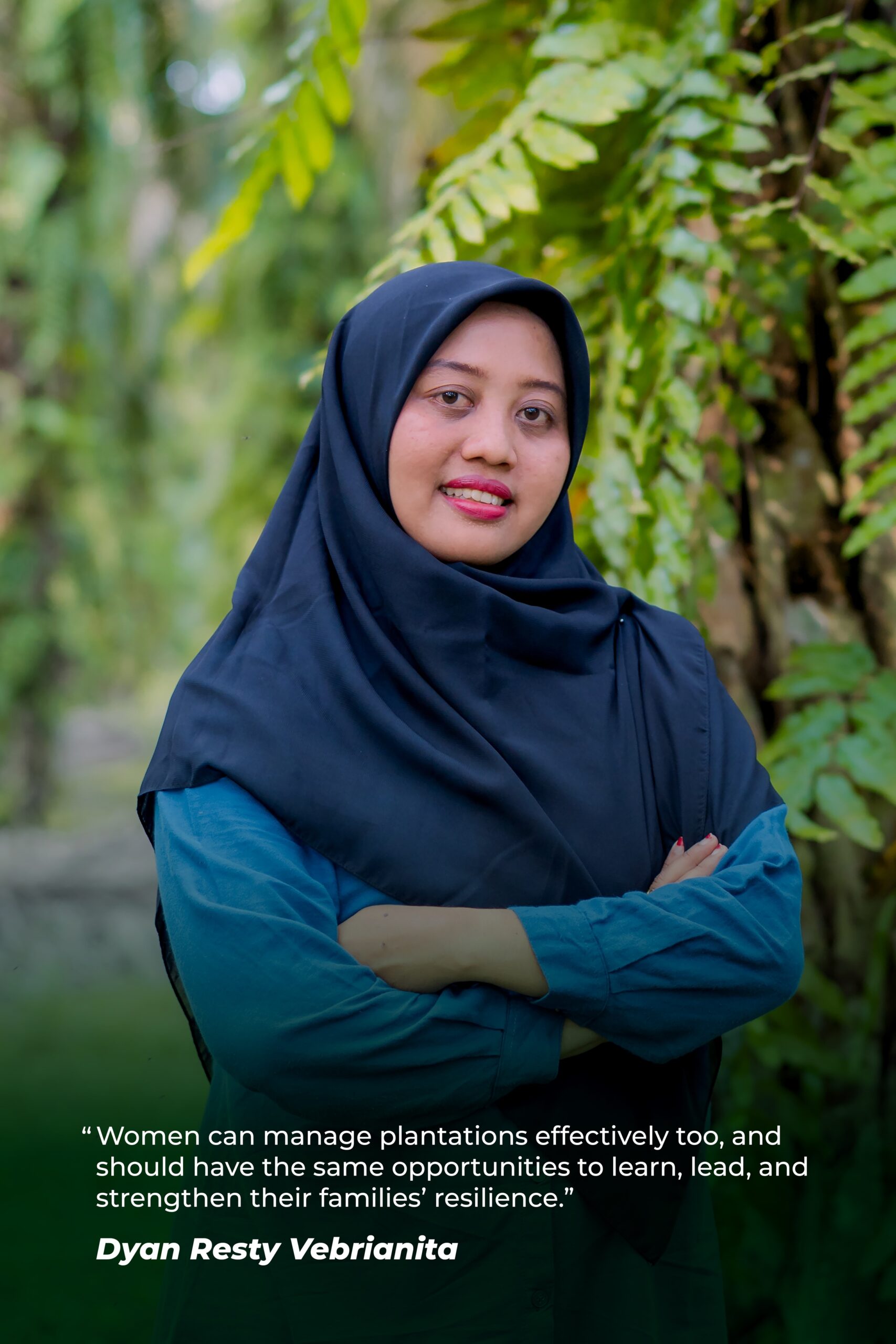
For Dyan Resty Vebrianita, a 35-year-old oil palm farmer from Rambah Jaya Village in Bangun Purba District, involvement in agriculture began at an early age. As a teenager, she accompanied her parents to the plantation, initially helping with small tasks before gradually learning how to manage farming operations herself.
After getting married, she was entrusted with managing a 1.90-hectare oil palm plantation inherited from her parents. Today, the plantation serves as her family’s primary source of income.
Alongside managing household responsibilities and finances, she also oversees plantation operations, including harvest monitoring, maintenance scheduling, and record-keeping for income and expenses.
Dyan explained that one of the key challenges women often face is limited participation in formal agricultural training. “Some still believe that farming is a man’s business, so women are rarely invited to participate in formal training.”
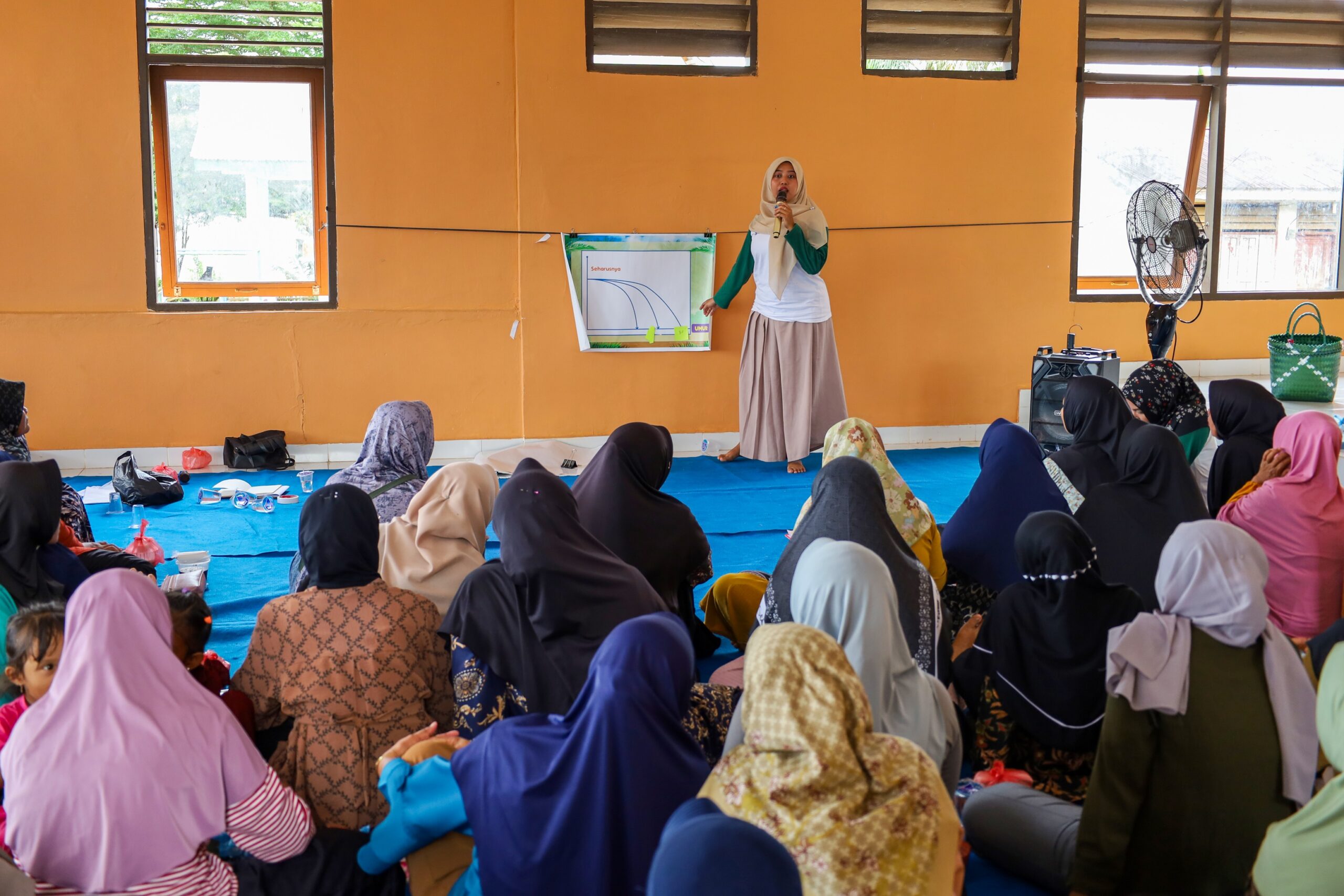
Through the women smallholders programme, participants received training covering financial literacy, nutrition, household resilience, and sustainable farming practices. For Dyan, the programme represented more than technical learning — it became an opportunity to demonstrate that women can play an active role in agricultural leadership and decision-making.
“I wanted to prove that women can also manage their own plantations effectively. Women should have the same opportunities as men to gain knowledge.”
The programme also introduced practical regenerative agriculture techniques that could be implemented directly on farms. Among the practices Dyan found most useful were U-shaped frond arrangements and planting soft ferns within frond piles to help maintain soil moisture naturally.
She also highlighted the importance of gradually reducing excessive chemical pesticide use and following fertiliser recommendations more carefully to support long-term soil health and reduce production costs over time.
Farmer groups, she explained, have been equally important in supporting adoption of these practices by providing access to mentoring, information-sharing, and stronger collaboration among farmers.
“What’s helpful is joining a farmer group, as it provides support and direct guidance,” added Dyan.
Looking ahead and beyond the project, Dyan hopes to continue improving her plantation while remaining environmentally responsible. She also hopes her farmer group can eventually establish a compost production facility and strengthen collective business opportunities to improve the economic resilience of local farmers.
Supporting the Next Generation of Sustainable Farmers
Like many agricultural regions globally, Rokan Hulu also faces questions about the future of farming and whether younger generations will continue to see agriculture as a viable livelihood.
For one young farmer involved in the programme, Yopi Rizana, farming has always been closely connected to family responsibility. As the child of oil palm farmers and the third of five siblings, he began helping his father manage the family plantation in his late teens. Over the past five years, he has become increasingly involved in plantation maintenance, harvesting, and day-to-day farm management.
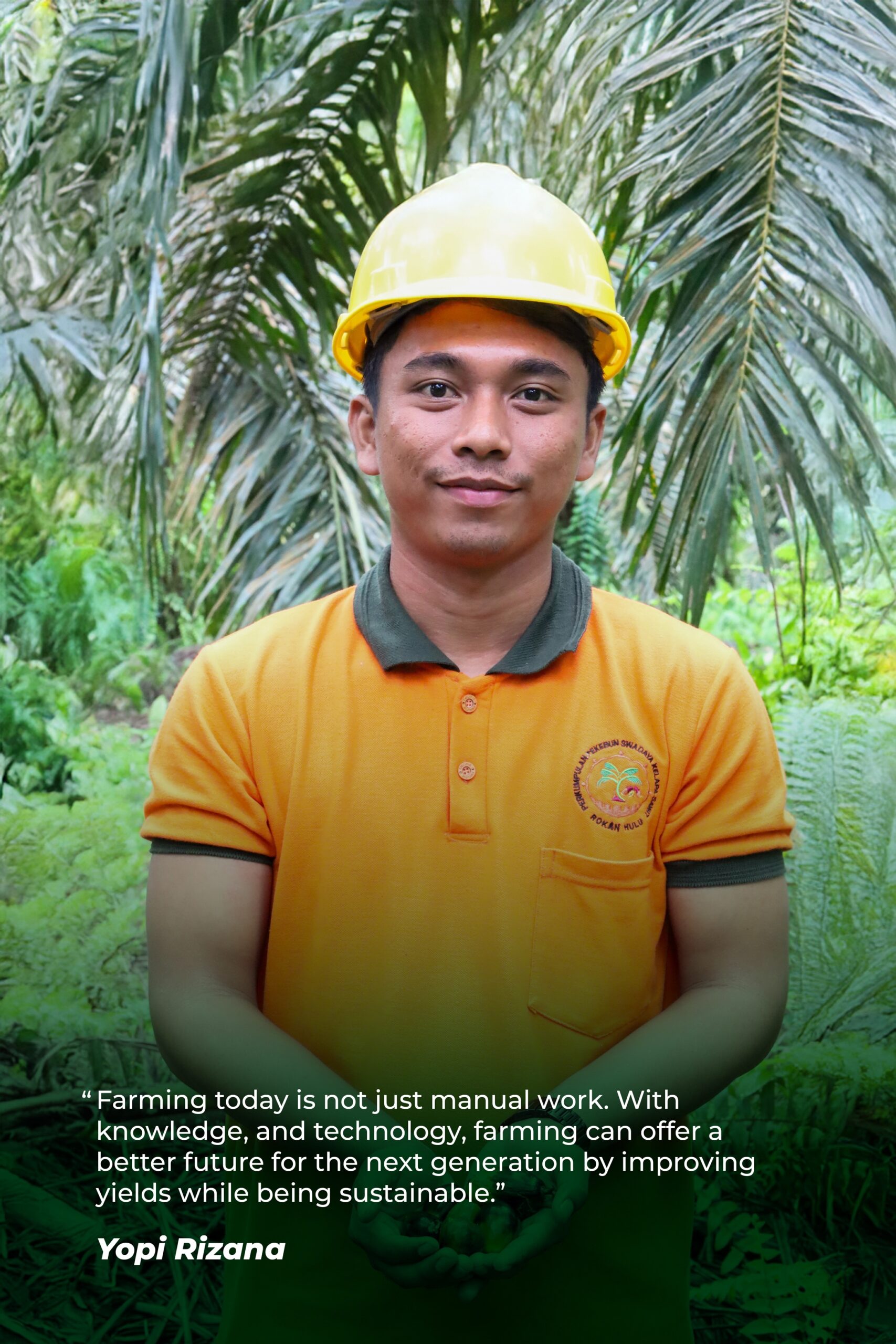
Although he is also a recent graduate, he continues to help manage the family plantation, particularly as his parents grow older.
“This experience has taught me discipline and responsibility, as well as the importance of hard work and consistency in managing a farming business,” said Yopi.
Through farmer groups and training programmes, he gained exposure not only to sustainable cultivation practices, but also to broader skills such as financial management, time management, and personal development.
For younger farmers, he believes access to knowledge, collaboration, and modern agricultural practices will become increasingly important in ensuring farming remains sustainable and economically viable.
He also believes agriculture should no longer be viewed solely as physically demanding manual labour.
“Farming today isn’t just about using traditional tools. There’s technology, online marketing, and sustainable practices that can increase yields while protecting soil.”
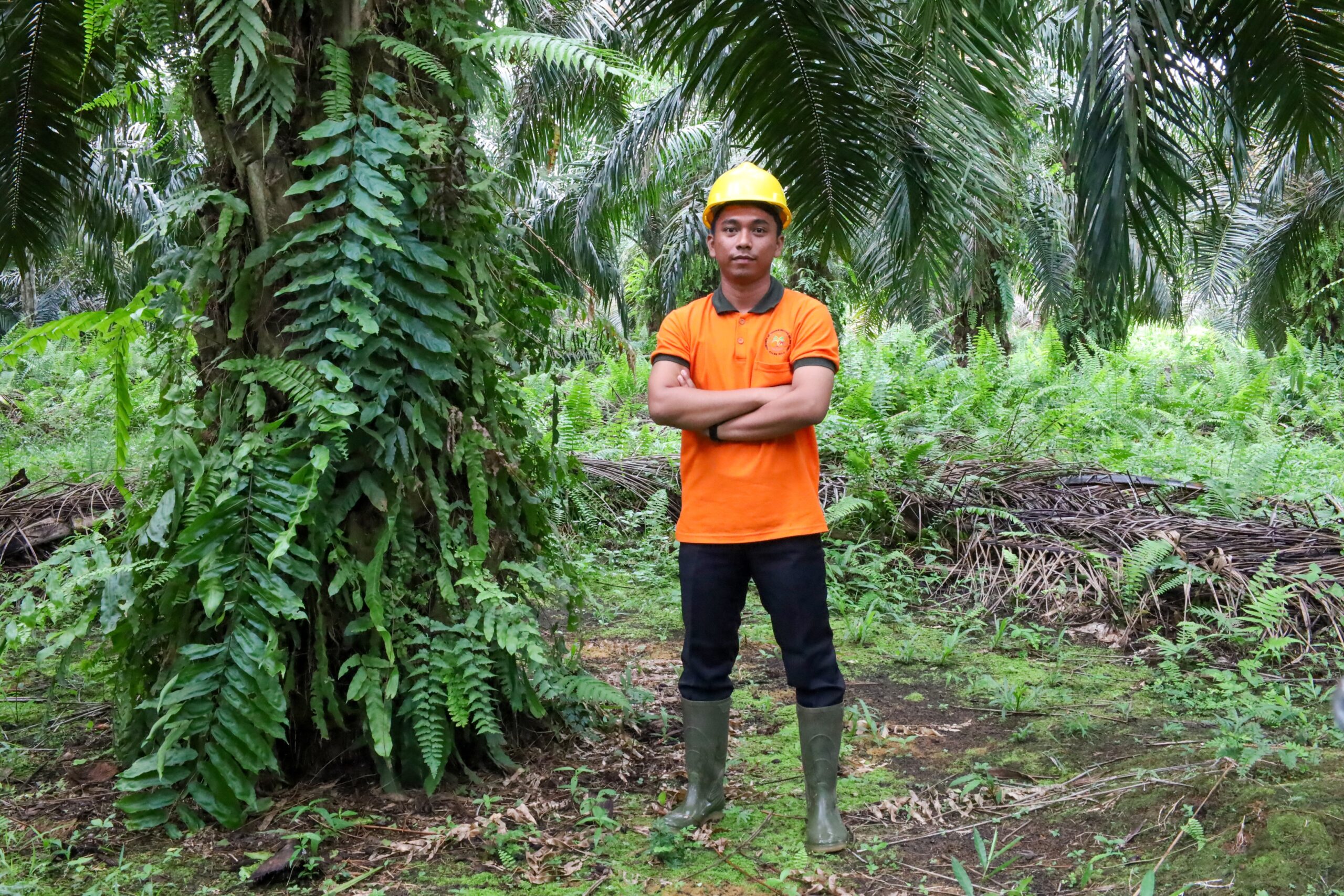
Rather than seeing farming as a last-resort occupation, he hopes more young people will recognise agriculture as a field that can continue evolving through science, technology, and sustainable innovation.
“Farming should no longer be seen as just another job, but rather a proud endeavor that can provide a better future for the next generation,” added Yopi.
Regenerative Agriculture in Practice
Regenerative agriculture serves as a cross-cutting theme throughout the Rokan Hulu initiative, helping connect productivity goals with longer-term environmental resilience.
Rather than promoting abstract sustainability concepts, the programme focuses on practical regenerative approaches that farmers can integrate into their existing operations. These include soil health management practices, optimised fertiliser application, integrated pest management, organic inputs such as composting, and approaches that support healthier growing conditions over time.
Farmers participating in the programme have begun applying practices such as U-shaped frond arrangements, planting soft ferns to help maintain soil moisture, and reducing excessive chemical pesticide use. These approaches aim to strengthen long-term soil fertility while helping farmers manage production costs more efficiently.
Importantly, the initiative frames regenerative agriculture not as a standalone technical intervention, but as part of a broader effort to strengthen farm resilience, support livelihoods, and encourage long-term sustainability at the landscape level.
The women’s and youth programmes further complement this approach by integrating household resilience, financial literacy, nutrition awareness, and future-oriented agricultural skills into the broader sustainability framework.
From Partnership to Landscape-Level Impact
The Rokan Hulu Landscape and Livelihoods Initiative reflects a broader shift toward landscape-based approaches that recognise sustainability challenges cannot be solved through isolated interventions alone.
By bringing together companies, NGOs, farmer organisations, technical experts, and government stakeholders, the initiative aims to create more coordinated and scalable approaches to sustainable palm oil production.
Farmer groups serve as important platforms for knowledge-sharing and adoption, while collaborative governance structures help strengthen alignment between different stakeholders operating within the landscape.
Importantly, the initiative also highlights the value of long-term engagement. Sustainable change at the farmer and landscape level requires ongoing trust-building, continuous learning, and practical support mechanisms that extend beyond short-term project cycles.
The experiences emerging from Rokan Hulu demonstrate how supply chain partnerships can translate into meaningful outcomes on the ground — improving livelihoods, strengthening inclusion, supporting environmental resilience, and helping create more sustainable agricultural landscapes for the future.
As sustainability expectations across agricultural supply chains continue to evolve, initiatives such as this may also help provide valuable lessons for how collaborative, landscape-level approaches can be scaled and adapted across other smallholder-producing regions.
About the Rokan Hulu Landscape and Livelihoods Initiative (ROHULLI)
ROHULLI is a five-year partnership between Musim Mas, Ferrero, Preferred by Nature, Agriterra, and the Sustainable Agriculture Network, funded by Denmark’s Danida Green Business Partnerships programme. The project aims to make palm oil production in Indonesia’s Rokan Hulu landscape more inclusive, sustainable, and resilient by supporting 5,400 independent smallholders to adopt regenerative agricultural practices, improve productivity, reduce reliance on synthetic inputs, and strengthen climate resilience. It will also help strengthen farmer organisations, support 2,500 farmers towards RSPO and ISPO certification, create diversified income opportunities for 2,000 community members, and advance biodiversity protection, ecosystem restoration, and deforestation risk mitigation in line with global sustainability standards and regulatory requirements such as the EU Deforestation Regulation.
Reference:
https://www.un.org/en/academic-impact/striving-feed-10-billion-people-2050