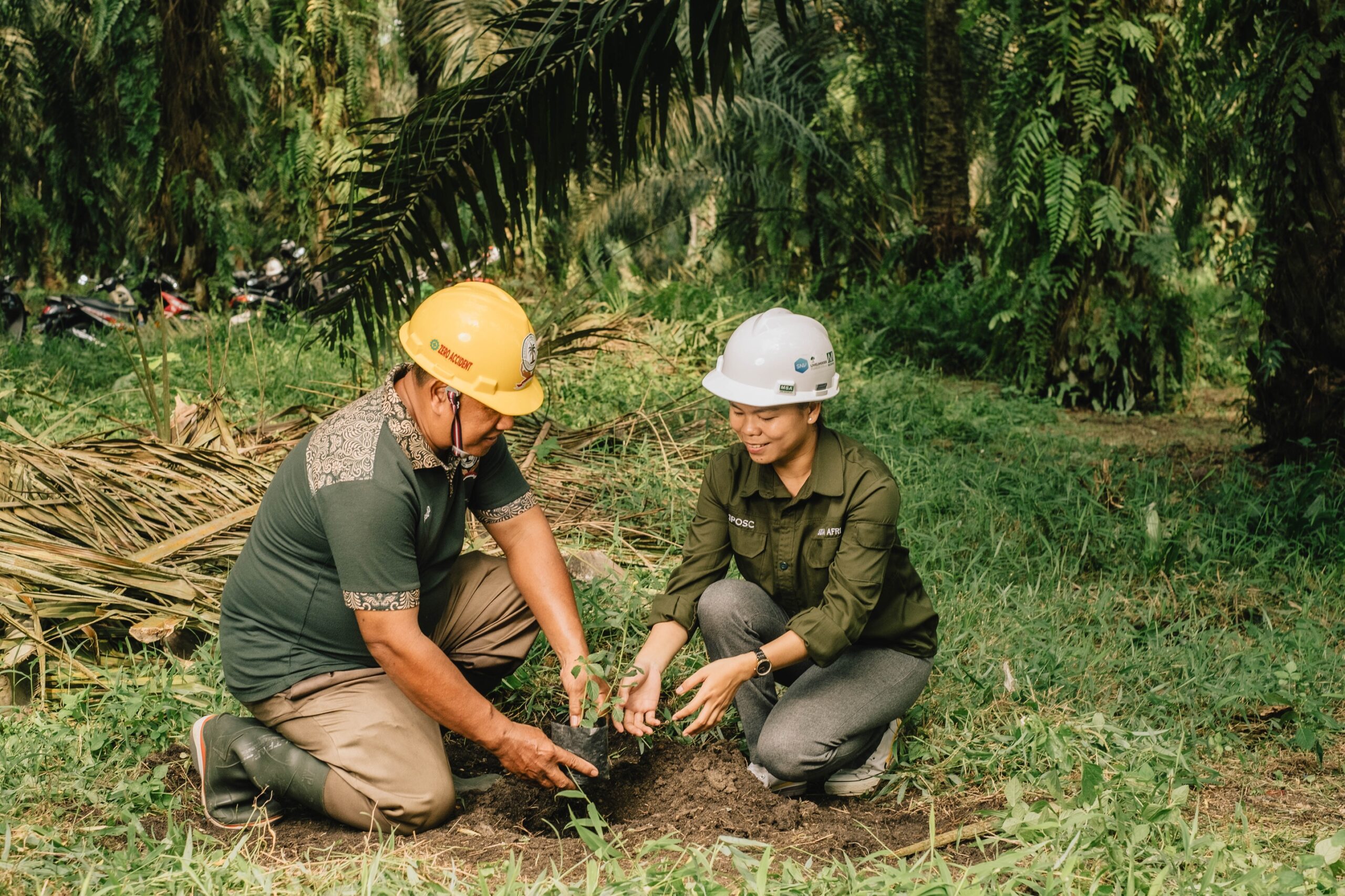
As part of her internship at Musim Mas, Elvina Husnyi, a student from Singapore Management University, spent five days at PT Musim Mas Sorek (PT MM Sorek) in Indonesia, gaining a firsthand look at how research and innovation support sustainable plantation management.
During her visit, Elvina spent time with three teams within Musim Mas’ R&D division: Crop Protection, Peat Management, and Agronomic Advisory & Research. From conducting pest and disease surveys in the field to learning about peatland rehabilitation and observing trials focused on nutrient efficiency and greenhouse gas emissions, the experience gave her a closer look at the science and people behind the work. Here are some of the things that stayed with me from my time at Sorek.
Key takeaways
- Musim Mas runs on-the-ground research at PT Musim Mas Sorek in Indonesia. Its R&D division there includes three teams: Crop Protection, Peat Management, and Agronomic Advisory & Research.
- The crop protection team manages pests without wiping out biodiversity. It runs regular pest and disease surveys for rhinoceros beetles, snails and early signs of Ganoderma. It plants Turnera subulata and Antigonon leptopus to attract beneficial insects, and uses chemicals only as a last resort.
- Peat management focuses on prevention as much as restoration. The team monitors water movement and drainage to lower fire risk and spot problems early. Rehabilitation at the site began in 2021, planting followed in 2023, and the team still surveys nearby forest for seeds and seedlings.
- The agronomy team now researches emissions as well as yields. Its work includes:
- fertilizer recommendations based on surveys and sampling
- measuring carbon flux from peat soils
- studying trunk biomass in replanted areas
- testing ground covers such as Mucuna bracteata and Nephrolepis biserrata
- Mechanization, automation and digital tools are being used to make plantation management more efficient.
- Sustainable plantation management takes several teams working together. Crop protection, peat management and agronomy each contribute. Results like forest recovery take years, not months.
Sustainability starts with understanding the ecosystem
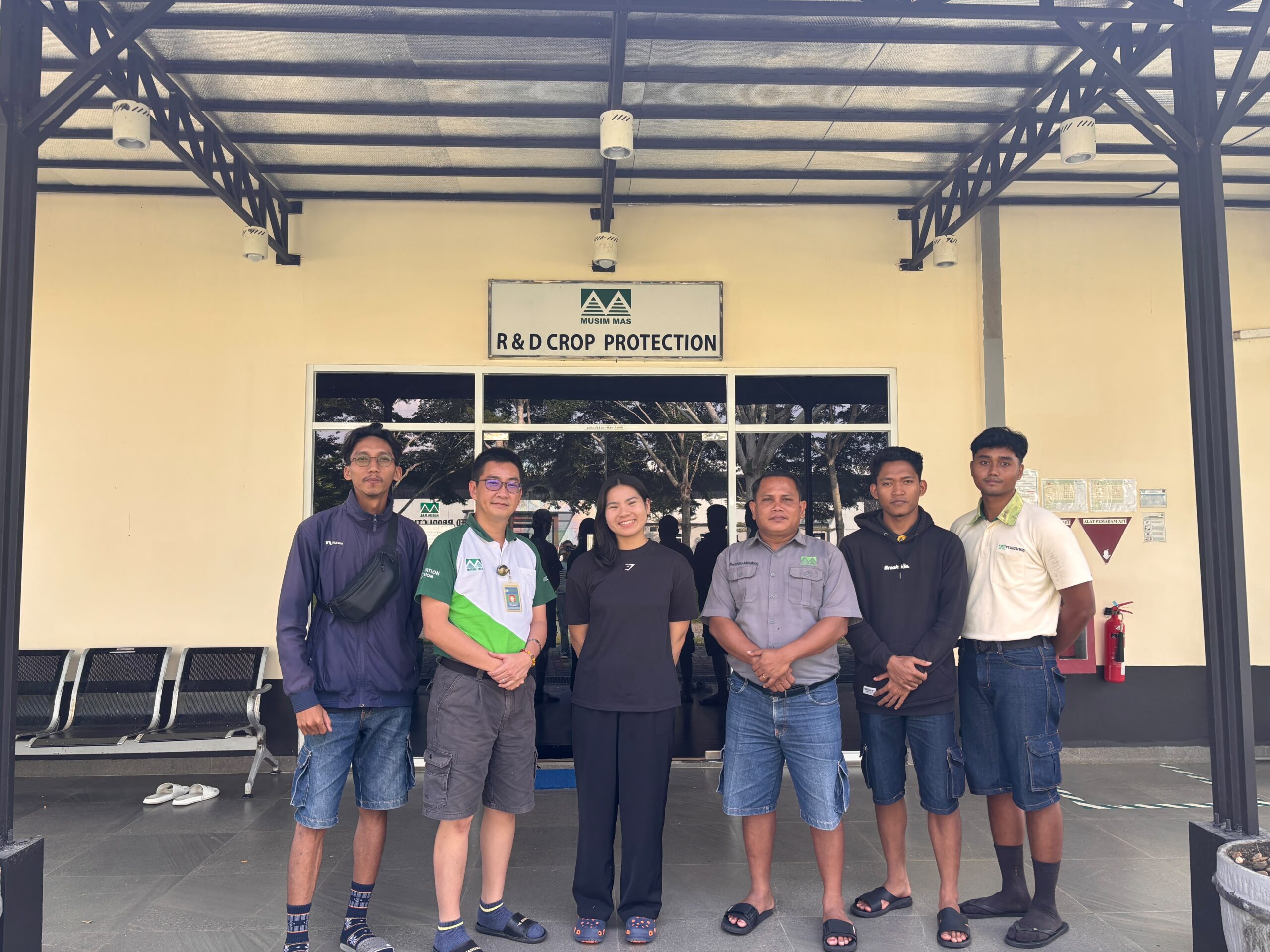
My first day was spent with the Crop Protection team, conducting a pest and disease census. We walked through planted blocks, inspecting palms for signs of damage and recording pests such as rhinoceros beetles and snails, as well as early symptoms of Ganoderma, a disease that can be difficult to detect until a palm is already affected.
What surprised me was that crop protection isn’t simply about eliminating pests. Some species are part of the surrounding ecosystem, so the challenge is to manage pest populations while maintaining biodiversity. The team also uses companion plants such as Turnera subulata and Antigonon leptopus to attract beneficial insects that help regulate pest populations.
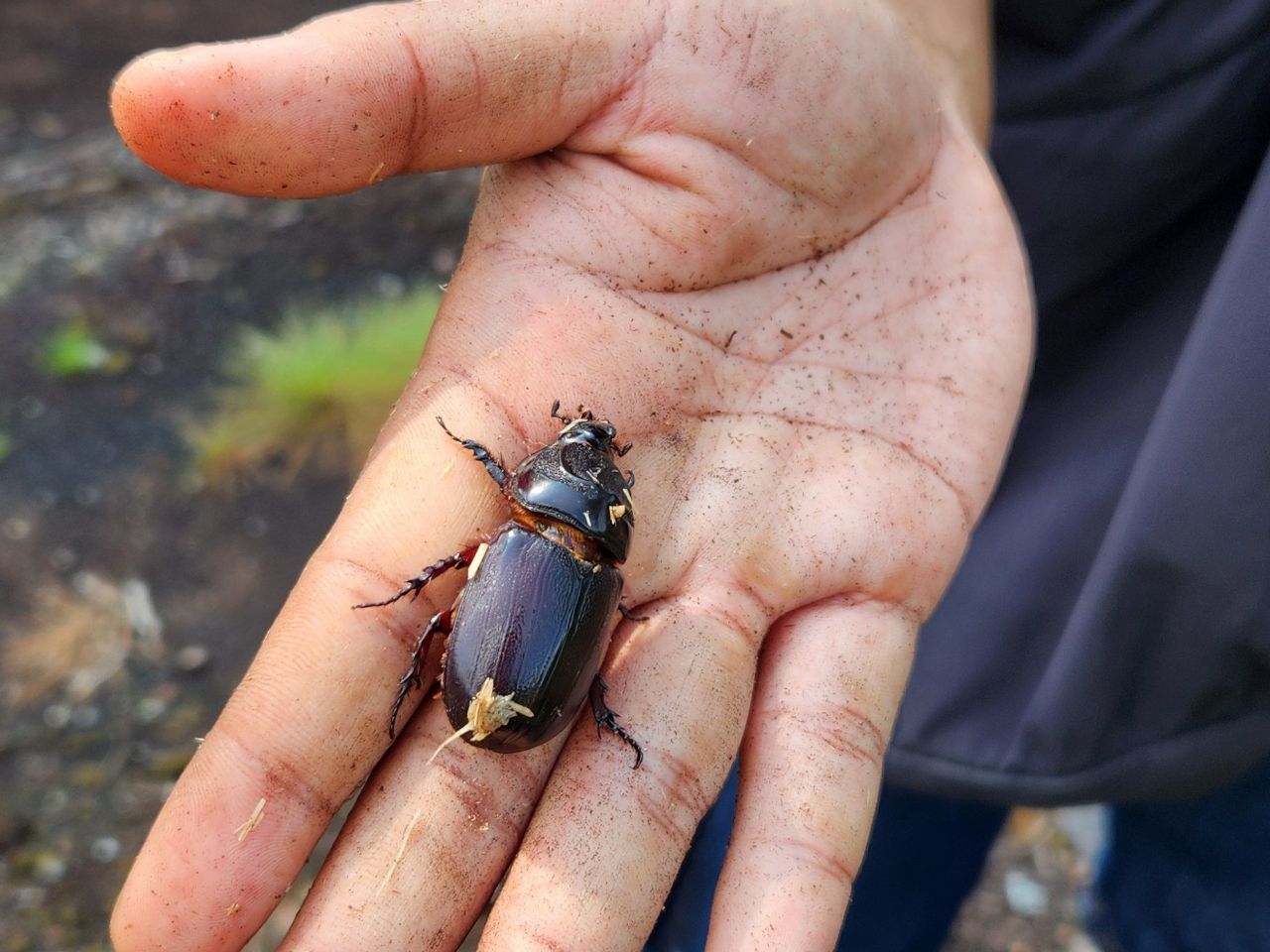
Common pests affecting oil palms include the rhinoceros beetle
Chemical intervention is treated as a last resort, with the team prioritising monitoring, natural predators and targeted approaches where possible.
It was my first real glimpse into how science can inform everyday decisions in plantation management. The goal isn’t necessarily to intervene more, but to understand when intervention is needed and how it can be done more precisely.
Some of the most important work is the work you don’t see
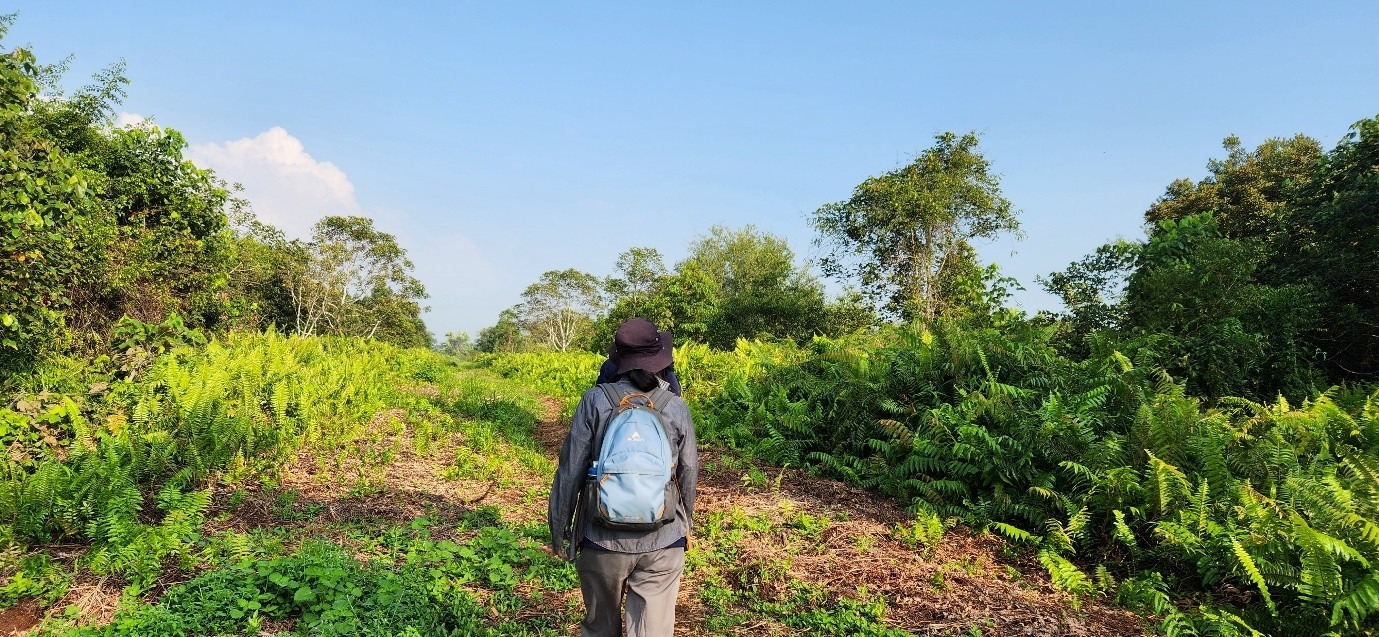
On my second day, I joined the Peat Management team and learned about peat ecosystems and forest rehabilitation.
I learned how the team assesses water movement and drainage as part of responsible peat management. I was also introduced to the close relationship between water, peat and vegetation, and how changes to one can affect the wider ecosystem.
One idea particularly stayed with me: prevention can be as important as restoration. A lot of environmental work doesn’t make headlines because, when it is done well, there may be no issue to report. Regular monitoring can help identify issues early, while water management can help reduce fire risk and forest rehabilitation can help restore degraded areas.
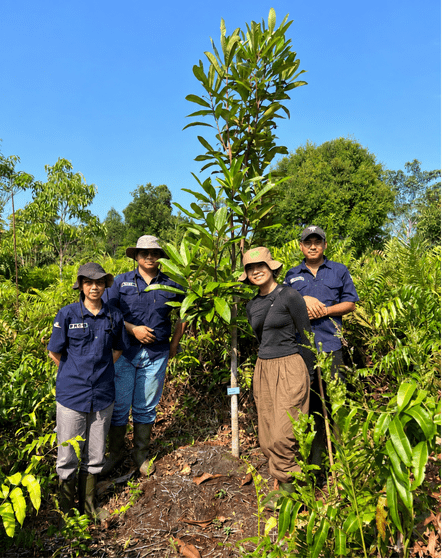
I also met Ms Julia Lo, Peat Management Manager at Musim Mas, who shared that forest rehabilitation is a process measured in years rather than weeks or months. The rehabilitation work at the site I visited began in 2021, with planting began in 2023, and the team continues to survey the surrounding forest for seeds and seedlings. That gave me a new appreciation for how environmental progress is built: gradually, through consistent work over time.
Innovation is also about asking better questions
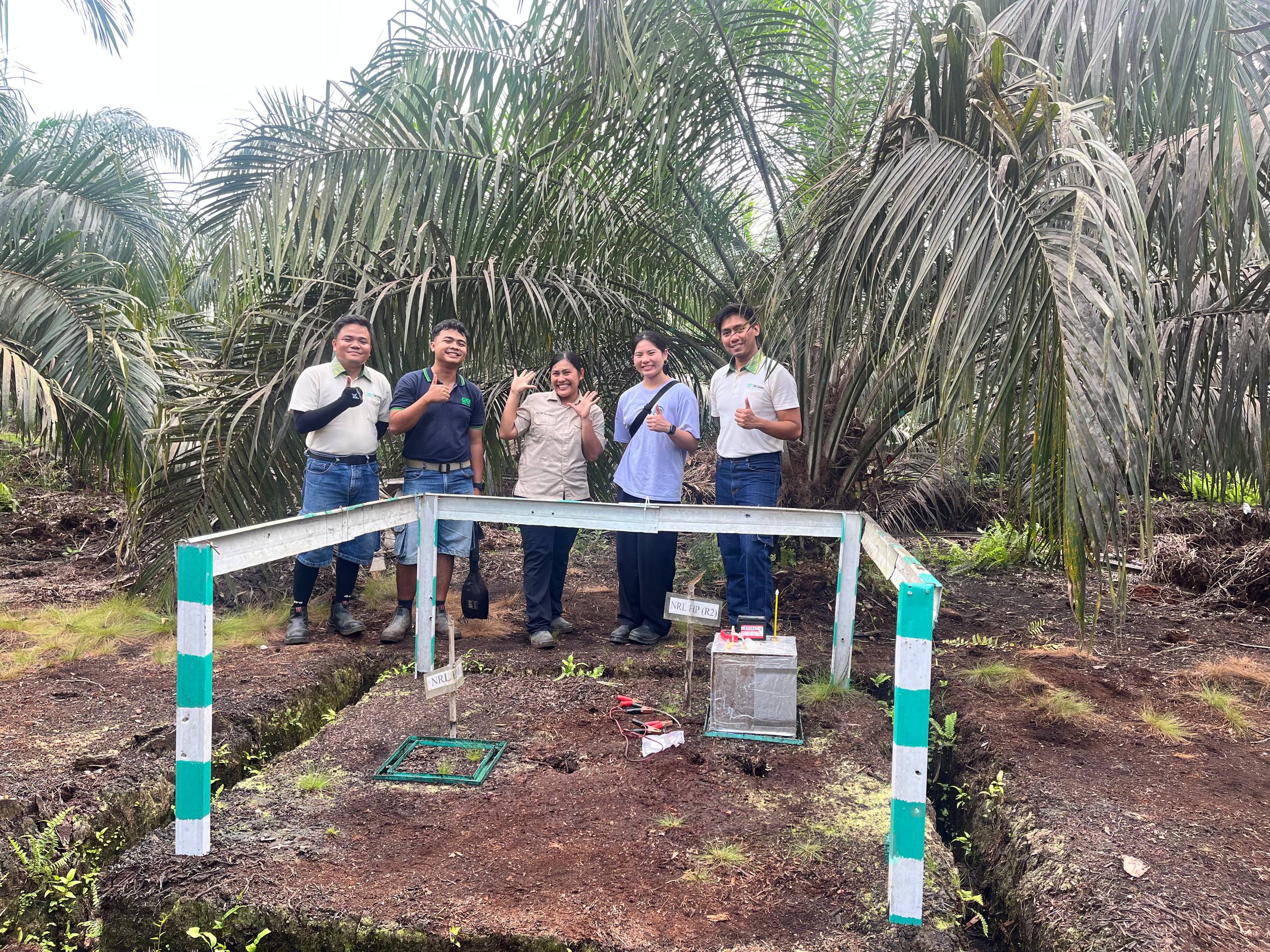
On my final day, I spent time with the Agronomic Advisory & Research team, which works on areas including nutrient use efficiency and plantation management.
I observed how the team conducts surveys and sampling to inform fertiliser recommendations, while also learning about the use of mechanisation, automation and digitalisation to improve efficiency.
What stood out to me was how the focus of research has evolved. While trials were previously focused primarily on improving productivity, the team has increasingly incorporated greenhouse gas emissions into its research, including work to understand emissions from peat soils.
I saw some of the ongoing trials, including measurements of carbon flux from peat, studies of oil palm trunk biomass in replanted areas, and the use of ground covers such as Mucuna bracteata and Nephrolepis biserrata.
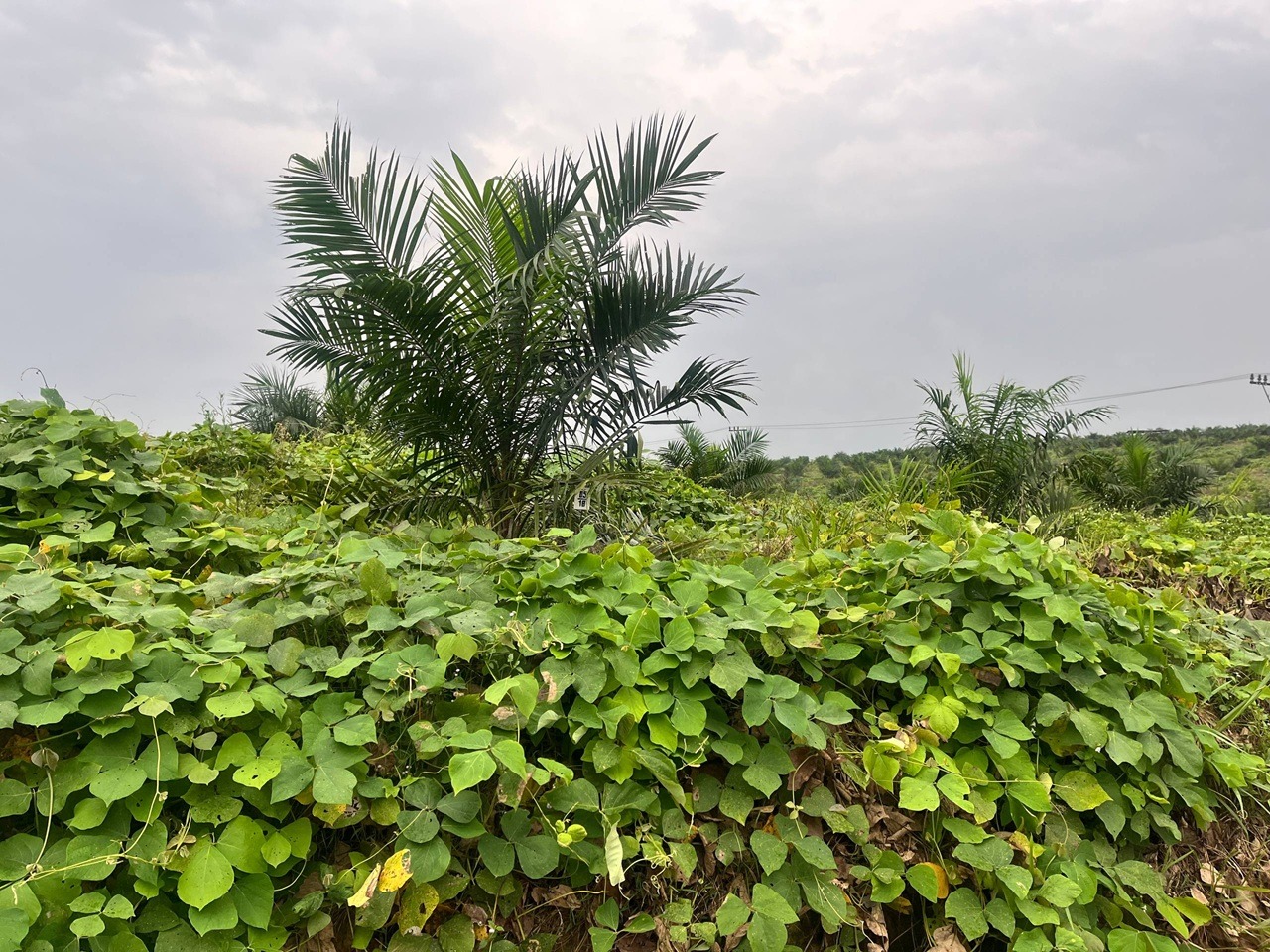
Mucuna bracteata is a ground cover that can help with nutrient recycling and nitrogen supply
These examples showed me that innovation isn’t always about finding a completely new idea. Sometimes, it is about asking better questions about existing practices and finding ways to make them more efficient and resilient.
Sustainability takes time and teamwork
One of the biggest things I took away from the experience was how interconnected the work is.
I met Adit, a Research Officer from the Crop Protection unit, who told me that he enjoys taking photographs of the landscape and birds he encounters between surveys. That stayed with me because it offered a glimpse into how the plantation becomes part of everyday life for the people who work there.
At the same time, the work itself can be demanding. Field surveys meant walking for hours, navigating uneven terrain and, as I quickly discovered, getting very familiar with mosquitoes.
More importantly, I saw that sustainable plantation management isn’t the responsibility of one team. Crop protection, peat management, agronomy and other areas each bring different expertise and perspectives.
The experience changed the way I think about sustainability. I had previously thought of it as a broad concept, but spending time with the people doing this work made it feel much more tangible.
It is reflected in everyday decisions: when to intervene and when to step back, what to monitor, what to test, and how to balance productivity with environmental considerations.
I left Sorek with a much deeper appreciation for the people behind the research, the patience required to see results, and the role that innovation can play in finding better ways to manage both production and the environment.
Most of all, I left with a broadened perspective — and a reminder that sometimes, understanding a complex issue starts simply with spending time in the field, asking questions and being willing to learn.
See the science behind our palm oil