By: Devane Sharma
Index
- Why Soil Health Matters for Smallholders
- 1. Selective Manual Weeding and Ground-Cover Management
- 2. Applying Organic Fertilizer Through Compost
- 3. Frond Stacking as Natural Mulching
- 4. Cover Cropping to Protect and Regenerate Soil
- 5. Behavioral Change: Regenerative Farm Management
- How These Practices Work Together
- BIPOSC as a Model for Farmer Behavior Change
Soil health is often shaped by practices that may appear simple at first glance: how farmers manage weeds, reuse organic materials, stack palm fronds, protect soil cover, and apply farm inputs. Over time, these practices help soil remain fertile, resilient, and productive, supporting more sustainable farm management in the long run.
For independent oil palm smallholders, this is especially important. Many smallholders rely on limited land and resources, making soil health central to both farm productivity and long-term livelihoods. Through the Biodiverse and Inclusive Palm Oil Supply Chain Project, or BIPOSC, in North Sumatra, Musim Mas and its partners are supporting smallholders in adopting regenerative agriculture practices that improve soil condition, strengthen farm resilience, and reduce reliance on external inputs.
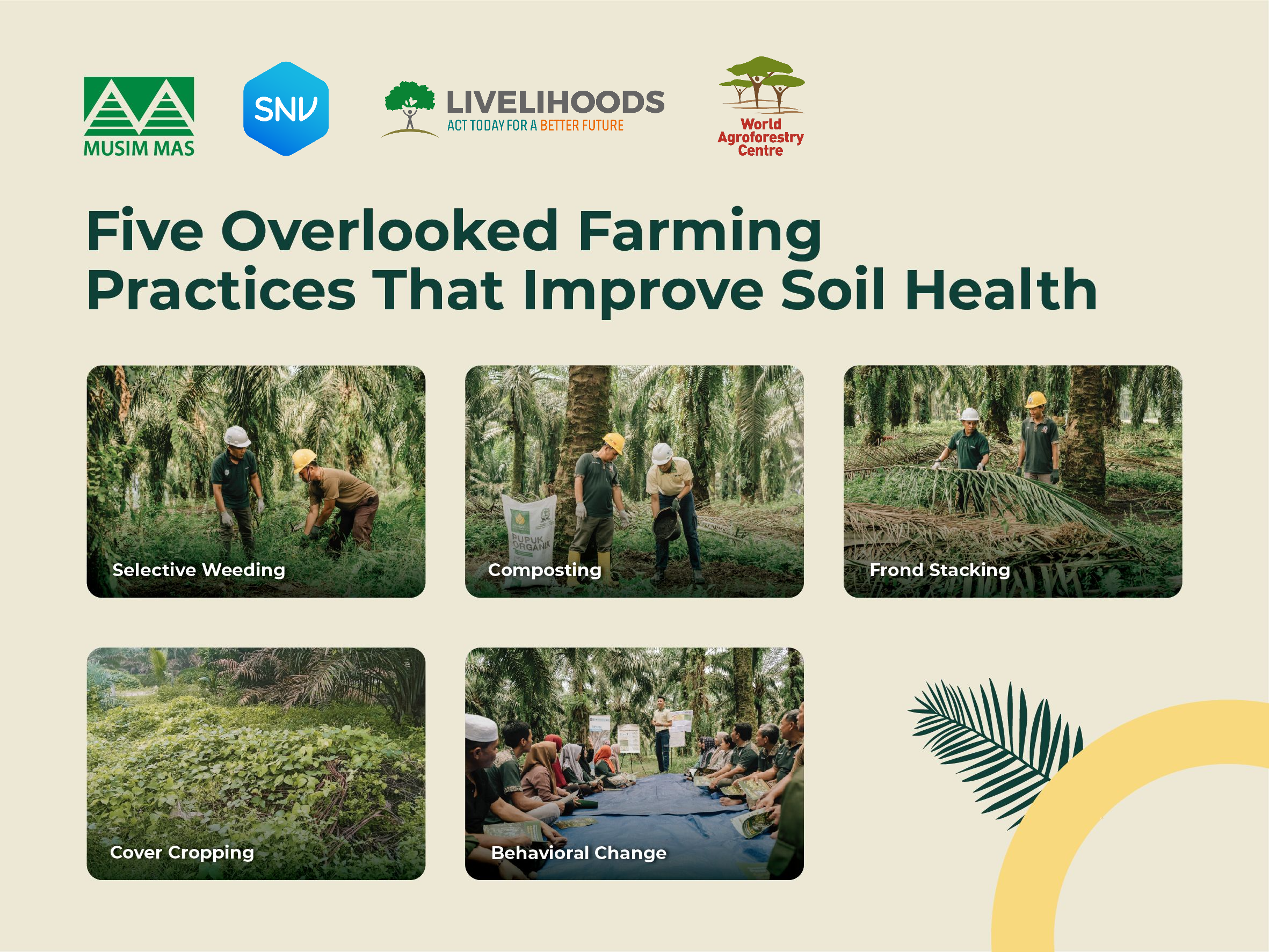
This article explores five often-overlooked farming practices that contribute to healthier soils, and how they come together as part of a broader shift towards regenerative farm management.
Why Soil Health Matters for Smallholders
Healthy soil provides the foundation for productive farming.It affects how nutrients are made available to plants, how well the soil retains water, how roots develop, and how resilient a farm can be over time.
For smallholders, soil health is not only an environmental concern. It is also closely linked to livelihoods. When soil becomes degraded, farmers may need to rely more heavily on costly fertilizer inputs to maintain productivity. Fertilizers are typically the most expensive cost component for oil palm farmers, and especially for independent smallholders who may already face barriers such as limited access to finance, markets, and technical knowledge.
Regenerative agriculture offers a way to look at farming differently. Instead of focusing only on maintaining production, it emphasizes the natural systems that support farming in the long run. In oil palm landscapes, this can include improving soil structure, maintaining ground cover, increasing organic matter, supporting biodiversity, and reducing unnecessary input use.
Through BIPOSC, regenerative agriculture is being applied in a practical way with independent smallholders in North Sumatra. While the concept can sound technical, many of its foundations begin with everyday farm management decisions.
The following five practices show how small changes at the plot level can contribute to healthier soils over time.
1. Selective Manual Weeding and Ground-Cover Management
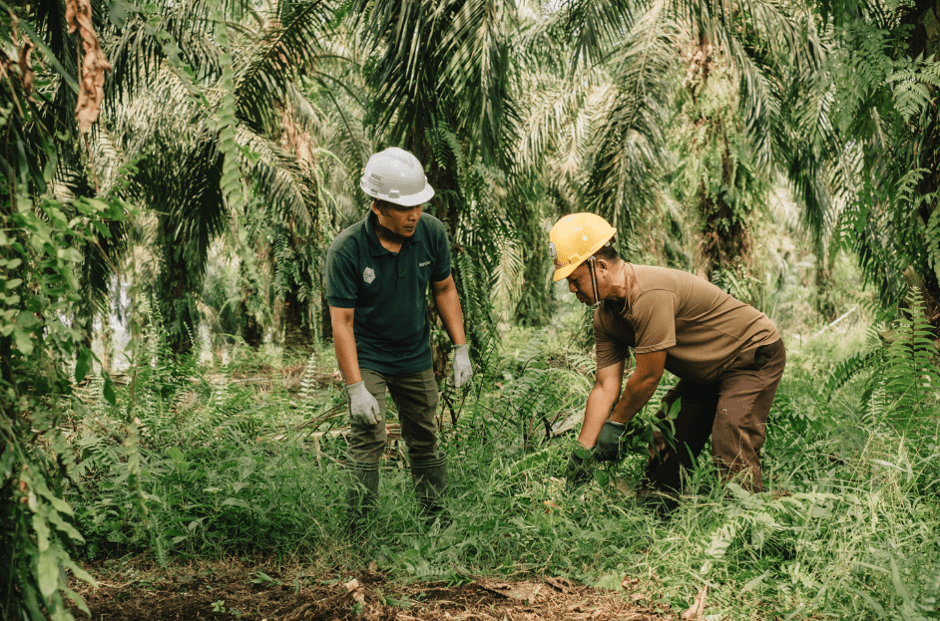
Selective weeding removes unwanted vegetation while retaining useful ground cover.
Weeding is often seen as a routine farm activity. However, in regenerative agriculture, weeding is not simply about clearing all vegetation from a plot.
Managed carefully, selective manual weeding can help farmers reduce competition around oil palms while still allowing useful ground cover to protect the soil. This is important because not all vegetation should be treated the same way. Some weeds may compete with oil palms for nutrients, water, or sunlight, while other forms of ground cover can help protect exposed soil.
When every plant is removed, soil can be left bare. Exposed soil is more vulnerable to heat, heavy rain, erosion, and moisture loss. Over time, this can affect soil structure and reduce its ability to support healthy root development.
The goal is not to leave farms unmanaged. Rather, it is to help farmers make more deliberate decisions about what needs to be cleared, what can remain, and how vegetation can be managed to support both crop productivity and soil protection.
Through BIPOSC, this is part of a broader shift in farm management behavior. Farmers are encouraged to look at their plots as living systems, where soil, crops, vegetation, water, and biodiversity are connected. Selective weeding becomes more than a maintenance task. It becomes one way to keep the soil protected while managing competition around the palms.
2. Applying Organic Fertilizer Through Compost
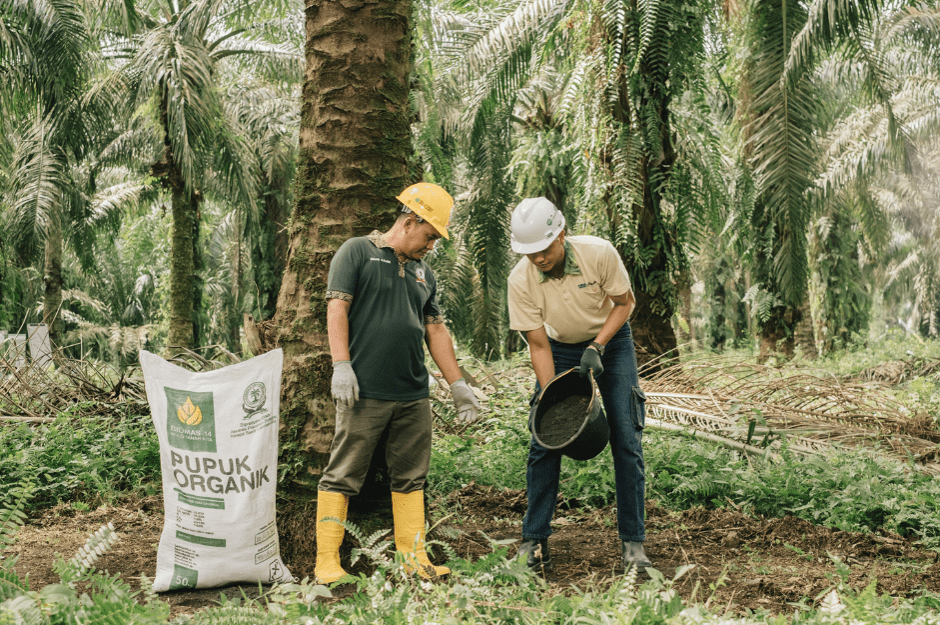
Compost application
Compost plays an important role in building healthier soil. It returns organic matter to the land, supports nutrient cycling, improves soil structure, and encourages microbial activity. These benefits are especially important for smallholder farms, where maintaining soil fertility can be a challenge.
In oil palm farming, compost can complement chemical fertilizer by improving the condition of the soil itself. While chemical fertilizers provide specific nutrients, compost helps build the organic matter and biological activity that support long-term soil health. It can also improve water retention, making soil more resilient during dry periods.
For smallholders, however, compost is only useful if it is practical and accessible. Farmers need to be able to obtain compost consistently, apply it properly, and afford it without adding further pressure to their farm costs.
This is where BIPOSC’s Composting Unit provides a practical example. The unit turns locally available organic materials into compost and operates as a community-based business model. Rather than treating organic by-products as waste, the project channels them back into the farming system as a useful soil input.
The Composting Unit also addresses one of the main barriers smallholders face: the cost of inputs. Through the farmers’ association, smallholders can access compost at a subsidized price, helping make soil-health practices more economically viable. This is important because regenerative agriculture cannot rely only on technical recommendations. It must also make sense for farmers’ livelihoods.
3. Frond Stacking as Natural Mulching
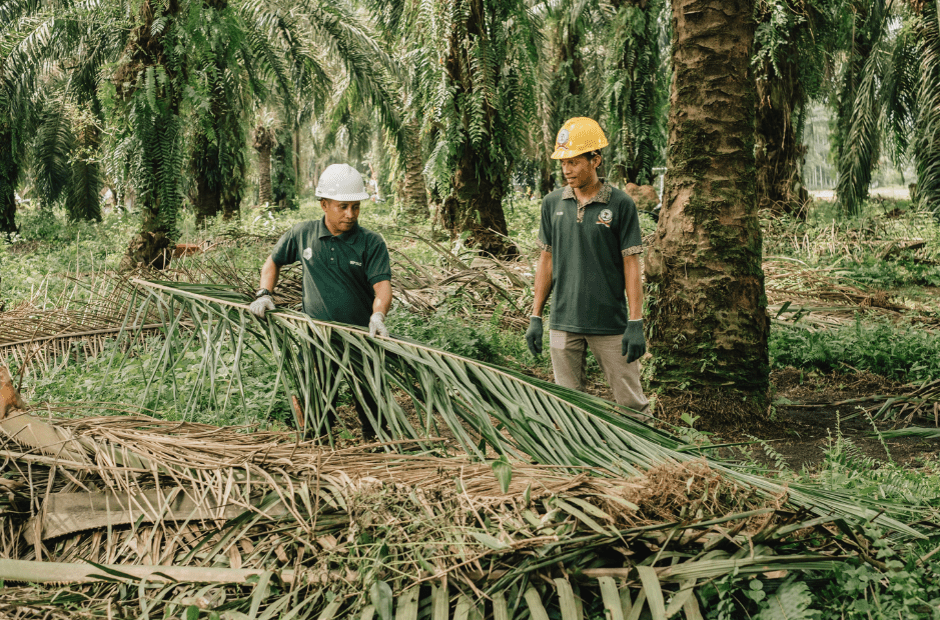
Frond stacking
Oil palm fronds are sometimes viewed simply as field residue. However, when managed properly, they can become an important resource for soil health.
Frond stacking involves arranging pruned palm fronds around palms or along suitable areas of the field. When placed properly and applied consistently, these fronds act as natural mulch. They help cover the soil, reduce moisture loss, and gradually return organic matter to the field as they decompose.
This practice is valuable because it uses materials that are already available on the farm. Instead of removing or underutilizing pruned fronds, farmers can return them to the soil system. Over time, this supports nutrient cycling and helps maintain better soil conditions.
Frond stacking also helps protect the soil surface. By reducing direct exposure to sun and rain, mulch can help moderate soil temperature, retain moisture, and reduce erosion. These benefits are especially important in smallholder plots where farmers need low-cost and practical ways to sustain productivity.
In BIPOSC, frond stacking is positioned as one of the practical regenerative agriculture practices that farmers can adopt using existing farm resources. It shows that improving soil health does not always require complex or expensive interventions. Sometimes, it begins with better use of what is already present on the farm.
4. Cover Cropping to Protect and Regenerate Soil

Cover cropping
Cover crops help protect soil by reducing the amount of exposed ground in a farm plot. In regenerative agriculture, this is important because covered soil is generally more resilient than bare soil.
Leguminous cover crops can provide an additional benefit. Some legumes form a symbiotic relationship with Rhizobium bacteria associated with their roots, allowing them to fix nitrogen from the atmosphere. This can help enrich soil nitrogen and contribute to nutrient availability within the farm system. When planted in suitable areas between oil palms or in open spaces, they can support moisture retention, reduce erosion, and contribute to a more balanced farm environment.
Cover cropping also supports biodiversity. A farm with more varied plant life can provide habitat and food sources for beneficial organisms, contributing to a healthier ecosystem. This matters because biodiversity is not separate from productivity. A more balanced farm environment can support natural processes such as nutrient cycling and pest management.
Through BIPOSC, cover cropping is introduced as part of a broader regenerative agriculture approach. Farmers learn how ground cover can protect soil, reduce weed pressure, and support better farm management over time. This reinforces the idea that soil health is not only about what is added to the soil, but also about how the land is protected.
5. Behavioral Change: Regenerative Farm Management
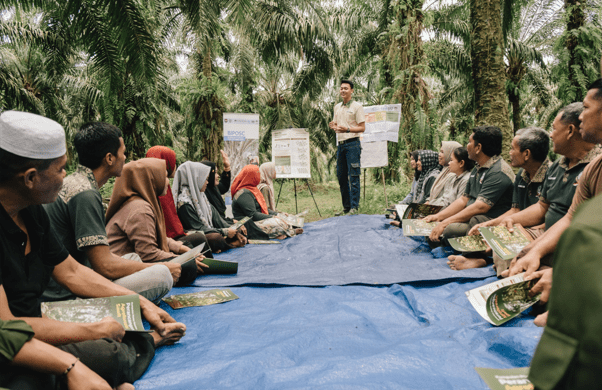
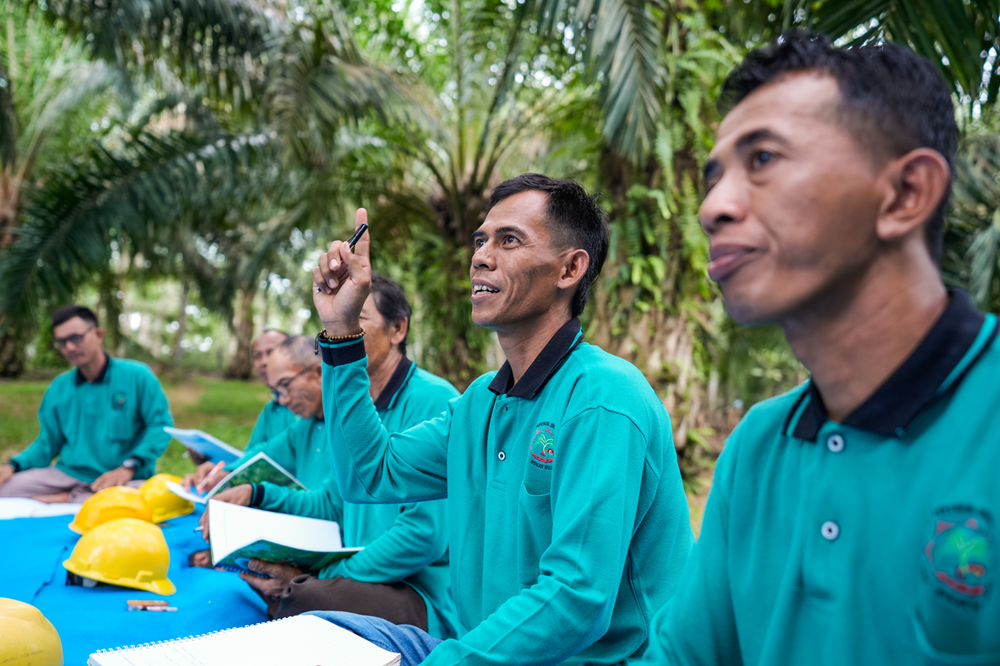
Regenerative agriculture practices involve a change in mindset about farm management.
Regenerative agriculture is not only about individual practices. It is about changing how farmers manage the whole farm system.
Reducing reliance on chemical inputs does not mean eliminating them entirely. Rather, the aim is to use inputs more efficiently, avoid unnecessary use, and reduce waste. For example, this can mean moving away from blanket spraying and towards more targeted, informed farm management.
Practices such as composting, cover cropping, frond stacking, and integrated pest management can support this shift. When soil is healthier, farms may become more resilient, and farmers may be less dependent on external inputs alone to maintain productivity. This can help reduce costs while supporting better long-term soil condition.
However, behavior change is essential. Farmers need access to knowledge, training, and ongoing support to understand when and how to adjust their practices. This is where Village Extension Officers, village facilitators, farmer associations, and demonstration plots play an important role.
Through BIPOSC, regenerative farm management is supported not only by introducing techniques, but by helping farmers understand the reasons behind them. When farmers see how practices affect their plots over time, they are better equipped to make decisions that support both productivity and soil health.
How These Practices Work Together
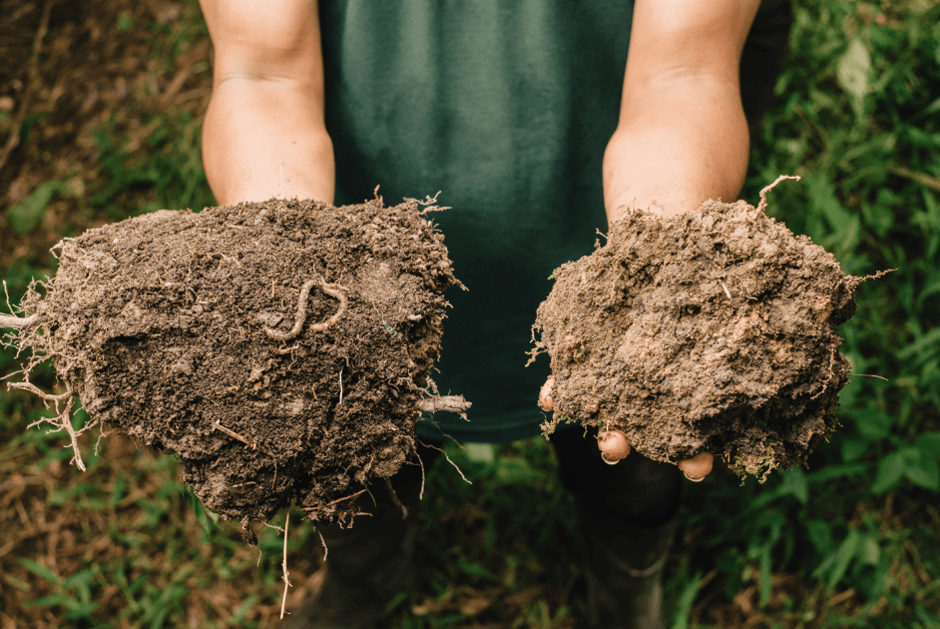
The sample on the left shows healthy soil found on the site of the BIPOSC project, compared to the one on the right that is degraded from extensive fertilizer use
Individually, each of these practices may appear basic. Together, they represent a shift in how farm plots are managed.
Instead of treating soil only as a medium for production, regenerative agriculture treats soil as a living system that must be protected, replenished, and managed over time. This means looking at how different practices interact with one another.
Soil cover protects the land from erosion, heat, and water loss. Organic matter supports nutrient cycling and microbial activity. More diverse farm conditions can support biodiversity and natural pest management. With training and field experience, farmers gain the knowledge and confidence to manage their plots more sustainably. Over time, healthier soils can support more resilient farming systems.
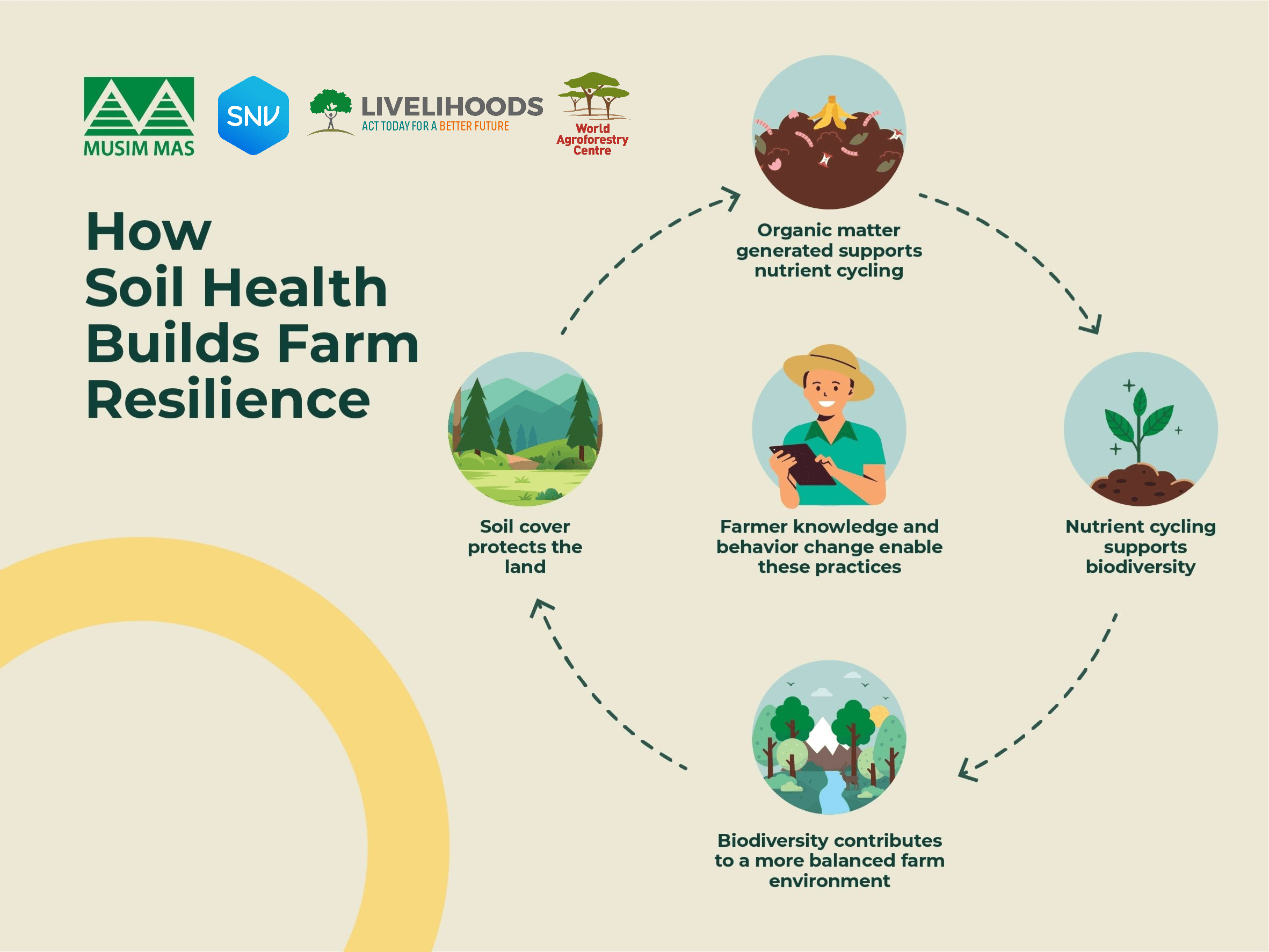
This can be understood as a simple chain. Soil cover protects the land. Organic matter supports nutrient cycling. Nutrient cycling and diverse vegetation support biodiversity. Biodiversity contributes to a more balanced farm environment. Farmer knowledge and behavior change help these practices become part of everyday farm management.
This systems view is important. A farmer who stacks fronds, applies compost, manages ground cover, plants cover crops, and uses inputs more efficiently is not simply adopting five separate techniques. They are gradually managing the farm in a way that works more closely with natural processes.
BIPOSC as a Model for Farmer Behavior Change
The success of regenerative agriculture depends not only on techniques, but on adoption. For smallholders, adopting new practices can require time, confidence, and evidence that these practices are both useful and practical. Training helps farmers understand why these methods matter, while demonstration plots allow them to see results in the field. Village facilitators provide hands-on support, and farmer associations can enable business models, such as the Composting Unit, that make these practices more affordable and easier to sustain. This turns regenerative agriculture from a concept into a working system.
The real value of BIPOSC is that it does not only introduce regenerative agriculture practices. It also supports the conditions farmers need to learn, apply, and continue improving these practices over time. By combining technical training, local facilitation, farmer associations, and community-based business models, BIPOSC provides a model that can be adapted and emulated in other places.
Improving soil health does not always begin with large interventions. Often, it starts with practical, repeated actions on the farm: protecting the soil, returning organic matter, encouraging biodiversity, and helping farmers make informed decisions.