How is Chocolate Made | Chocolate Trends and Demand | About Cocoa Butter | Cocoa Butter Alternatives | Regulations and Innovations
Cocoa butter alternative in chocolate has become increasingly important as manufacturers strive to preserve the rich, velvety texture and complex flavors that make chocolate so enchanting.
From the moment it melts in your mouth, chocolate delivers a multi-sensory experience—sweet, bitter, and creamy all at once.
The importance of mouthfeel—how chocolate feels as it melts—cannot be overstated. It’s a key factor that enhances the indulgence and satisfaction that chocolate provides.
Whether enjoyed alone, shared during celebrations, or offered as a heartfelt gift, chocolate continues to be deeply woven into our daily lives and cherished traditions.
Curious about what goes into making chocolate? Let’s explore how cacao beans become chocolate bars, and why cocoa butter and its substitutes matter.
How Is Chocolate Made?
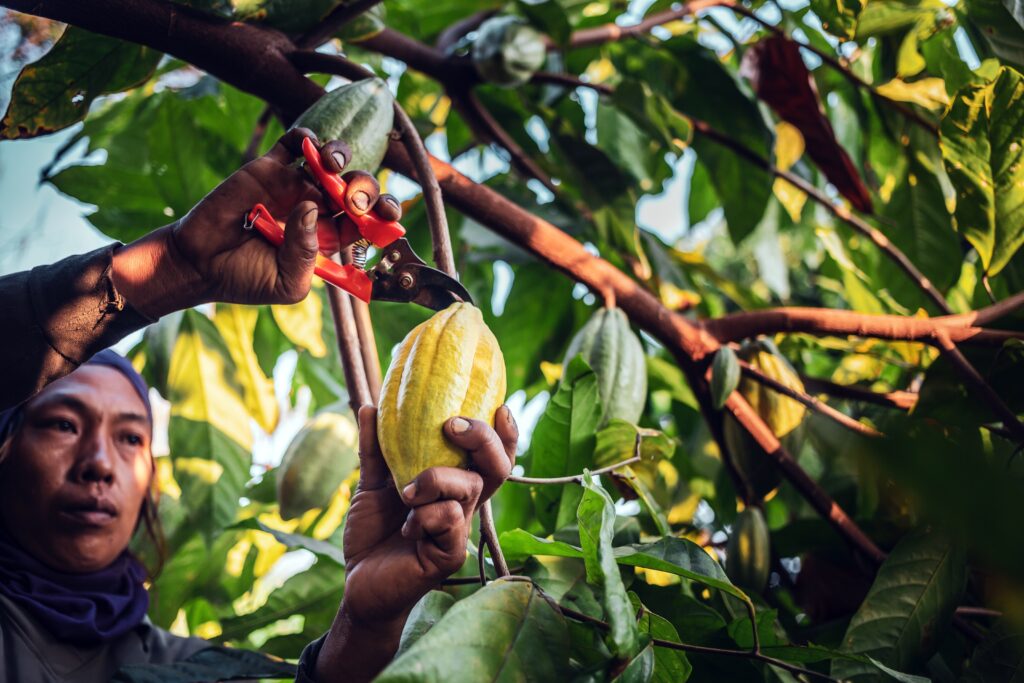
Chocolate originates from cacao beans, which come from the Theobroma cacao tree. Grown in tropical climates, the tree produces fruit in the form of cacao pods.
This is the main ingredient in chocolate. From the cacao pods, the journey of chocolate production starts as follows:
1. Harvesting
Harvesters handpick cacao pods with care to prevent damage to the cacao tree. They then open the pods to extract the beans, which remain covered in sticky pulp.
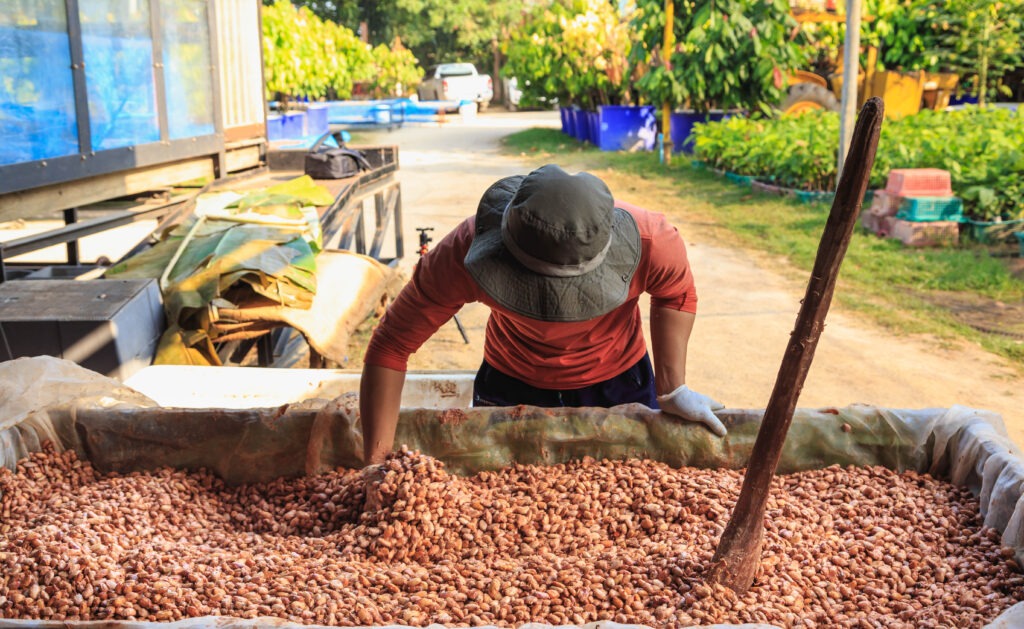
2. Fermenting
Producers place the beans and pulp into large, covered fermentation boxes that keep them exposed to air while keeping the temperature between 40 and 50ºC.
Fermentation plays a vital role in eliminating harmful bacteria, typically taking up to eight days to complete.
Workers stir the beans daily during this process to distribute oxygen evenly. This fermentation also deepens the beans’ flavor. Once fermented, we call these seeds cocoa beans.
3. Drying
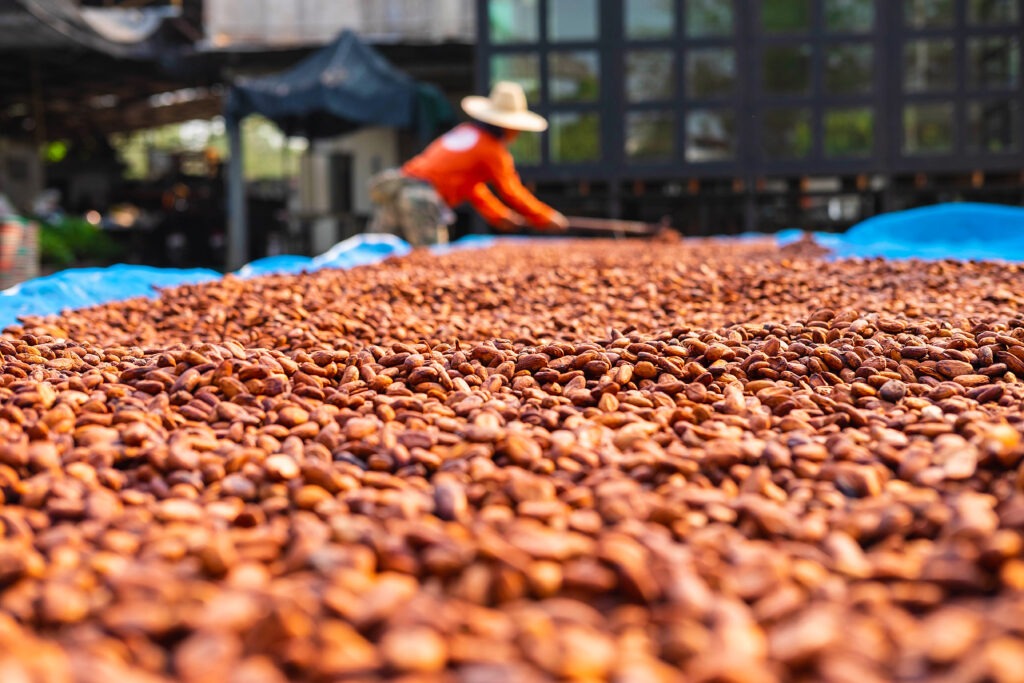
After fermentation, producers sun-dry the beans to remove excess moisture and stop further fermentation. This step is crucial to prevent further fermentation and preserve the flavor.
4. Roasting
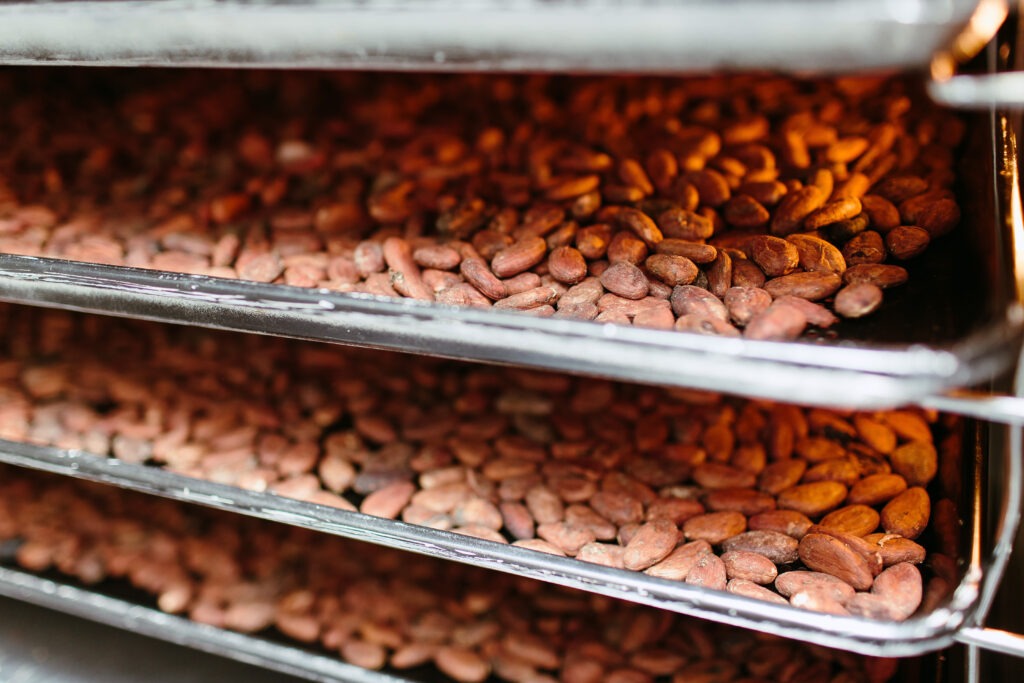
Workers sort the beans and check them for quality at the factory, and moldy beans and debris are sieved out.
The roasting process uses different temperatures for each bean size and variety. It enhances the beans’ flavor profile and eliminates any remaining bacteria.
5. Winnowing
Next, a winnowing machine is used to remove the outer shells, which is usually done using bursts of air to separate the beans into shells and cocoa nibs. The latter is used in the chocolate production process.
6. Grinding and Conching
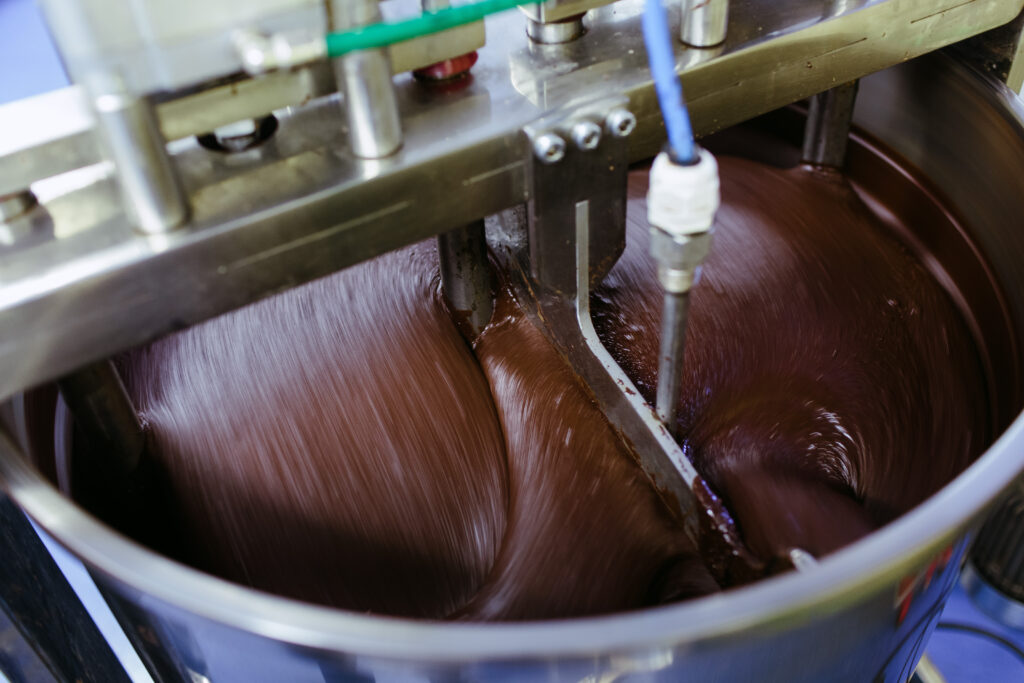
Manufacturers grind the nibs into a thick paste known as cocoa mass (cocoa liquor), which can be separated into cocoa solids and cocoa butter.
With further grinding, the texture becomes smoother. During this process, additional ingredients such as sugar, milk powder, or vanilla are incorporated.
For example, milk chocolate would incorporate more milk powder.
7. Tempering
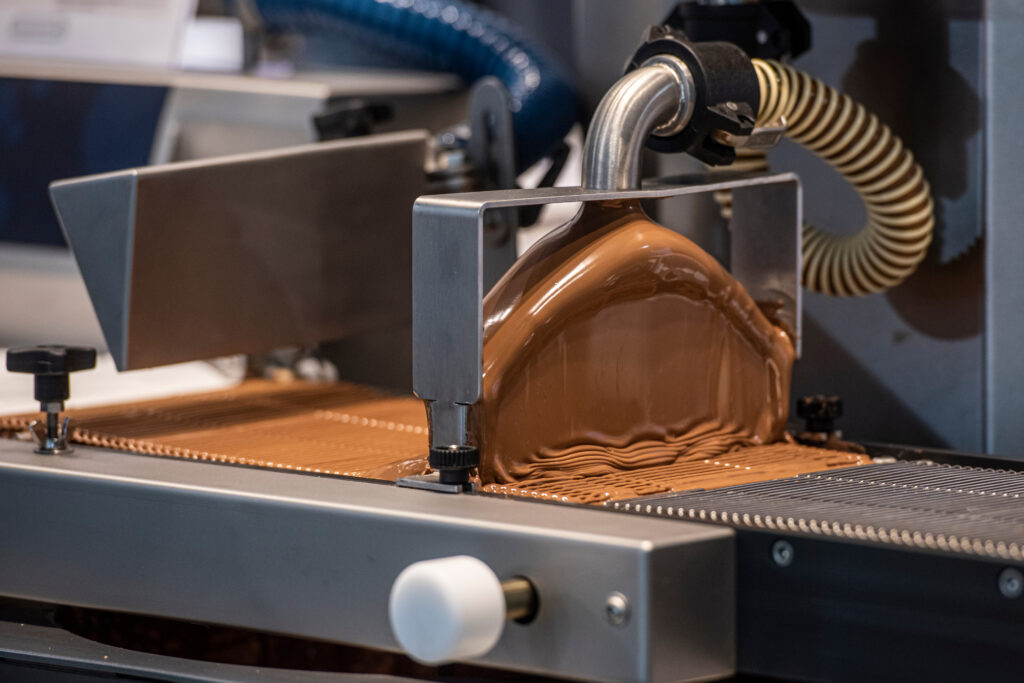
They temper the chocolate by carefully heating and cooling it to stabilize the cocoa butter crystals.
This ensures a glossy appearance and smooth texture while firm, producing the characteristic snap effect when a piece of chocolate is broken by being bitten or by hand.
Without this step, the chocolate would be dull and crumbly. Tempering machines or manual methods can achieve this process.
8. Molding and Finishing
Workers pour tempered chocolate into molds to create bars or other shapes, then cool them until solid. Manufacturers can also use this chocolate for different applications.

The Trends and Demand for Chocolate
Consumers are demanding a wider array of chocolate products and flavors. There is a growing demand for:
- Dark chocolate or reduced-sugar varieties for health reasons
- Plant-based dairy-free options
- Innovative flavors incorporating non-traditional ingredients like spices, and others
The global market size for chocolate was estimated at US$119.4 billion in 2023 and is expected to grow at a compound annual growth rate (CAGR) of 4.1% from 2024 to 2030.1
Rising disposable incomes and an expanding middle class are driving growth in chocolate consumption across the Asia-Pacific region.
The growth has also given rise to innovative flavors and products that cater to local tastes, such as matcha-infused chocolates in Japan or durian-flavored chocolates in Southeast Asia.
However, chocolate prices have spiked in recent years. Poor weather conditions, such as droughts and excessive rainfall, have affected yields and output.
As a result, cocoa prices have spiked since 2023. From US$2,500 a ton in the 2010s, cocoa has been trading at US$6,000 to US$11,000 in April 2024.
Read More: Bread Improvers Explained: Key Ingredients and Benefits
Cocoa Butter: The Most Expensive Component of Chocolate
Increasing cocoa prices have placed a spotlight on the most expensive ingredient in chocolate, cocoa butter.
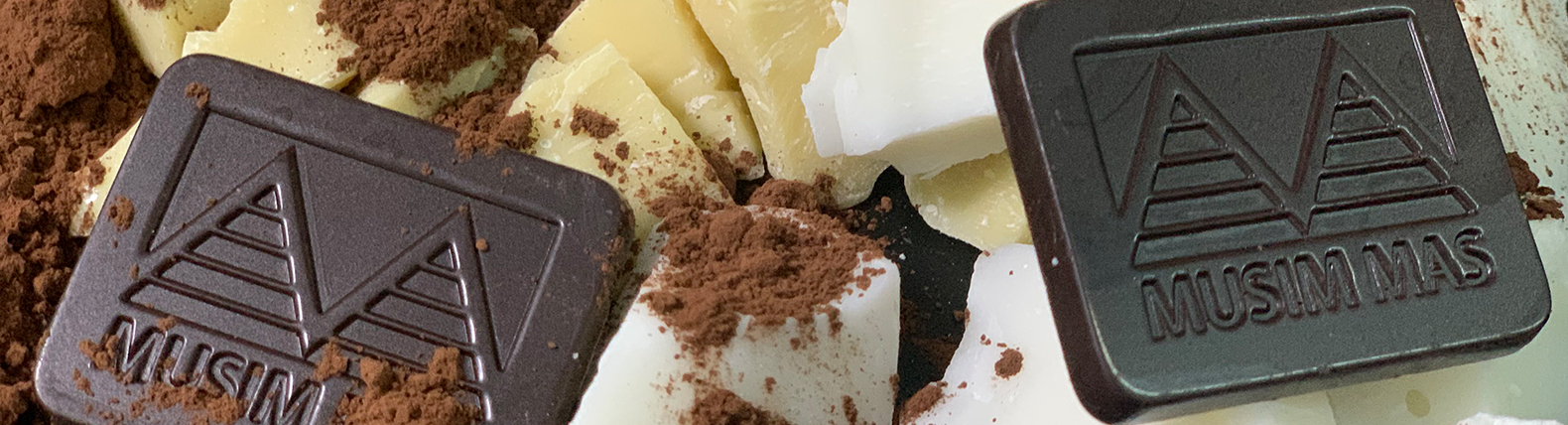
Cocoa butter is the fat found in cocoa beans and gives chocolate its decadent and creamy texture.
Pale yellow in color, it also has a pleasant flavor and aroma of cocoa and a melting point slightly below human body temperature.
Manufacturers can extract cocoa butter from the grinding process described above during cocoa bean processing.
The amount of cocoa butter can be altered to change the texture and melt properties of the chocolate.
Cocoa butter has a low melting point of around 35°C, which is in line with human body temperature and gives chocolate its melt-in-mouth property.
However, its low temperature poses handling and logistical challenges in warmer climates, including much of the Asia Pacific region.
Cocoa butter’s low melting point also poses challenges when used in specific chocolate applications, such as for coatings to keep their form and remain solid on store shelves.
Cocoa Butter Alternative in Chocolate
The increasing prices of cocoa, including the high cost of cocoa butter and specific application demands, have all led to a demand for alternatives. Here are some key alternatives:
Cocoa Butter Substitute (CBS)
A common cocoa butter substitute, CBS is widely used to fully replace cocoa butter in chocolate and confectionery applications.
Typically made from palm kernel oil, CBS can achieve a melting profile similar to that of cocoa butter.
The primary benefit of CBS is its cost-effectiveness; it is significantly cheaper than cocoa butter, making it a popular choice for mass-market chocolates and coatings.
Additionally, CBS has good snap and gloss characteristics, making it suitable for chocolate products that require a firm texture and shiny appearance. However, a key difference with cocoa butter is that CBS doesn’t need a specific tempering procedure and is much easier to handle during production.
Despite these benefits, CBS might slightly alter the mouthfeel compared to traditional cocoa butter, often leading to a firmer or more brittle texture.
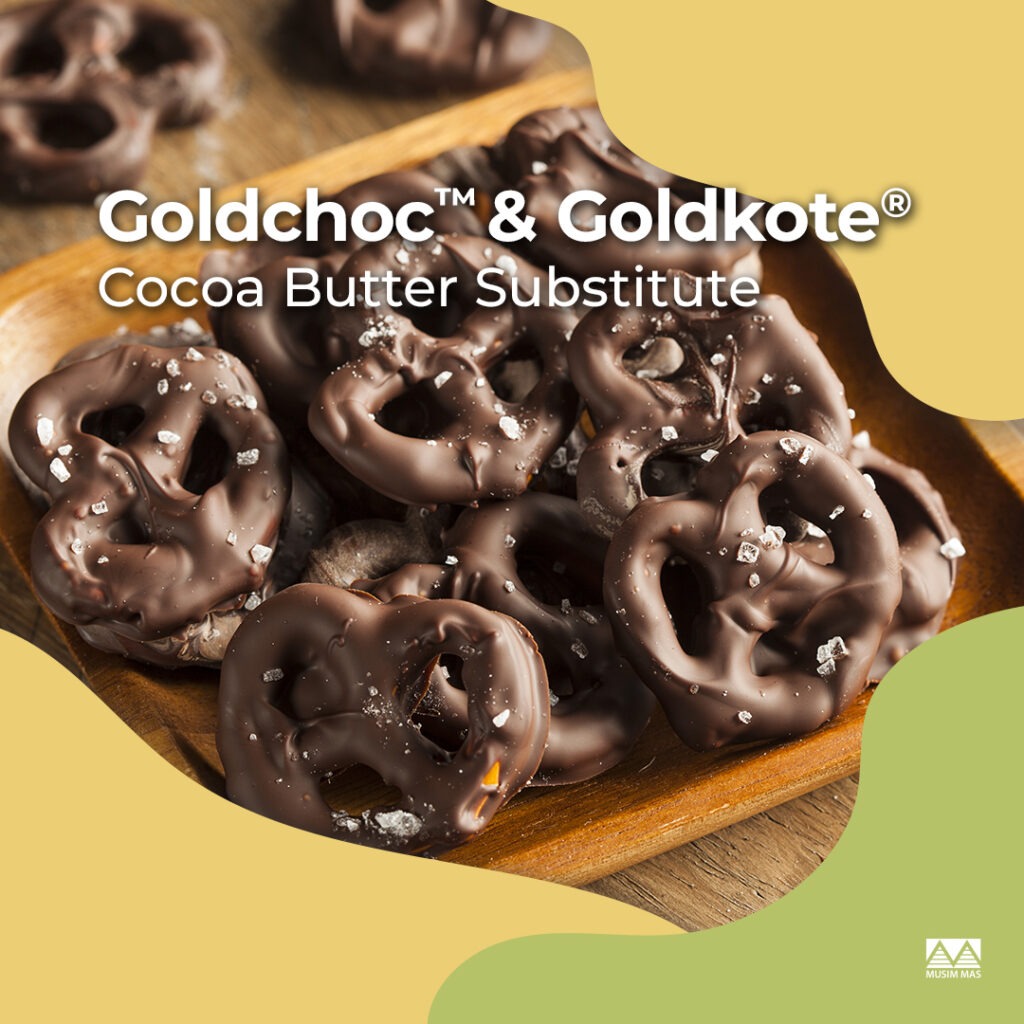
Musim Mas’ cocoa butter substitutes, including the Goldchoc™ and Goldkote® ranges, are ideal for molding, enrobing, and coating.
They are highly versatile and can be used for a broad range of applications, enabling confectionery manufacturers to innovate.
Cocoa Butter Replacer (CBR)
Many chocolate and confectionery manufacturers widely use CBS, a common cocoa butter substitute, to fully replace cocoa butter.
These substitutes often come from vegetable oils, such as palm olein, soybean, canola, and sunflower.
CBRs can also replace some cocoa butter in a product without significantly altering the chocolate’s sensory properties.
The primary benefit of CBRs is their cost savings while maintaining some of the desired characteristics of cocoa butter, such as texture and melting behavior.
CBRs differ from CBS because they can be used in higher-quality chocolate products without drastically changing the taste and mouthfeel.
CBRs contribute to a similar mouthfeel as cocoa butter, though the experience might be slightly less smooth or creamy, depending on the formulation and the proportion used.
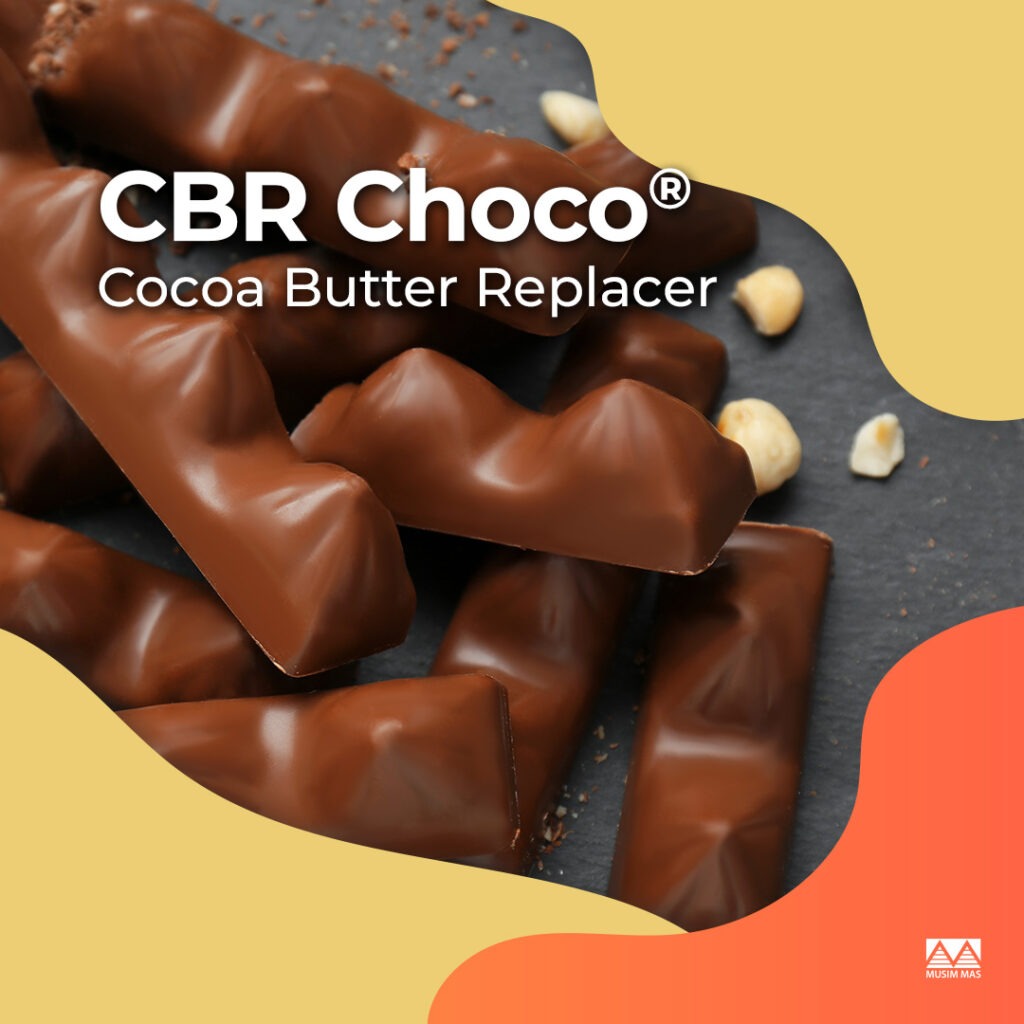
Meeting the need for easy-to-use applications without the need for tempering, Musim Mas’ Cocoa Butter Replacer CBR Choco® range is excellent for molding, coating, panning, and inclusions. It has a cocoa butter tolerance of up to 20%.
Cocoa Butter Equivalent
Cocoa Butter Equivalent (CBE) can replace cocoa butter in chocolate formulations without compromising quality.
They are typically made from a blend of vegetable oils and feature the ideal snap and mouthfeel of chocolates. Unlike CBS and CBR, CBEs can be used up to 100% replacement in some applications.
This makes CBEs particularly valuable for high-quality chocolate products where maintaining the traditional characteristics of cocoa butter is essential.
As another form of cocoa butter substitute, CBEs closely mimic the texture and mouthfeel of natural cocoa butter while remaining cost-effective.
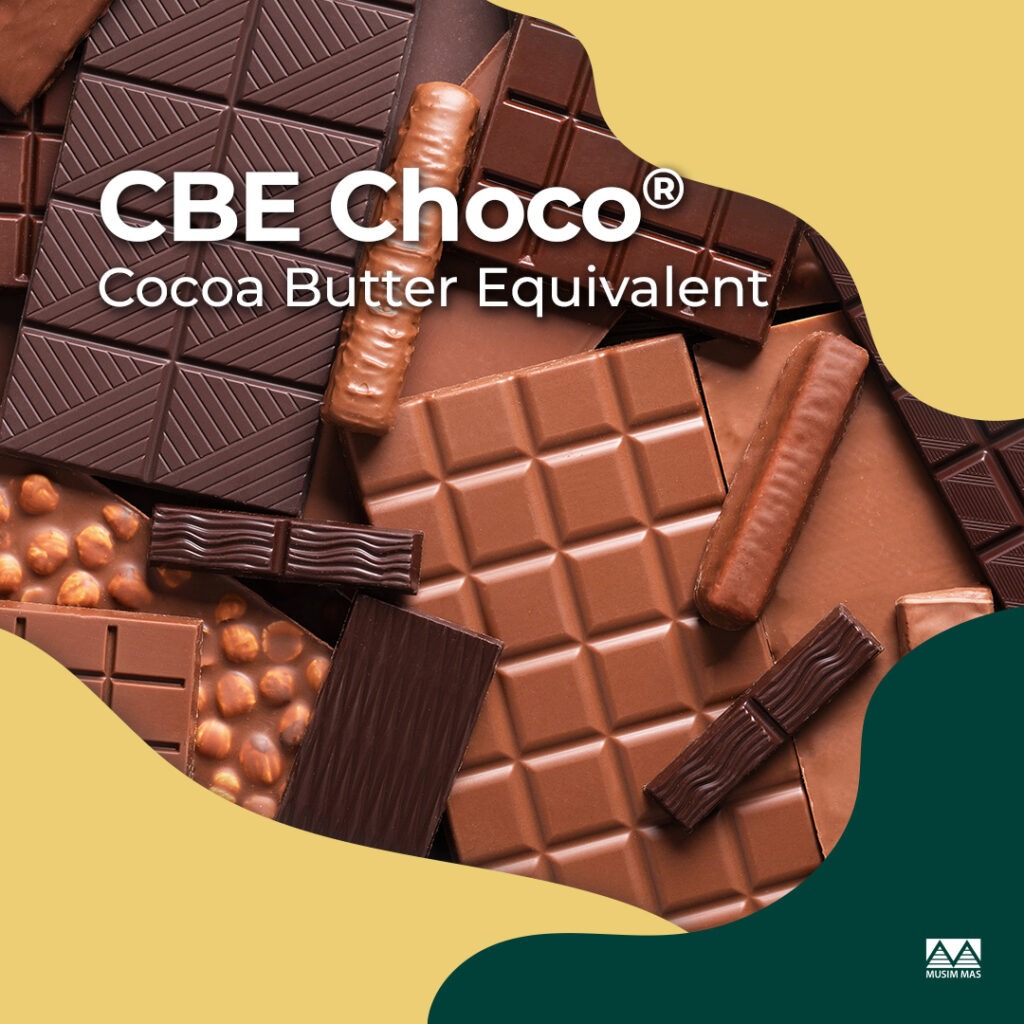
Fully compatible with cocoa butter, Musim Mas’ Cocoa Butter Equivalent CBE Choco® range is suitable for chocolates and super coatings.
It can be tailored for use in different climates to be heat-resistant or withstand winter conditions.
Like CBR Choco®, it can also be used for molding, coating, panning, and inclusions. Musim Mas’ CBE Choco® NE50 is free of exotic fats, unlike most CBEs, offering additional cost savings without altering taste or sensory properties.
Read More: Puff Pastry Margarine for Flawless Puff Pastries and Croissants
CBS vs CBR vs CBE
Regulations on Cocoa Butter in Chocolates
With the growing demand for chocolate products and increasing cocoa prices, cocoa butter alternatives offer a huge potential for confectionery producers to remain competitive.
However, producers using a cocoa butter alternative in chocolate must consider regional regulations for labeling and formulation to remain compliant.
In the US, the Food and Drug Administration’s standard of identity mandates that products use cocoa butter as the only fat source if they want to call themselves chocolate. The use of a cocoa butter alternative will require a different naming convention.2
On the other hand, Directive 2000/36/EC permits European products to replace up to 5% of cocoa butter and still call them chocolate.3 These products must also label any cocoa butter substitutes used.
In Canada, chocolates must contain at least 35% cocoa solids, of which at least 18% must be cocoa butter.4
Enabling Chocolate Innovations
Cocoa butter substitutes not only help manage rising ingredient costs but also support innovation in new chocolate formulations.
As a leading specialty fats supplier, Musim Mas produces specialty fats like cocoa butter alternatives for a wide range of applications.
Musim Mas further supports confectionery producers with its innovation and applications center, the Novel IDEAS Center.
Dedicated to developing new solutions using the group’s leading specialty fat products and others, the center aims to enable producers to innovate and stay ahead in quality product development and formulation.
_______________________________________________________________________
References:
[1]https://www.grandviewresearch.com/industry-analysis/chocolate-market
[4] https://laws-lois.justice.gc.ca/eng/regulations/c.r.c.,_c._870/page-22.html
[5] https://www.whitakerschocolates.com/blogs/blog/how-is-chocolate-made-step-by-step
[6]https://www.businesstimes.com.sg/companies-markets/why-prices-chocolate-and-cocoa-went-nuts
[7] https://www.ulprospector.com/knowledge/1085/fbn-cocoa-butter-alternatives-chocolate/
[8] https://www.sciencedirect.com/science/article/pii/S1658077X17303387
[9] https://www.sciencedirect.com/science/article/pii/S2772753X23003362
[10] https://www.chocolate-academy.com/en/inspiration/trends/coatings-fillings-and-science-fats