By: Devane Sharma
Index
- The Risk Management Framework (RMF) as a Tool
- Prioritizing and Engaging High-Risk Suppliers
- Supporting Supplier Progress
- Transparency, Accountability, and Continuous Improvement
- Beyond Compliance – Driving Sectoral Change
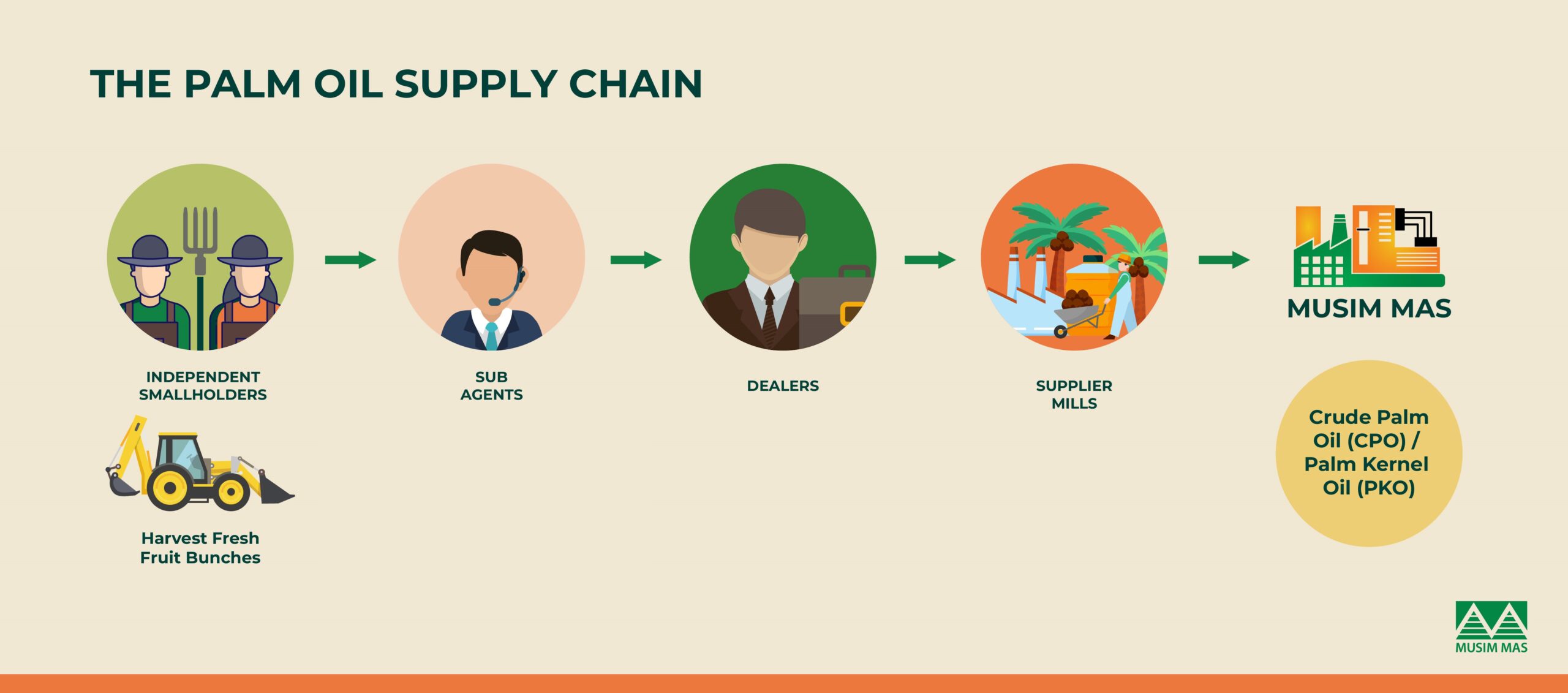
Palm oil is one of the world’s most widely traded commodities, used in everything from food to household products to biofuels. But its global reach also comes with complex supply chains that stretch across thousands of plantations, smallholders, and mills. At Musim Mas, 86% of the crude palm oil we process come from third-party suppliers. This means our No Deforestation, No Peat, No Exploitation (NDPE) commitments must extend far beyond our own operations.
For us, responsible sourcing is not simply about securing supply. It is about ensuring that sustainability standards are consistently applied across the entire value chain — from our direct suppliers to the independent smallholders who depend on palm oil for their livelihoods. In this context, responsible sourcing becomes a tool not just for risk management, but for transformation.
The Risk Management Framework (RMF) as a Tool
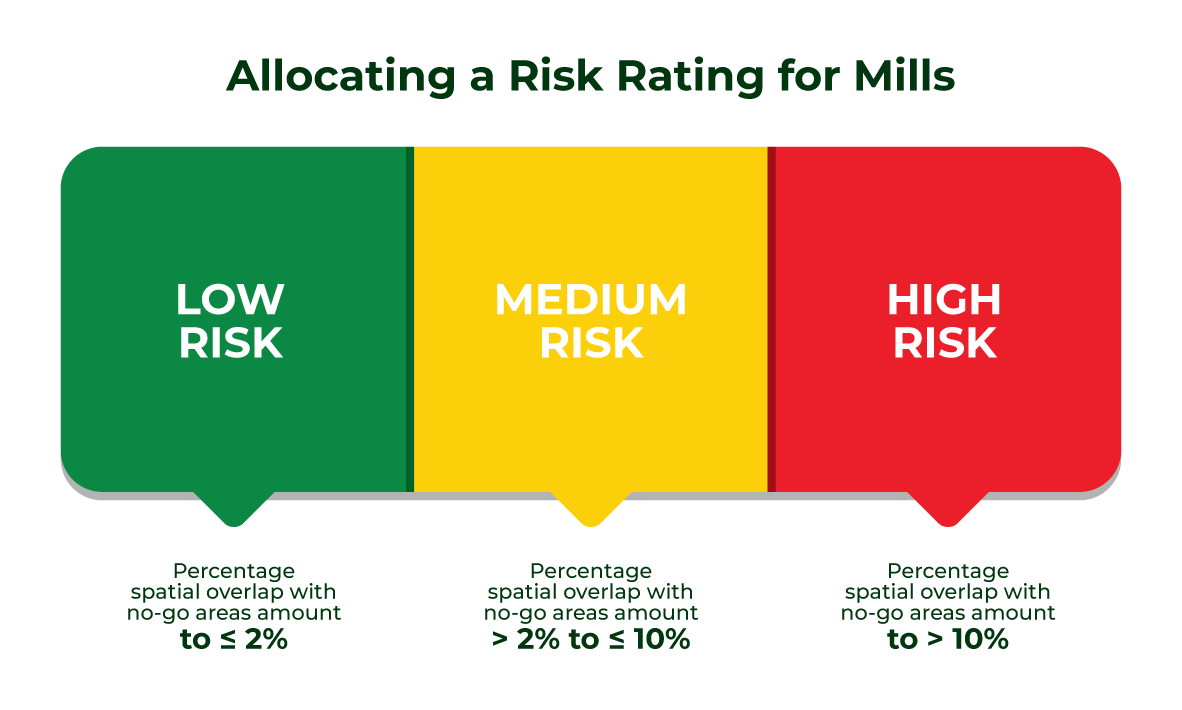
To make responsible sourcing measurable, Musim Mas developed the Risk Management Framework (RMF). This science-based system identifies, classifies, and monitors supplier risk at the mill level, where the supply chain converges.
Annual risk assessment is at the core of the RMF. Every supplying mill in our network is classified as low, medium, or high risk, based on supply shed analysis. This includes overlays of forest cover, peatland presence, and conservation areas. By combining geospatial mapping with supply data, we can target engagement where it matters most.
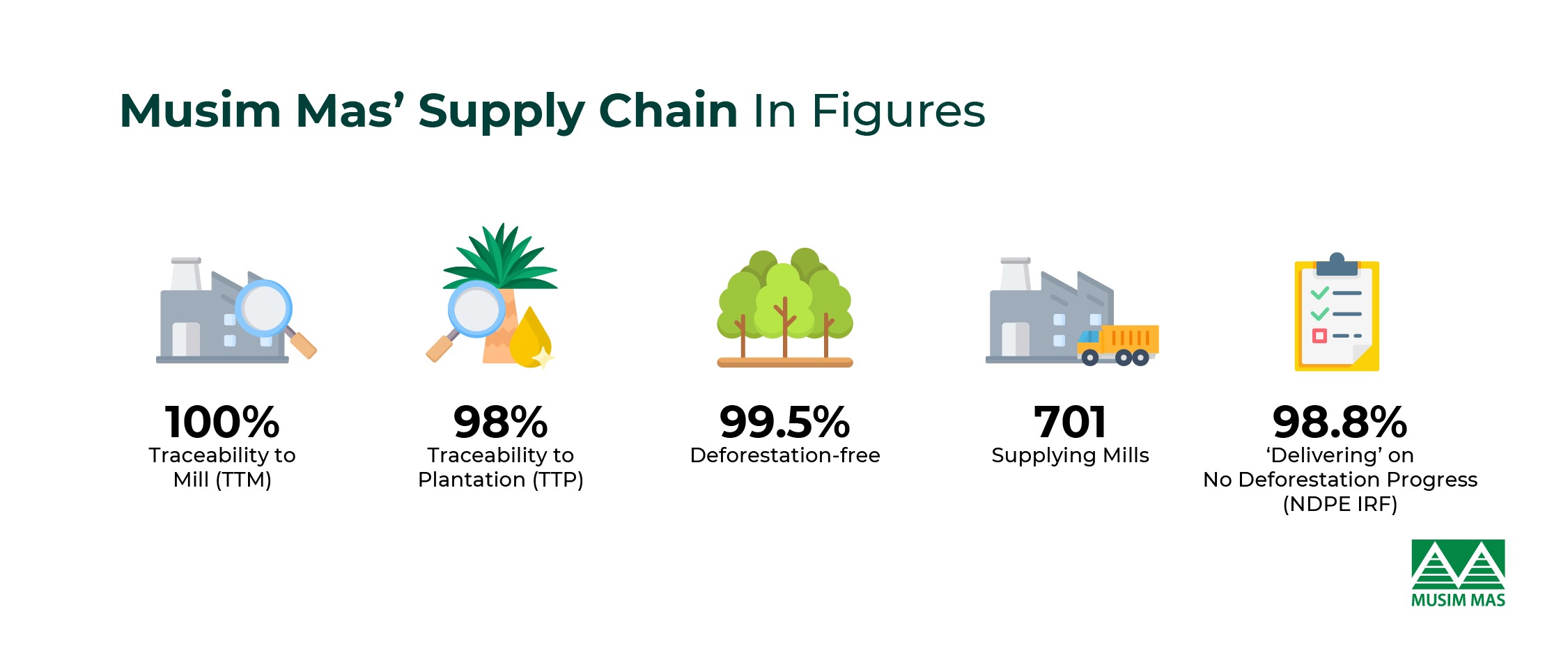
Traceability forms the foundation of this work. We have achieved 100% Traceability to Mill (TTM) and increased Traceability to Plantation (TTP) from 60% in 2019 to 98% in 2024. High levels of traceability allow us to pinpoint where risks may occur and act before they escalate.
The system is also independently verified. In 2024, external auditors confirmed that 99.5% of our supply was deforestation-free through our Verified Deforestation-Free (VDF) approach, with only 2 high-risk mills identified out of 701 supplying mills. 98.8% of Musim Mas’ suppliers are ‘Delivering’ on their No Deforestation Progress as defined in the NDPE Implementation Reporting Framework. These results demonstrate that our approach is not just theoretical — it delivers measurable outcomes in reducing deforestation risks across our palm oil supply chain.
Prioritizing and Engaging High-Risk Suppliers
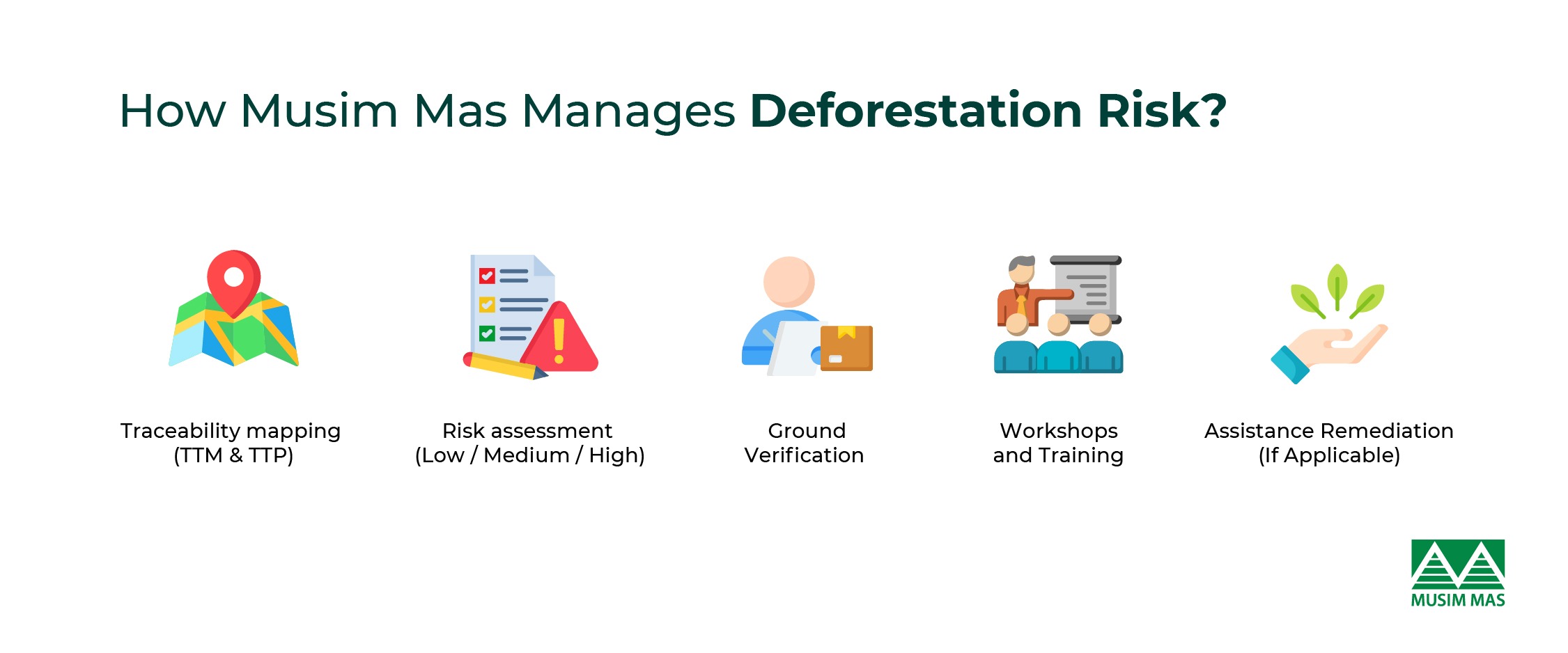
We recognize that risk cannot be eliminated through monitoring alone. Engagement is essential if we want lasting change. That is why we prioritize high-risk mills for tailored, time-bound action plans. These plans may include:
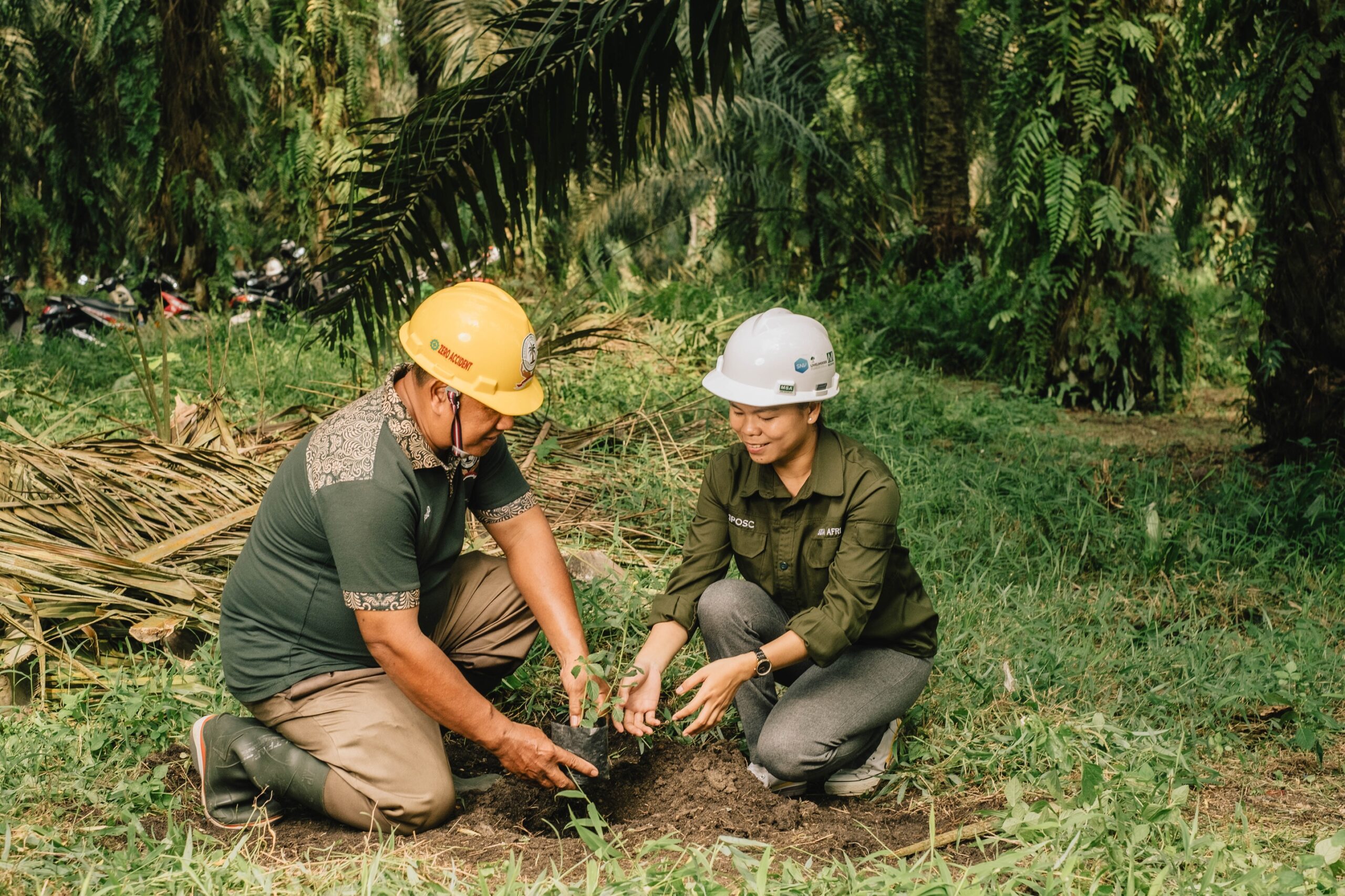
- Site visits for ground verification, data collection, and direct dialogue with management.
- Workshops and training on NDPE policy compliance, grievance handling, and traceability reporting.
- Technical assistance to remediate issues such as conducting HCV/HCS assessments, developing peatland management plans, or setting up traceability systems.
By combining risk assessment with practical support, we ensure that suppliers are not only evaluated but also equipped to transition to sustainable practices. This hands-on engagement is particularly important for high-risk mills, which often face capacity and resource constraints.
Supporting Supplier Progress
Engagement works best when paired with accountability. Our Controlled Purchase Protocol balances both.
- Suppliers that commit to improvement remain in our supply chain under close monitoring and support.
- Suppliers that refuse to change face suspension.
This approach provides a strong incentive for suppliers to align with NDPE requirements while still keeping the door open for transformation. To help them succeed, we offer a range of support:
- Best practice toolkits and one-on-one mentoring on topics such as responsible land use, grievance resolution, and traceability systems.
- Access to our independent smallholder programs — the largest in Indonesia — which strengthen Good Agricultural Practices (GAP), promote certification, and improve financial literacy.
This model prevents “leakage” of non-compliant suppliers into less sustainable markets and fosters long-term transformation. We believe engagement, not exclusion, creates the conditions for lasting change. While our support is extensive, we also set clear expectations for every supplier we work with. Compliance with our NDPE policy is not optional — it is the foundation of long-term partnership. Our requirements include:
- Establishing baselines: Conducting HCV/HCS assessments before land development.
- Fixing potential problems: Remediating deforestation and restoring affected areas where non-compliance has occurred.
- Creating sustainable structures: Proactively engaging in our priority sourcing landscapes, where we collaborate on jurisdictional and landscape-level solutions to deforestation and exploitation.
By making these expectations clear, we empower suppliers to make responsible choices while strengthening accountability across the supply chain.
Transparency, Accountability, and Continuous Improvement
Credibility in responsible sourcing depends on transparency. That is why we:
- Publish annual disclosures of supplier risk levels, including the percentage of mills identified as high, medium, and low risk.
- Submit our RMF to independent verification by Control Union, which ensures external credibility.
- Continue expanding the RMF scope to include social risks, such as labour rights, indigenous peoples’ rights, and local community well-being.
By holding ourselves to this level of openness, we aim to build trust with stakeholders while continuously raising the bar for responsible sourcing practices.
Beyond Compliance – Driving Sectoral Change
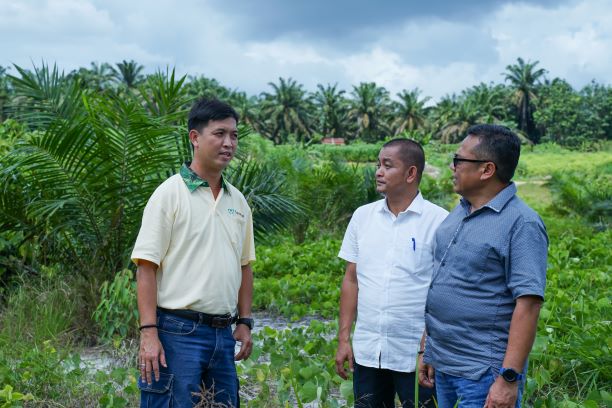
For Musim Mas, compliance is just the starting point. Our responsible sourcing strategy aims to go further — linking supplier engagement with landscape programs and smallholder support that deliver benefits beyond our supply chain. This includes:
- Supporting independent smallholders with training on regenerative agriculture, soil health, and Good Agricultural Practices.
- Working at the landscape level with partners to address systemic issues like deforestation, peatland management, and smallholder inclusion.
- Contributing to broader goals such as climate resilience, biodiversity protection, and rural community livelihoods.
By addressing deforestation risks while simultaneously building supplier capacity, we are helping to drive sector-wide change toward a truly sustainable palm oil industry.
Managing deforestation risk in palm oil is a complex task, but it is also an opportunity. Through our Risk Management Framework, Musim Mas has created a system that not only identifies risks but actively supports suppliers to overcome them.
Our approach — based on traceability, engagement, accountability, and transparency — demonstrates that responsible sourcing can deliver real impact. As we continue to expand the scope of the RMF and prepare to launch our updated policy in 2026, we remain committed to transforming risks into opportunities for progress, both within our supply chain and across the wider industry.
Learn more about our Risk Management Framework and read the latest Verification Statement.