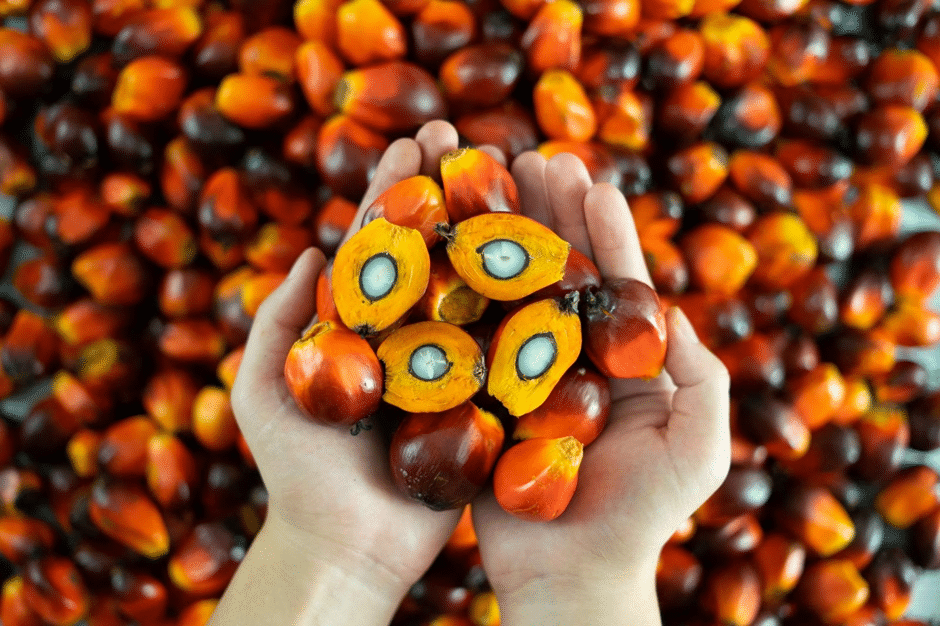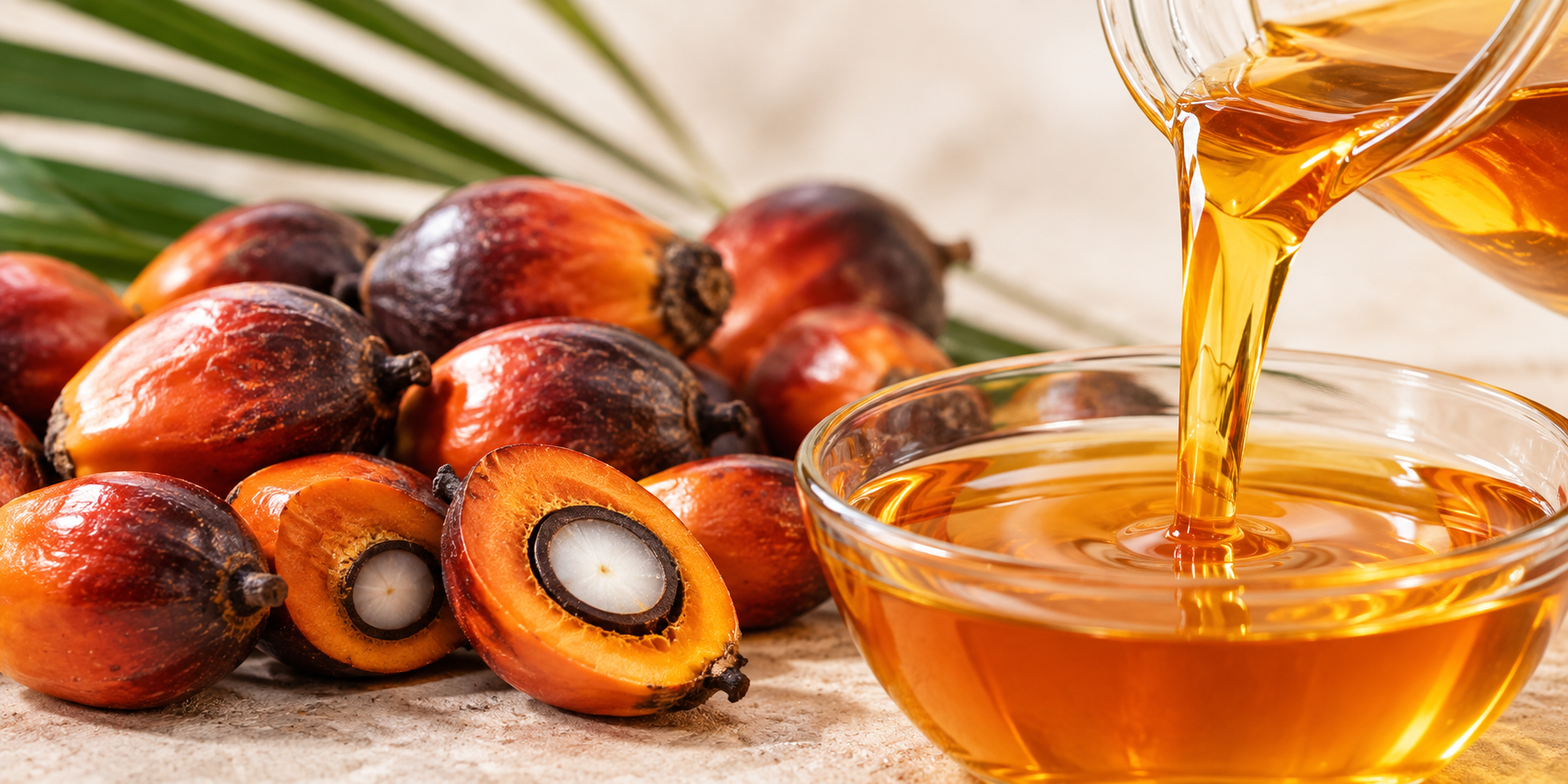
Producing refined palm oil that meets food-grade quality standards is not a single-step process. Between crude palm oil extraction and the finished product reaching food manufacturers, the oil passes through a tightly controlled sequence of refining stages, each designed to remove specific impurities that would otherwise affect quality, stability, and safety. Among these stages, bleaching is one of the most technically important, and bleaching earth is the material that makes it work.
For refinery operators and edible oil manufacturers, understanding how bleaching earth functions, what it removes, and how spent bleaching earth (SBE) should be managed is directly relevant to product quality, regulatory compliance, and operational sustainability. At Musim Mas, bleaching is integrated into a broader responsible refining approach grounded in our ESG commitments, combining advanced processing technology with continuous improvement across quality, waste management, and environmental performance standards.
Key takeaways
- Bleaching earth is an acid-activated clay adsorbent, usually bentonite-based, added to degummed crude palm oil under vacuum at 90 to 125°C to strip out pigments, trace metals, soaps and oxidation products.
- It does four jobs at once: standardises colour, improves oxidative stability, protects deodorisation efficiency, and keeps the oil within food-grade specifications.
- Typical dosage runs from 0.5% to 3% by weight of oil. Over-dosing raises cost and spent earth volume; under-dosing risks failing specification.
- Spent bleaching earth (SBE) is the largest solid waste stream in a palm oil refinery, holding 20% to 30% residual oil and carrying a real spontaneous combustion risk.
- Under Indonesia’s Government Regulation No. 22/2021, SBE is no longer classified as hazardous waste once residual oil is reduced below 3%, which has made on-site oil recovery commercially attractive.
- Solvent extraction recovers 72% to 78% of that residual oil as biodiesel feedstock, and the de-oiled clay can go into cement, wall tiles, soil conditioning or wastewater treatment.
What Is Bleaching Earth and Why Is It Used?
Bleaching earth, also known as activated clay or activated bleaching earth, is a processed mineral adsorbent derived primarily from bentonite, a naturally occurring aluminosilicate clay. Through acid activation, its surface area and pore structure are significantly enhanced, dramatically increasing its capacity to bind and remove unwanted compounds from crude oil.
In palm oil refining, bleaching earth is added to degummed crude palm oil during the bleaching step, which typically occurs under vacuum at temperatures between 90–125°C. The oil-clay mixture is agitated to maximize contact, then filtered to remove the loaded adsorbent. The activated clay works through both physical adsorption (binding compounds to its surface via hydrophobic and electrostatic forces) and chemical adsorption (forming covalent or ionic bonds with certain pigment molecules).
The primary targets of bleaching earth in palm oil refining include carotenoids (which give crude palm oil its characteristic deep orange-red color), chlorophyll and chlorophyll derivatives, trace metals such as iron and copper, residual soaps from any prior neutralization steps, hydroperoxides and other oxidation products, and free fatty acids. Removing these compounds improves the color, stability, and sensory profile of the oil, and critically prepares it for the downstream deodorization step that follows.
How the Bleaching Process Improves Palm Oil Quality
The bleaching step performs several quality functions simultaneously, which is why it cannot be skipped or simplified without affecting the final product.
- Color standardization is the most visible outcome. Crude palm oil’s high carotenoid content produces a deep red-orange color that would be unacceptable in most food manufacturing applications. Bleaching removes a portion of these pigments directly through adsorption; the remainder are thermally degraded during the subsequent high-temperature deodorization stage. Research has shown that some refineries target only around 20% carotenoid removal during bleaching, with deodorization at 240°C degrading over 98% of the remaining carotenoids within 20 minutes.
- Oxidative stability is improved by removing hydroperoxides and trace pro-oxidant metals, particularly iron and copper. These compounds, if left in the oil, would accelerate lipid oxidation during storage and use, shortening shelf life and generating off-flavors. Removing them at the bleaching stage significantly reduces the oxidative load entering the deodorizer.
- Deodorization efficiency depends on the quality of bleached oil entering the deodorizer. Residual soaps, gums, and chlorophyll derivatives can interfere with steam stripping performance and increase the formation of process contaminants such as 3-monochloropropane-1,2-diol esters (3-MCPDE) and glycidyl esters (GE), compounds subject to strict regulatory limits in food-grade refined palm oil under EU and international standards. Effective bleaching reduces the precursor load and supports cleaner deodorization.
- Food-grade compliance requires that refined palm oil meets internationally recognized specifications for color (measured by Lovibond colorimeter or equivalent), oxidative quality (peroxide value, anisidine value), and absence of regulated contaminants. Bleaching earth selection and dosage are key variables in achieving these specifications consistently across production batches.
The typical dosage of activated bleaching earth in palm oil refining ranges from 0.5% to 3% by weight of oil, depending on the crude oil quality, target color specifications, and bleaching earth grade. Dosage optimization is an ongoing operational consideration, using more bleaching earth than necessary increases material cost and generates more spent earth, while under-dosing risks failing product specifications.
Understanding Spent Bleaching Earth (SBE)
Once filtered from the bleached oil, the loaded clay, now referred to as spent bleaching earth (SBE), retains the pigments, metals, and oxidation products it has adsorbed, along with a significant quantity of residual oil. SBE typically contains between 20% and 30% residual oil by weight, which is both a resource recovery opportunity and an operational hazard.
The residual oil in SBE is prone to oxidation and can reach the point of spontaneous ignition if not handled correctly. This makes SBE a material requiring careful storage and handling: it must be kept away from heat sources, stored in covered, well-ventilated areas, and processed or transferred within defined timeframes. In Indonesia, SBE was historically classified as scheduled hazardous waste under B3 regulations, though Government Regulation No. 22/2021 removed it from the hazardous waste list provided the residual oil content has been reduced to below 3% through extraction, a change that has incentivized investment in on-site oil recovery systems.
SBE is the largest solid waste stream generated by palm oil refineries in terms of volume, which means its management is a material operational and sustainability issue, not a minor byproduct consideration.
See More About Bleaching Earth
Sustainable Approaches to SBE Management
The high residual oil content of SBE makes it a prime candidate for resource recovery, and a range of approaches are now in active use or development across the industry.
Oil recovery via solvent extraction is the most established route. Using hexane or similar solvents, refineries can recover 72–78% of the residual oil in SBE as a non-food-grade oil fraction. This recovered oil is a viable feedstock for biodiesel production, creating a circular energy stream from what would otherwise be a waste disposal problem. The de-oiled bleaching earth (DOBE) remaining after extraction can be further valorized.
Construction and industrial materials applications are the most common downstream use for DOBE. The aluminosilicate mineral composition of bleaching earth, approximately 80% inorganic minerals (SiO₂, Al₂O₃), makes it a suitable raw material for non-fired wall tiles, cement production, and soil conditioning. Research has also demonstrated its utility as a bio-organic fertilizer when applied to agricultural land, closing a partial loop back to the palm oil production system.
Bioremediation and wastewater treatment represent emerging applications for SBE-derived materials. Studies have shown that SBE-based coagulants can achieve COD removal rates of over 90% in wastewater treatment applications, creating value from a material that would otherwise require disposal cost.
Clay reactivation, thermally or chemically restoring the adsorption capacity of spent earth for reuse in the bleaching process, remains technically challenging at industrial scale but is an active area of research and emerging commercial development.
Musim Mas integrates SBE management into its circular economy and zero-waste refining commitments, applying continuous improvement processes to minimize waste volume, maximize resource recovery, and ensure regulatory compliance across our refining operations.
Key Considerations for Refiners Managing Spent Bleaching Earth
For refinery operators reviewing or improving their SBE management practices, four areas deserve priority attention. Safe storage and handling protocols must be in place from the point of filtration to transfer or processing, given SBE’s spontaneous combustion risk. Regulatory compliance requirements vary by jurisdiction and are evolving, staying current with local B3 or equivalent waste classification rules is essential for avoiding liability and accessing valorization pathways. Oil recovery investment should be evaluated against both the economic return from recovered oil and the regulatory and reputational benefits of reducing landfill dependence. And sustainability integration, aligning SBE management with broader ESG reporting and circular economy frameworks, is increasingly expected by buyers, investors, and certification bodies auditing refinery operations.
For Musim Mas, responsible SBE management is not a standalone compliance exercise but part of our commitment to operating refineries that meet the highest standards of environmental stewardship and responsible production. Our teams apply internationally recognized quality and environmental management systems and work continuously to improve process efficiency and waste minimization across our refining operations.
Talk to us about refining quality and SBE management
Frequently Asked Questions
What is bleaching earth in palm oil refining?
Bleaching earth is an acid-activated clay mineral added to crude palm oil during the refining process to adsorb and remove pigments, trace metals, oxidation products, and other impurities. It works primarily through physical and chemical adsorption under vacuum at 90–125°C, and is filtered out after contact with the oil. It is a standard processing aid in all commercial palm oil refinery operations.
Why is bleaching earth used during edible oil processing?
Bleaching earth removes compounds that would otherwise compromise refined oil quality: carotenoids affecting color, chlorophyll derivatives affecting flavor and downstream processing, trace metals that accelerate oxidation, and hydroperoxides that reduce shelf life. It also prepares the oil for deodorization by reducing precursor compounds associated with regulated process contaminants such as 3-MCPDE and glycidyl esters.
What is spent bleaching earth (SBE)?
Spent bleaching earth is the clay material filtered from oil after the bleaching step. It contains the adsorbed impurities from the crude oil as well as 20–30% residual oil by weight. SBE is the largest solid waste stream generated by palm oil refineries and requires careful handling due to its spontaneous combustion risk from residual oil oxidation.
How is spent bleaching earth disposed of or recycled?
SBE can be processed through solvent extraction to recover 70–78% of its residual oil content as a biodiesel feedstock. The remaining de-oiled material (DOBE) can be used in construction materials, soil amendment, or wastewater treatment applications. Landfilling is the traditional disposal method but is increasingly discouraged due to environmental risks and regulatory pressure in major producing countries including Indonesia.
How does bleaching affect palm oil quality?
Bleaching standardizes oil color, removes pro-oxidant metals that reduce shelf life, improves deodorization efficiency, and helps achieve food-grade specifications for peroxide value, anisidine value, and color. The combined bleaching and deodorization sequence, with bleaching removing or reducing key impurities and deodorization thermally degrading the remainder, is what enables crude palm oil to meet the quality standards required for food manufacturing applications.