Oleochemicals are chemical compounds derived from natural oils such as palm oil and palm kernel oil. Examples include palm kernel oil fatty acid, fatty alcohols, glycerine, and fatty methyl esters.
These compounds are then used in the production of various products around us, from cosmetics to industrial lubricants and even concrete additives.
But how does palm kernel oil fatty acid go from a tropical fruit to industrial and household products?
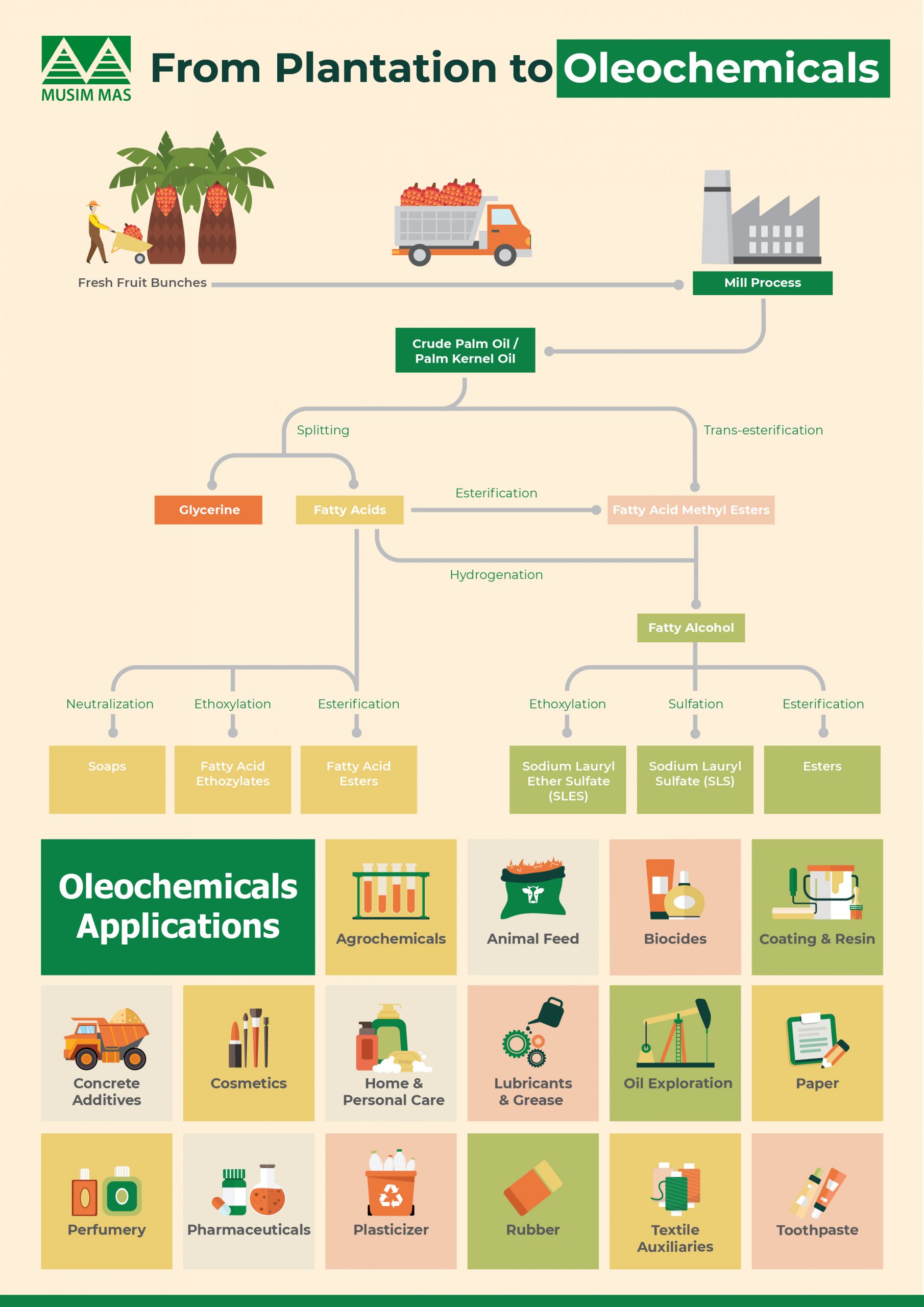
After palm fruits are processed into Crude Palm Oil and Palm Kernel Oil, the oils undergo hydrolysis to produce glycerine and palm kernel oil fatty acid. In a separate trans-esterification process, fatty alcohols are also created.
These derivatives then go towards the production of products such as cosmetics, detergents, and even concrete additives.
The flowchart below outlines how palm kernel oil fatty acids and related oleochemicals are derived and where they are commonly applied.
Read More: Substitutes for Cocoa Butter: All About the Alternatives
Ultimately, as global demand for sustainable ingredients grows, oleochemicals derived from palm oil continue to play a vital role in creating everyday products.
Their versatility and renewable origin make them an increasingly important alternative to petroleum-based chemicals across multiple industries.