By: Devane Sharma
What is MCT Oil? | Substitutes for MCT Oil | How Are MCTs Different from Other Fats? | How is MCT Oil Made? | Palm Kernel MCT Oil vs. Coconut MCT Oil: What’s the Difference? | Uses and Benefits of MCT Oil | Musim Mas’ MCT Oil Range | Sustainability You Can Trust
What is MCT Oil? A Versatile Ingredient for Health and Industry
Medium-Chain Triglyceride (MCT) oil is used in supplements as carriers and in nutritional drinks. MCT can be made from palm and coconut oil. It is seen to have benefits for improving brain function and gut health and promoting weight loss. MCT oil has emerged as an ingredient across various industries—from food and nutrition to pharmaceuticals and personal care. As consumer awareness around health and functional foods grows, consumers increasingly turn to MCT oil for its versatility, digestibility, and wellness appeal. In this blog, we unpack what MCT oil is, how it’s made, and why it matters.

MCTs are a type of fat composed of medium-length carbon chains, typically between eight and ten carbon atoms. This structure makes them easier to digest and absorb than long-chain triglycerides (LCTs) found in most dietary fats. MCT oil is a purified extract of these fats, typically derived from palm kernel oil or coconut oil.
The most commonly used MCTs in commercial products are Caprylic acid (C8) and Capric acid (C10).
These MCTs are rapidly converted into ketones by the liver, providing an immediate source of energy—a quality highly valued in ketogenic diets, sports nutrition, and clinical nutrition settings.
Substitutes for MCT Oil
While MCT oil has unique benefits, some alternatives are used in similar applications. These include long-chain triglyceride (LCT) oils such as olive, soybean, or fish oil in nutritional settings. However, these fats are absorbed slowly, require bile salts for digestion, and are processed via the lymphatic system before reaching the bloodstream. MCTs, by contrast, are absorbed quickly and directly by the liver. This metabolic efficiency gives MCTs a distinct advantage in applications that require quick energy delivery, enhanced absorption, or low digestive burden, such as sports nutrition, clinical formulations, or ketogenic diets.
Esters like isopropyl myristate or light mineral oils may serve as emollients in personal care and cosmetics. However, these substitutes often lack MCTs’ fast absorption and clean-label appeal.
For this reason, MCT oil remains the preferred choice when rapid energy delivery, easy digestion, or a neutral sensory profile is essential.
How Are MCTs Different from Other Fats?
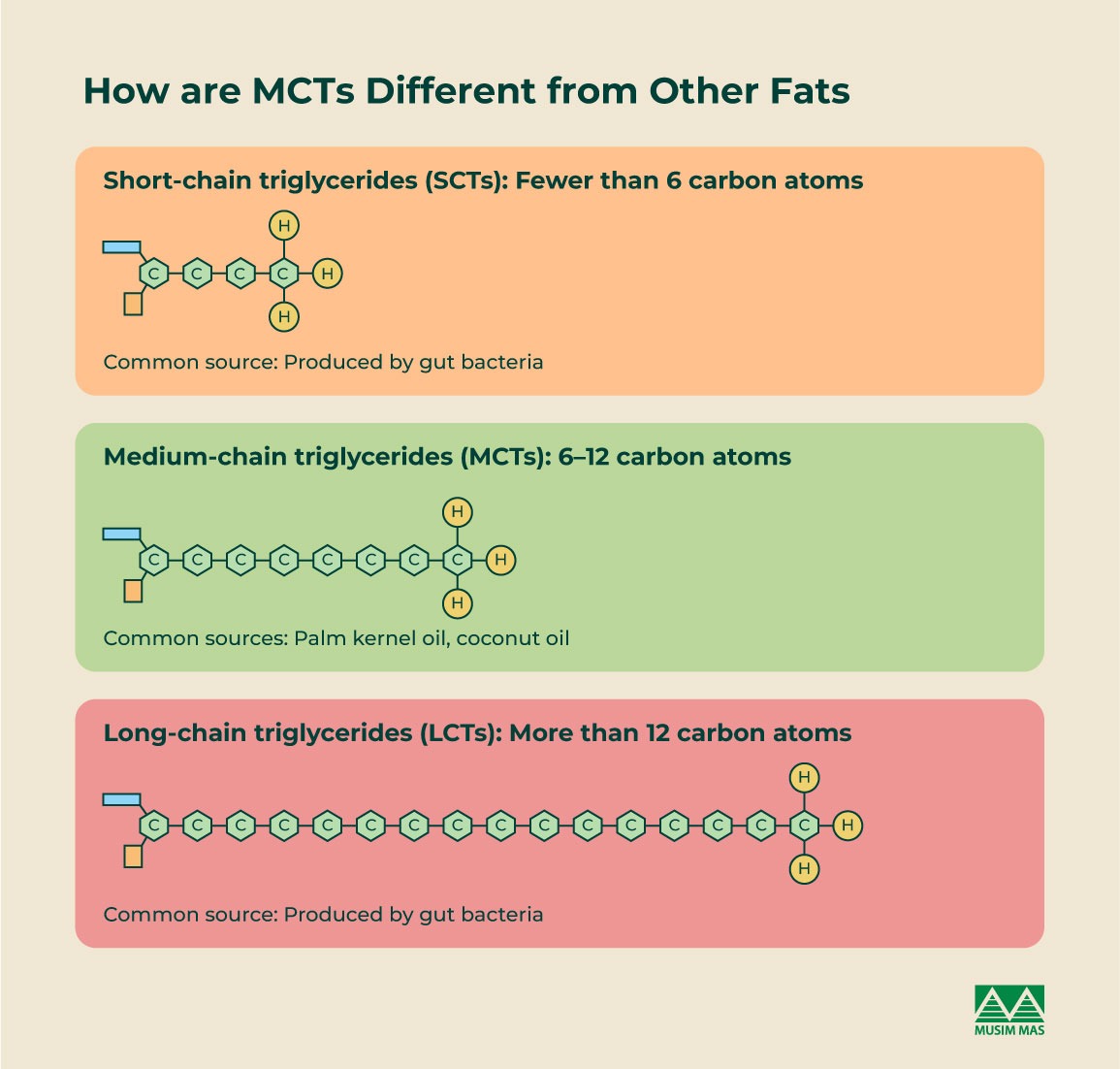
All dietary fats are made up of triglycerides, but not all triglycerides behave the same in the body. The key difference lies in the length of their fatty acid chains:
- Short-chain triglycerides (SCTs): Fewer than 6 carbon atoms
- Medium-chain triglycerides (MCTs): 6–12 carbon atoms
- Long-chain triglycerides (LCTs): More than 12 carbon atoms
Most dietary fats—like those found in olive, fish, and animal fats—are LCTs. MCTs, by contrast, are absorbed quickly and directly by the liver. This unique pathway means MCTs:
- Do not require bile salts or pancreatic enzymes for digestion
- Bypass the lymphatic system and go straight to the liver
- Are rapidly converted into ketones, an alternative energy source used by the brain and muscles
This metabolic efficiency gives MCTs a distinct advantage in applications that require quick energy delivery, enhanced absorption, or low digestive burden, such as sports nutrition, clinical formulations, or ketogenic diets.
From a formulation standpoint, MCT oils are also more stable, less greasy, odourless, and have a neutral taste compared to many LCT oils. This makes them easier to incorporate into a wide range of ingestible and topical products.
How is MCT Oil Made?
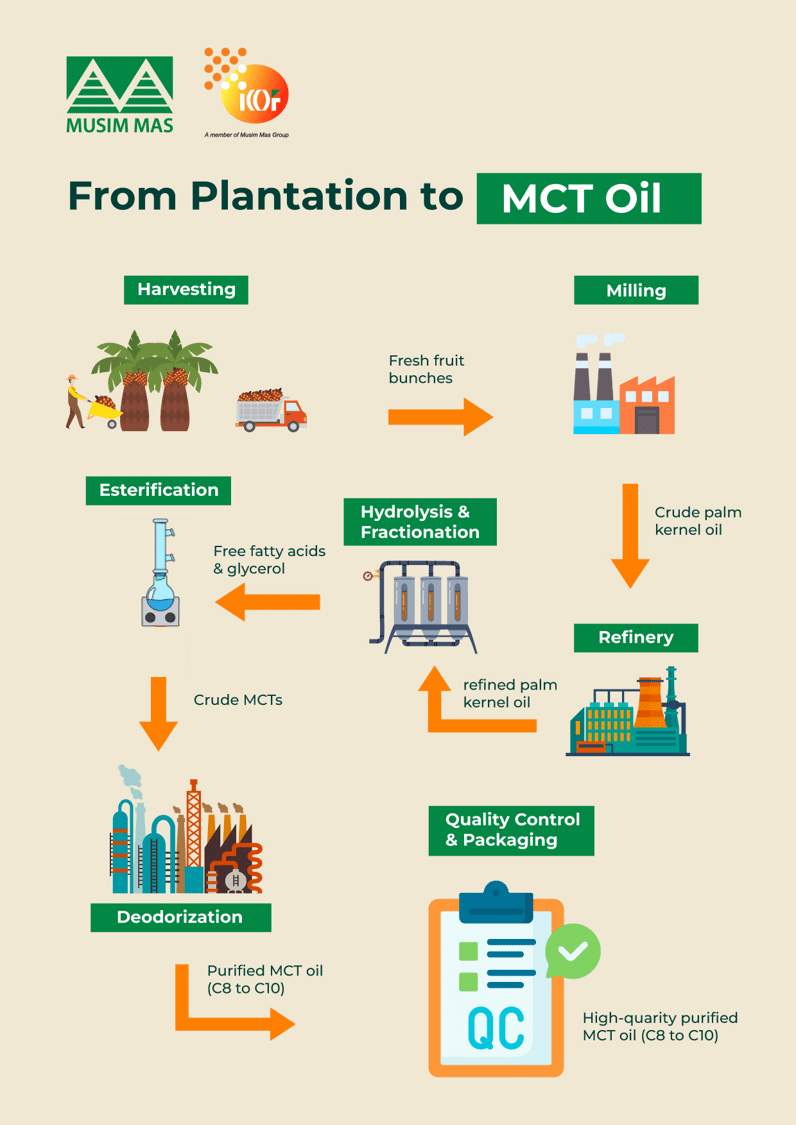
The production of MCT oil begins at the source—the oil palm tree. The process is intricate and involves several carefully controlled steps to ensure quality, purity, and sustainability at each stage.
- Harvesting
Oil palm trees bear large bunches of fruit containing flesh (mesocarp) and seeds (kernels). While the mesocarp yields crude palm oil (CPO), the kernel inside the seed produces crude palm kernel oil (CPKO), which is key to MCT oil production. - Milling
Once harvested, the fruit bunches are transported to mills for immediate processing to preserve freshness and oil quality. The kernels are separated from the fruit and cracked open. The extracted kernels are cleaned, dried, and mechanically pressed to yield CPKO. This oil is naturally rich in medium-chain fatty acids such as lauric (C12), capric (C10), and caprylic (C8) acids—the building blocks of MCT oil. - Refining
Crude palm kernel oil undergoes refining to remove free fatty acids, odors, pigments, and impurities. This typically includes degumming, neutralization, bleaching, and deodorization, resulting in refined palm kernel oil (RPKO). - Hydrolysis and Fractionation
In this step, hydrolysis of CPKO/RPKO is performed first. This breaks down the triglycerides in oils into crude fatty acids and glycerol. These fatty acids are then fractionated into different fractions into any of the following ratios: 60%C8:40%C10, 70%:30% and 80%C8:20%C10. - Esterification
The C8/C10 acids are then esterified with glycerol resulting in a mixture of crude MCTs with an excess of C8/C10 acids. After esterification, excess fatty acids are removed under vacuum to bring down the acidity level to low level. - Deodorization
Once esterified, the MCT oil undergoes deodorization using dry steam distillation under vacuum followed by bleaching sometimes with activated carbon. This removes any residual free fatty acids and volatile compounds—ensuring the final oil is odorless, tasteless and heat-stable, and suitable for sensitive applications. No chemical solvents are used at any stage, maintaining a clean-label standard. - Quality Control and Packaging
Once the MCT oil is deodorized, it undergoes final filtration, testing, and packaging under strict hygiene standards. At Musim Mas, we implement rigorous quality control at every stage of the process to ensure compliance with international pharmacopeia standards such as USP, BP, and European Pharmacopeia and quality certifications such as ISO, GMP, Halal, and Kosher.
What sets our MCT oil apart is our MCT is produced using our unique process without using catalyst-free esterification process, which eliminates the need for chemical agents. This makes our MCT oils ideal for clean-label, nutritional, and pharmaceutical applications. As part of our fully integrated supply chain, we manage every step—from plantation to packaging—ensuring full traceability, quality, and sustainable sourcing throughout.
Palm Kernel MCT Oil vs. Coconut MCT Oil: What’s the Difference?
Both palm kernel and coconut oil are natural sources of medium-chain triglycerides. While their fatty acid compositions are similar, there are a few key differences:
- Composition:
Coconut oil generally contains slightly more lauric acid (C12) and double the amount of caprylic(C8) and capric(C10) than palm kernel oil. The final composition of commercial MCT oils can be standardized to contain different proportions regardless of the source. - Functionality:
In practical terms, palm- and coconut-based MCT oils offer similar performance and benefits. When fractionated to isolate specific fatty acids like C8 and C10, there is no functional difference in digestibility, energy conversion, or taste. - Sustainability:
Palm-based MCT oil can be a more land-efficient option, producing more oil per hectare than coconut. However, sustainability concerns around palm oil production are valid. That’s why responsible sourcing is crucial. Sourcing MCTs made from No Deforestation, Peat, and Exploitation (NDPE) sources or with certification from the Roundtable on Sustainable Palm Oil (RSPO) is key. Musim Mas provides RSPO-certified sources and further discloses its sourcing, where the group adopts a traceability-to-plantation approach. This ensures that Musim Mas’ sources do not contribute to deforestation or exploitation. - Cost and Availability:
Palm kernel oil tends to be more cost-effective and readily available at industrial scales. This makes palm-based MCT oil an attractive option for manufacturers looking for performance without compromise.
In short, both sources are valid, and the choice is based on supplier integrity, sustainability credentials, and supply chain preferences.
Uses and Benefits of MCT Oil
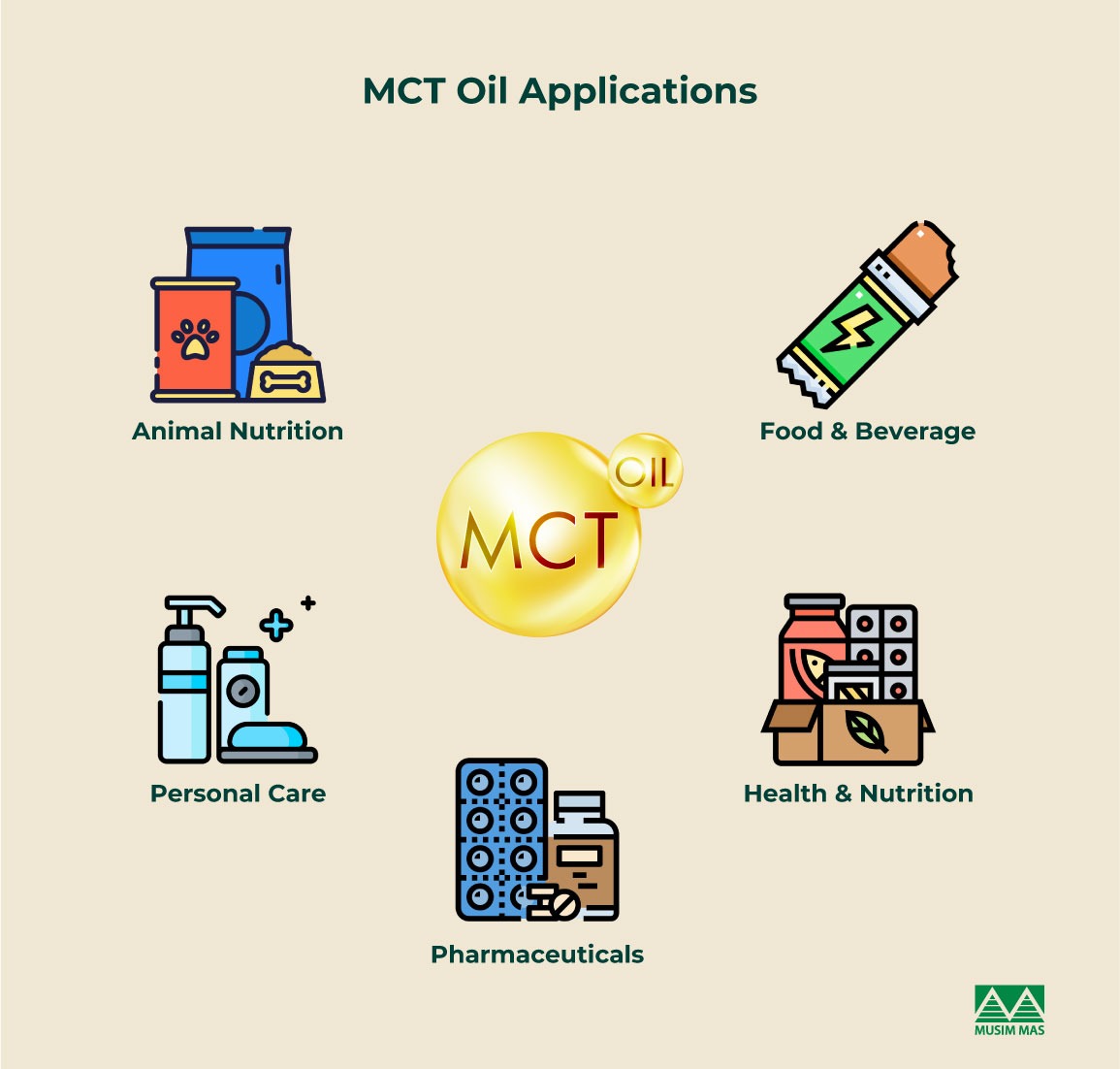
MCT oil is prized for its versatility and functional benefits, making it a valuable ingredient across various industries. Its rapid absorption, neutral flavor, and stability offer a wide range of applications:
Food and Beverage
MCT oil is commonly used in functional foods and beverages such as meal replacements, nutritional bars, energy drinks, and ketogenic-friendly products. Its ability to provide fast, sustained energy without requiring digestion by bile salts makes it ideal for products targeting athletes, health-conscious consumers, or those following low-carb diets. It is also added to coffee creamers and salad dressings, thanks to its clean mouthfeel and heat stability.
Health and Nutrition
In the health and wellness, MCT oil is used in dietary supplements for weight management, cognitive support, and energy metabolism. It is especially valued in ketogenic and paleo diets. In clinical nutrition, MCT oil is an easily digestible fat source for patients with fat malabsorption disorders or increased metabolic needs, such as those undergoing cancer treatment or managing epilepsy.
Pharmaceuticals
Pharmaceutical manufacturers use MCT oil as an excipient or carrier for fat-soluble vitamins and active pharmaceutical ingredients (APIs), improving their solubility and bioavailability. It is also used in oral suspensions and topical formulations due to its stability and mild sensory profile.
Personal Care and Cosmetics
In skincare and cosmetic formulations, MCT oil functions as a lightweight emollient. It helps deliver active ingredients, enhances skin feel, and improves product spreadability without leaving a greasy residue. It is commonly found in lotions, creams, serums, and oil-based cleansers.
Animal Nutrition
MCT oil is also used in pet food and veterinary formulations to support energy intake and fat absorption, particularly in senior pets or animals with specific dietary requirements.
Musim Mas’ MCT Oil Range
Under our MASESTER® brand, Musim Mas offers a full spectrum of MCT oil formulations to suit different needs. Our range includes:
- 99%, 98%, and 95% Caprylic acid (C8) grades for energy-focused formulations
- Balanced C8/C10 ratios such as 70% and 60% C8 for general-purpose use
All products are manufactured in ISO- and GMP-certified facilities and comply with USP, BP, and EP pharmacopeia standards. Additionally, our MCT oils are:
Whether your formulation needs a high-performance energy source or a clean, neutral carrier oil, Musim Mas delivers consistent, high-quality solutions.
Sustainability You Can Trust
Sourcing MCT oil from palm kernel oil has long raised sustainability questions. At Musim Mas, we address these concerns head-on. As one of the earliest Roundtable on Sustainable Palm Oil (RSPO) members, we’ve long championed responsible sourcing practices.
Our operations include the world’s first mill certified under RSPO’s 2018 Principles & Criteria. Sustainability isn’t an add-on—it’s built into every product we make.
With decades of experience in palm oil refining and innovation, Musim Mas is uniquely positioned to supply high-quality, sustainably sourced MCT oils at scale. Our integrated supply chain and flexible production allow us to serve bulk industrial customers and niche product developers.
If you’re formulating the next generation of functional foods, dietary supplements, or clean beauty products, our MCT oil range offers the performance, traceability, and peace of mind your business needs.
Contact us to learn more about how our MCT oil solutions can fit into your product line.