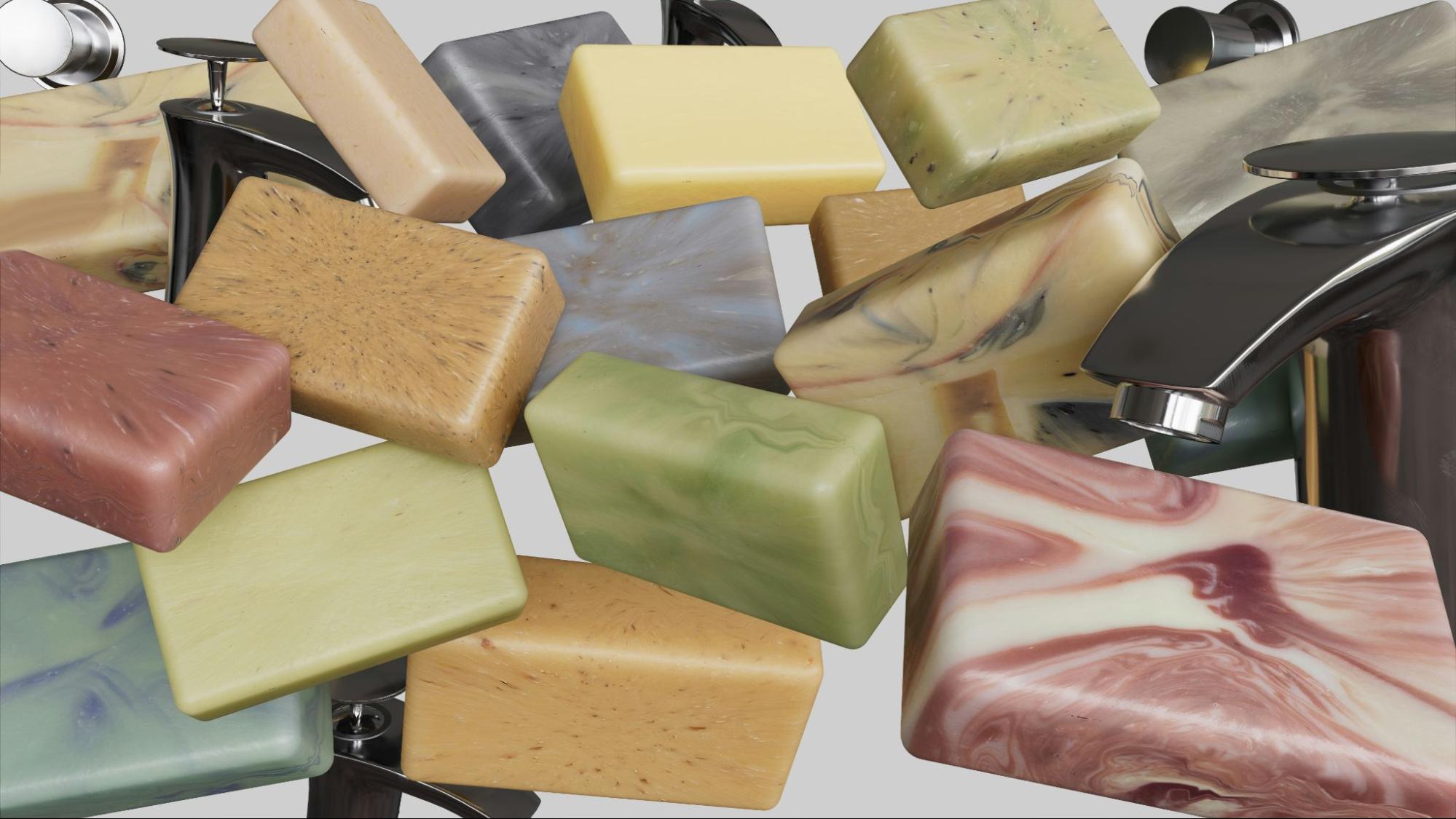
Every bar of soap, whether a premium moisturizing body bar or a high-efficiency laundry soap, starts from the same foundational material: soap noodles. For soap manufacturers, personal care producers, and procurement professionals, understanding soap noodles is essential. They are the primary raw material in large-scale bar soap production, and the quality of the noodle directly determines the quality of the finished product.
This article covers what soap noodles are, how they are produced, the key types available, and how to approach selection for your manufacturing application.
What Are Soap Noodles?
This are semi-finished soap base materials, the intermediate product between raw oils and fats and the finished soap bar. They are produced by converting fatty acids or oils into their sodium salt form, then extruding the resulting soap mass into uniform pellet-like strands, which give the product its distinctive “noodle” shape.
Chemically, soap noodles are the sodium salts of fatty acids, typically derived from plant-based oils such as palm oil and palm kernel oil, or in some markets, from animal fats (tallow). Their composition, fatty acids, alkali (sodium hydroxide), and water, determines their physical properties and suitability for downstream soap production.
From a manufacturing perspective, soap noodles offer significant advantages over processing raw oils directly. Their uniform shape and controlled moisture content make them easy to handle, blend, and process on standard soap finishing lines. Manufacturers can focus on value-added steps, adding fragrances, colorants, moisturizers, or specialty actives, without managing the complexity of full saponification in-house.
How Are Soap Noodles Made?
Soap noodle production begins with saponification, the chemical reaction between fats or oils and an alkali (typically sodium hydroxide) that produces soap and glycerol. There are two primary production routes:
- Direct Saponification (Full Boiled Process)
In this method, whole oils or fats are reacted directly with alkali under controlled conditions. The full boiled process allows for efficient glycerol recovery as a co-product, and it is commonly used in large-scale integrated oleochemical facilities. The resulting soap mass is then dried, plodded, and extruded into noodle form.
- Fatty Acid Neutralization Route
In this approach, fatty acids (derived from oil splitting and distillation) are neutralized with sodium hydroxide to produce soap. This method offers more precise control over the fatty acid composition of the final noodle, making it particularly well-suited for premium toilet soap grades. The resulting soap is similarly dried and extruded into noodle form.
For context on how palm oil is processed into fatty acids and oleochemicals, see our overview of how palm oil is made into oleochemicals.
Across both routes, quality control at each stage, including moisture content management, whiteness, and Total Fatty Matter (TFM) measurement, is critical to producing a consistent, high-quality noodle.
Types of Soap Noodles

(Unsplash/Annie Spratt)
Soap noodles are classified by their intended application and their key physical and chemical properties. The most important differentiation criteria are TFM content and oil blend ratio.
-
Toilet Soap Noodles
This are formulated for personal hygiene and cosmetic bar soap applications. They are typically produced using an 80:20 blend of palm oil (or palm stearin) and palm kernel oil (or coconut oil). Which delivers a balance of structural hardness and lathering performance. TFM content in toilet grade noodles is generally 78% and above, indicating a high soap content and superior cleansing efficacy.
Available in Snow White and off-white grades, reflecting the purity of the raw material inputs. They readily accept fragrances, botanical extracts, and skin-care actives, making them a versatile base for differentiated product development.
2. Laundry Soap Noodles
Designed for detergent performance, laundry soap noodles prioritize cleaning power over skin-care properties. They typically have a lower TFM (around 72%) and may incorporate a higher proportion of palm stearin or tallow-derived fatty acids for robust stain removal characteristics. Laundry noodles are the base material for bar laundry soaps and household cleaning products.
3. Multipurpose and Specialty Grades
Some manufacturers source multipurpose soap noodles (sometimes called “swing” noodles) which offer flexible formulation capability between toilet and laundry grades. Specialty soap bases, including transparent noodles and medicated grades, cater to niche applications such as luxury cosmetic bars, herbal soaps, and pharmaceutical-grade products.
Understanding TFM in Soap Noodles
Total Fatty Matter (TFM) is one of the most important quality parameters in soap noodle specification. It refers to the percentage of fatty matter, the active cleansing component, in the soap noodle, and it directly correlates with the soap’s cleansing performance and grade classification.
Higher TFM values indicate a higher soap content and generally better lathering and cleansing properties, but they also come with a higher raw material cost. Standard TFM grades in the market typically range from 68% (economy/laundry grade) to 78% and above (premium toilet and cosmetic grades). Selecting the appropriate TFM for your product positioning is a foundational sourcing decision.
Applications of Soap Noodles

(Source: Unsplash/Matthew Tkocz)
Soap noodles serve as the base material across a wide range of end-use soap products:
- Bar soap manufacturing for personal hygiene. Toilet soap noodles are the standard base for daily hygiene bars, including antibacterial, moisturizing, and herbal variants.
- Laundry and household cleaning products. Laundry soap noodles are processed into bar detergents for fabric care and general cleaning applications, particularly in developing markets where bar format cleaning products remain dominant.
- Industrial and institutional cleaning. Are used in the formulation of industrial hand soaps and heavy-duty cleaning bars for institutional use.
- Branded soap product development. Allow brand owners and contract manufacturers to develop and scale custom soap formulations efficiently, since the base saponification work has already been completed upstream.
How to Choose the Right Soap Noodles
For procurement and formulation teams evaluating soap noodles for a specific application, the following criteria provide a structured starting point:
Total Fatty Matter (TFM)level. Match TFM to your product category positioning. Premium personal care bars typically require 78% TFM or above; laundry and economy grades can work with lower TFM specifications.
Oil blend ratio. The ratio of palm oil to palm kernel oil (or coconut oil) affects lathering, hardness, and skin feel. Evaluate the blend against your product requirements.
Physical properties. Moisture content, whiteness, and noodle hardness all affect processing performance on your finishing lines. Request technical data sheets and test runs where possible.
Supplier certifications and traceability. For sustainability-conscious brands and regulated markets, look for RSPO certification and verified traceability back to the palm oil source. Halal and Kosher certifications may also be relevant depending on your target market.
Frequently Asked Questions
What are soap noodles made of?
Primarily composed of sodium salts of fatty acids, water, and trace amounts of residual glycerol. They are produced from vegetable oils (most commonly palm oil and palm kernel oil, or coconut oil) or animal fats, reacted with sodium hydroxide through a saponification process.
How are soap noodles produced?
Produced via either direct saponification of whole oils or fatty acid neutralization. Both routes involve reacting fats or fatty acids with sodium hydroxide, followed by drying to the desired moisture level and extrusion into noodle form.
What are this used for?
The primary raw material in the production of bar soaps, including toilet soaps, laundry bars, cosmetic bars, and industrial cleaning soaps. Soap manufacturers blend soap noodles with additives such as fragrances, pigments, and active ingredients to produce finished soap products.
Why are palm-based soap noodles widely used?
Palm oil and palm kernel oil are the dominant raw materials for soap noodle production globally, particularly in Southeast Asia. Palm oil provides hardness and lathering stability, while palm kernel oil contributes to foam quality. Palm-based soap noodles are also biodegradable, renewable, and available in RSPO-certified form. Supporting both performance and sustainability goals for soap manufacturers worldwide.
Source High-Quality Soap Noodles from Musim Mas
Musim Mas produces high-quality soap noodles derived from refined vegetable oils, serving soap manufacturers across personal care, toiletries, laundry, and specialty applications. Our soap noodles are available in customizable specifications to meet the precise requirements of your formulation and scale.
As a fully integrated palm oil company, we offer traceability from plantation to product. With RSPO certification available across our supply chain. Explore our product page or visit our Fatty Acids product page. And understand the upstream ingredients that go into our soap noodle production. Contact us today to discuss your sourcing requirements.