By: Chang Rui Jia
What Is Chocolate Tempering? | The Importance of Chocolate Tempering | The Science of Cocoa Butter Crystals | Chocolate Tempering Process | Chocolate Tempering Methods | How to Check If Chocolate Is Properly Tempered | What Happens If Chocolate Is Not Properly Tempered? | Do All Chocolates Need Tempering? | Optimizing Quality Amid Rising Cocoa Prices
Chocolate lovers expect that glossy sheen, firm snap, and smooth texture in every bite. For manufacturers, achieving this consistently comes down to one critical process: chocolate tempering. At Musim Mas, we combine technical expertise with innovation to help the confectionary industry master tempering for reliable quality and consumer satisfaction.
What Is Chocolate Tempering?
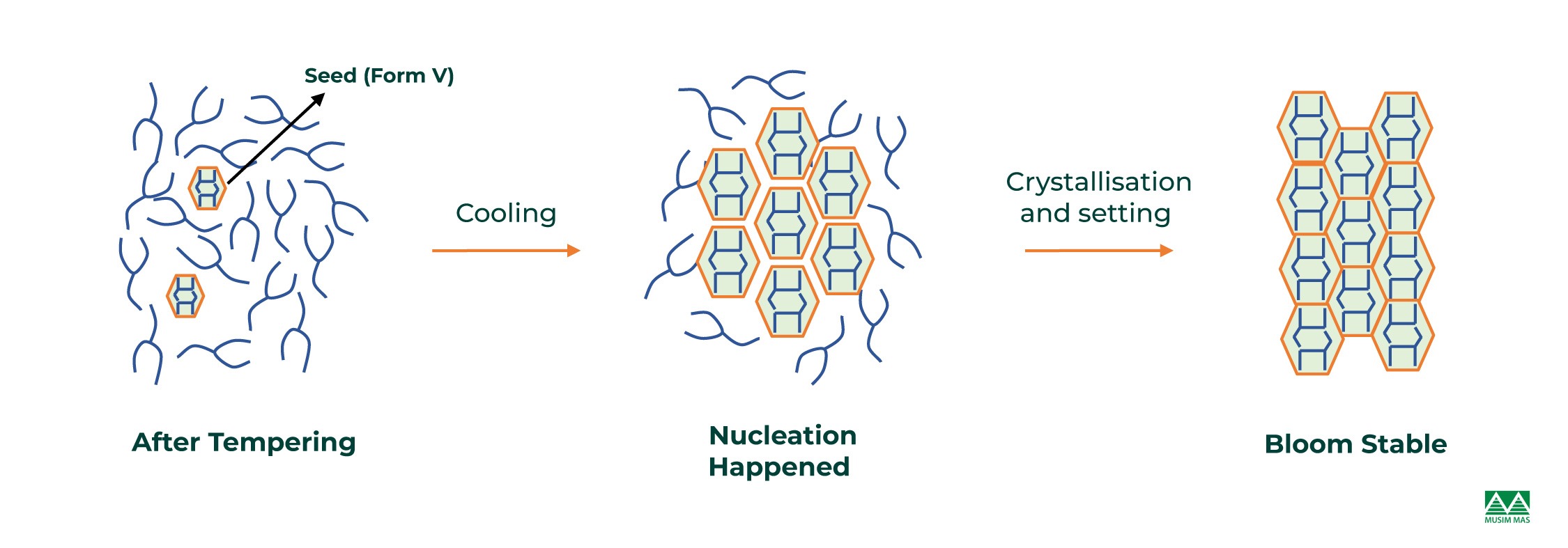
Chocolate tempering is the controlled cooling and mixing of chocolate to form stable seed crystals. Specifically, tempering aims to create Form V (β2) cocoa butter crystals, which provide the chocolate’s glossy finish and snappy texture.
The Importance of Chocolate Tempering
Tempering isn’t optional—it’s essential for premium chocolate manufacturing. Proper tempering ensures:
- Appearance: Glossy appearance that attracts consumers at first sight.
- Texture: Snappy texture that enhances eating quality.
- Shelf life: Extension by reducing fat bloom.
- Processing: Efficient de-molding during industrial production.
The Science of Cocoa Butter Crystals
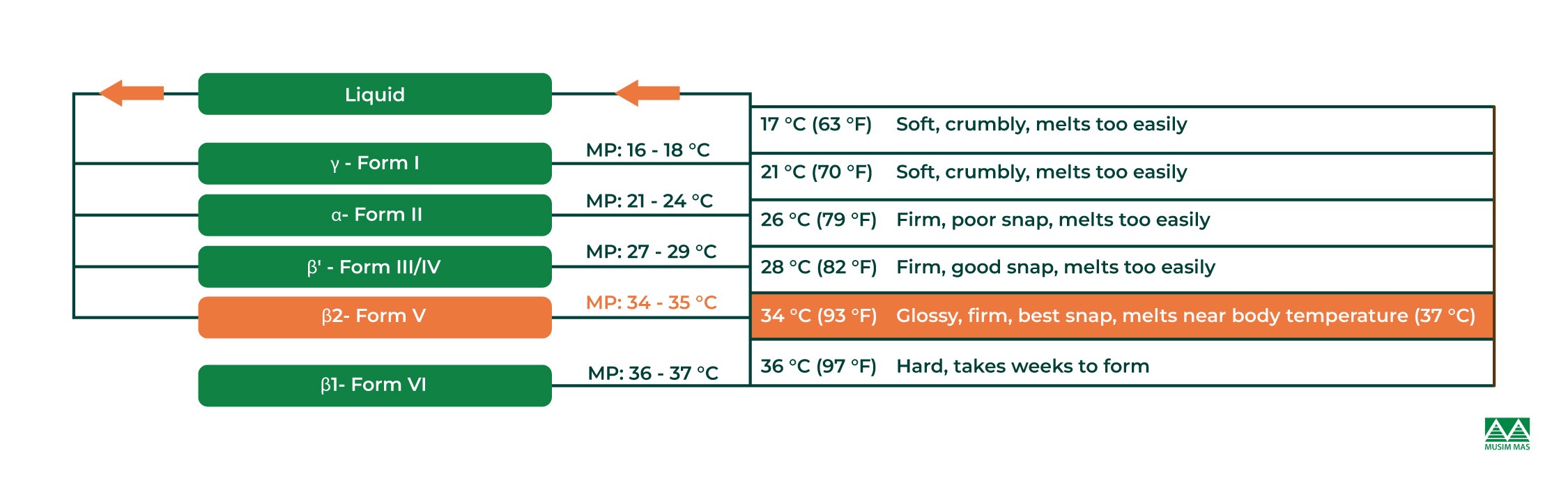
Cocoa butter is polymorphic, meaning it crystallizes into different forms. Only one is ideal for chocolate production:
- Form I & II: Melt below 24°C, unstable.
- Form III & IV: Melt too easily when handled.
- Form V (β2): Ideal form, stable, glossy, with a firm snap.
- Form VI: Highly stable but takes weeks to develop.
The key to quality chocolate is stabilizing Form V (β2) crystals, which balance texture, gloss, and durability.
Chocolate Tempering Process
Tempering involves carefully controlled temperature stages:
- Melting (40–45°C): Chocolate is fully melted with no crystals present.
- Cooling (<20°C): All crystal forms (I – V) are generated.
- Reheating (29–32°C): Unstable crystals (I – IV) melt, leaving only stable Form V.
At this stage, chocolate is ready for molding or coating, delivering a premium glossy and snappy finish.
Chocolate Tempering Methods
Different methods can be used depending on the scale of production:
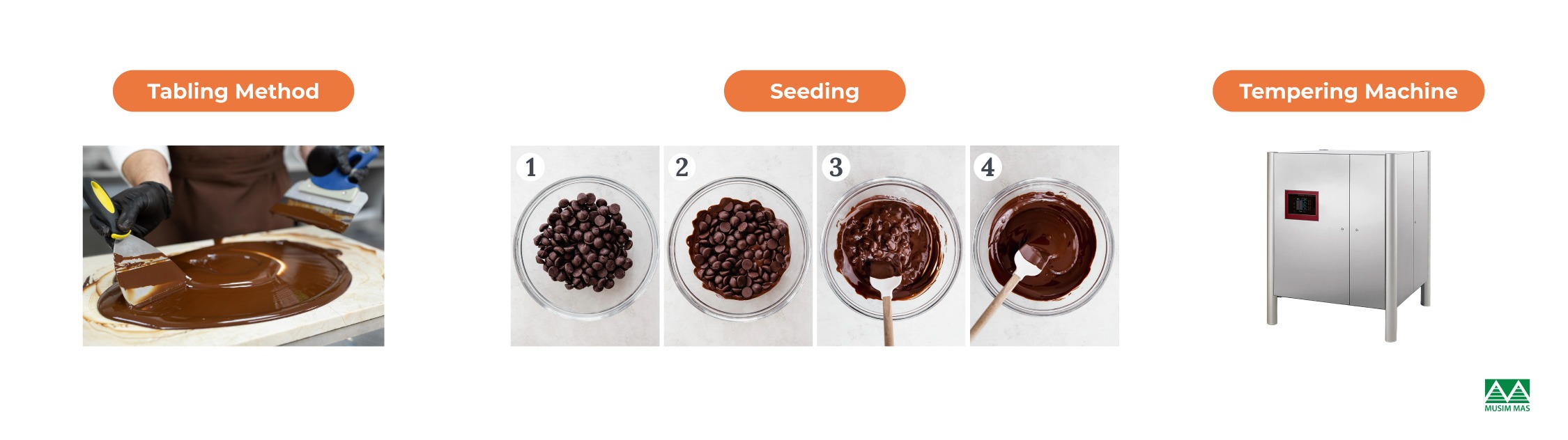
- Tabling Method: Cooling chocolate on a marble slab before re-incorporation.
- Seeding Method: Adding stable crystals to melted chocolate.
- Tempering Machine: Industrial equipment for consistency at large scale.
How to Check If Chocolate Is Properly Tempered
Manufacturers can verify tempering success through:
- Temper meter analysis: Measures temper index for precision.
- Practical cues: Chocolate thickens in viscosity, works at ≤32°C, and solidifies with a glossy, snappy finish.
What Happens If Chocolate Is Not Properly Tempered?
Poorly tempered chocolate negatively impacts both manufacturing efficiency and consumer experience:
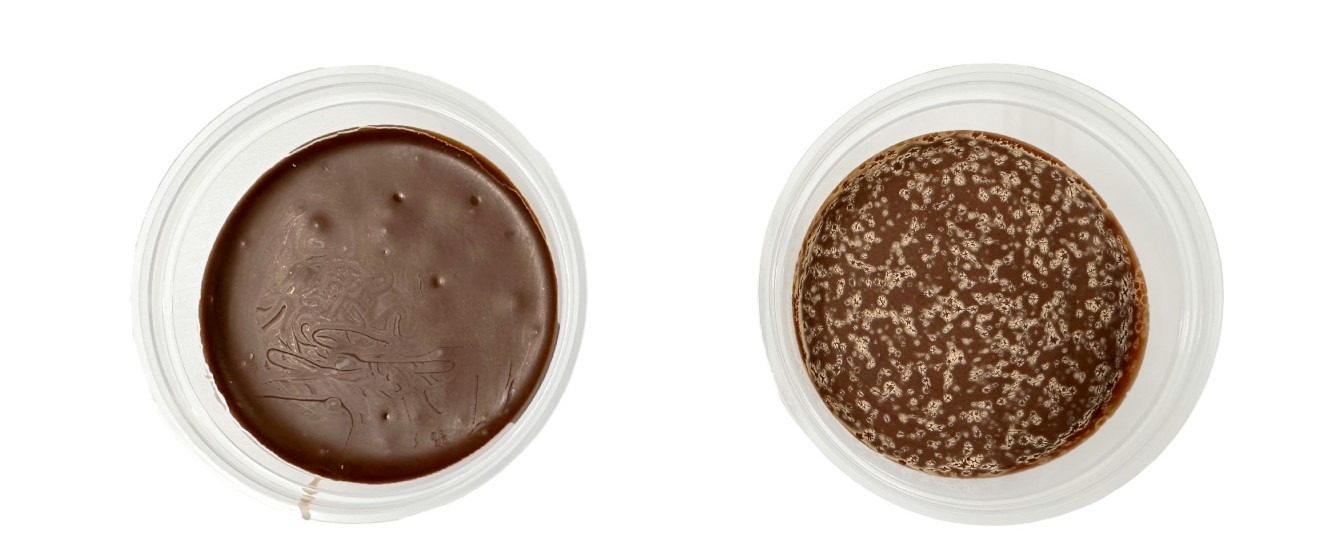
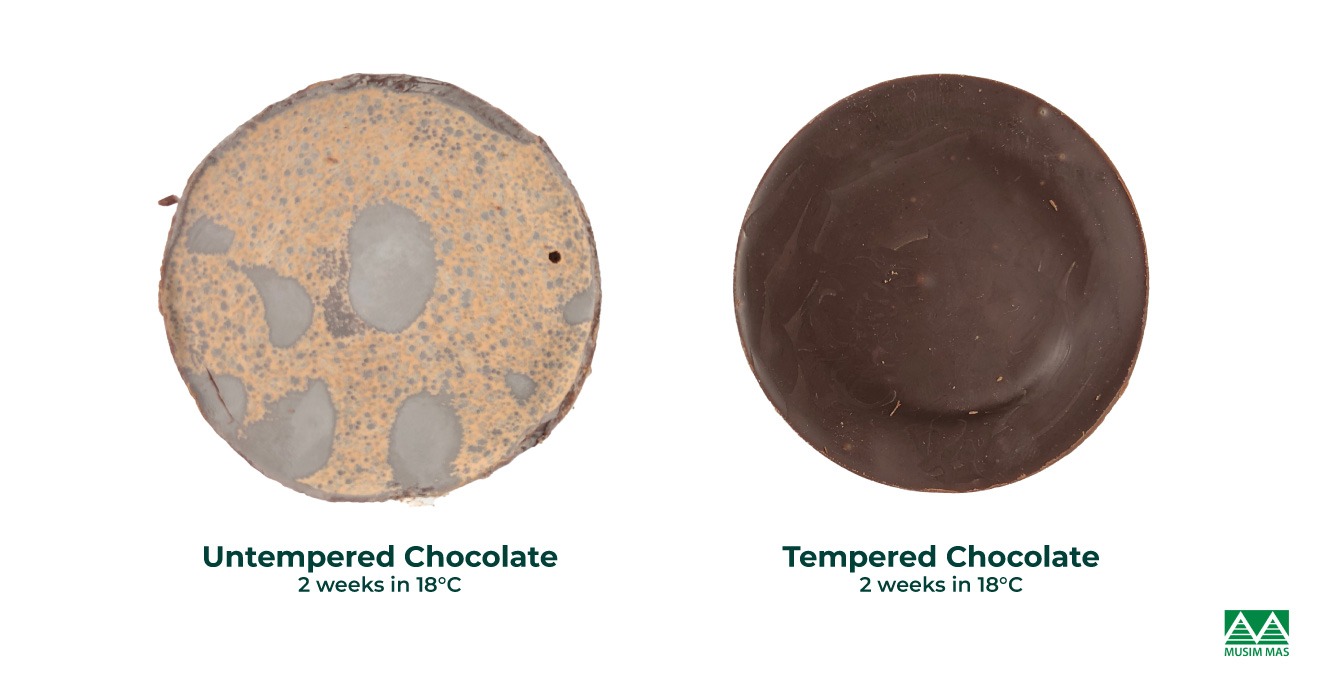
- Chocolate bloom: White streaks appear quickly, reducing shelf life.
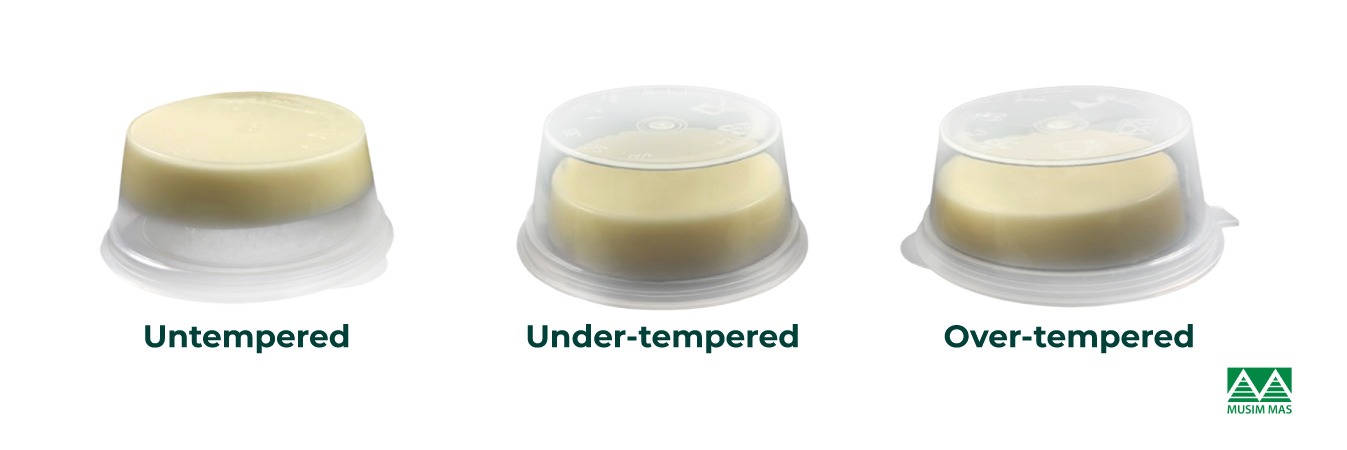
- Difficult de-molding: No crystalline contraction, causing production issues.
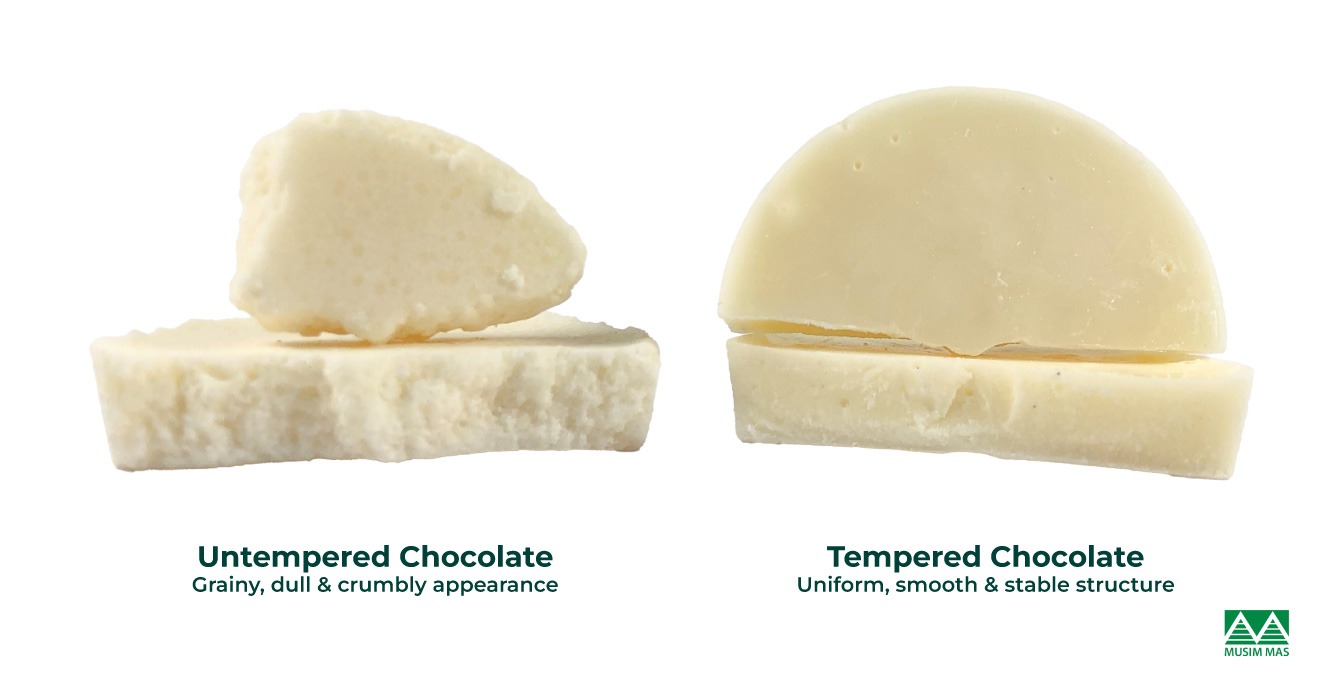
- Grainy mouthfeel: Large, unstable crystals disrupt texture.
x
Do All Chocolates Need Tempering?
Only chocolates or compounds made with Cocoa Butter (CB) or Cocoa Butter Equivalents (CBE) require tempering. Chocolates made with alternative fats, such as Cocoa Butter Substitutes (CBS) or Cocoa Butter Replacers (CBR), may not require this step.
Optimizing Quality Amid Rising Cocoa Prices
With cocoa prices reaching record highs, manufacturers face increasing pressure to maintain product quality while managing production costs. This is where Musim Mas’ CBE CHOCO® range and MASEMUL® PGPR 9090 make a difference:
CBE CHOCO® 43
A Cocoa Butter Equivalent (CBE) similar to West African cocoa butter, it delivers a smooth, melt-in-your-mouth experience. Ideal for creamy fillings, ganache and fine chocolate applications where mouthfeel is critical. Suitable for use from 5% up to full cocoa butter replacement.
CBE CHOCO® 48
A versatile, well-balanced CBE with physical properties equivalent to cocoa butter. It is perfect for general-purpose chocolates, panned products, and coatings, supporting 5% up to full cocoa butter replacement.
CBE CHOCO® 60
A Cocoa Butter Improver (CBI) designed to enhance the hardness and heat stability of chocolate products. Typically used at around 5% replacement alongside CBE, it balances softness while improving heat resistance.
MASEMUL® PGPR 9090
A high-performance Polyglycerol Polyricinoleate (PGPR) emulsifier engineered to enhance chocolate processing efficiency. It significantly reduces viscosity and yield value, allowing manufacturers to lower cocoa butter content without compromising texture or mouthfeel.
By improving flow properties, MASEMUL® PGPR 9090 ensures smoother molding, enrobing, and coating processes. It strikes the ideal balance between quality and cost-efficiency, supporting the production of premium chocolates that remain competitive in today’s demanding market.
Tempering chocolate is both an art and a science—one that determines whether chocolate products meet consumer expectations for quality, texture, and shelf life.
At Musim Mas, we support food manufacturers worldwide with deep expertise in fats, oils, and functional ingredients—helping you bring moments of goodness through perfectly tempered chocolate.