By: Devane Sharma
Index
- What Is a Landscape-Based Approach?
- Why NDPE Alone Is Not Enough
- Our Landscape-Based Approach: Three Interconnected Pillars
- Why Collaboration Is Essential
- Landscape Approaches by Region
- Supporting Climate Action
- Frequently Asked Questions (FAQ)
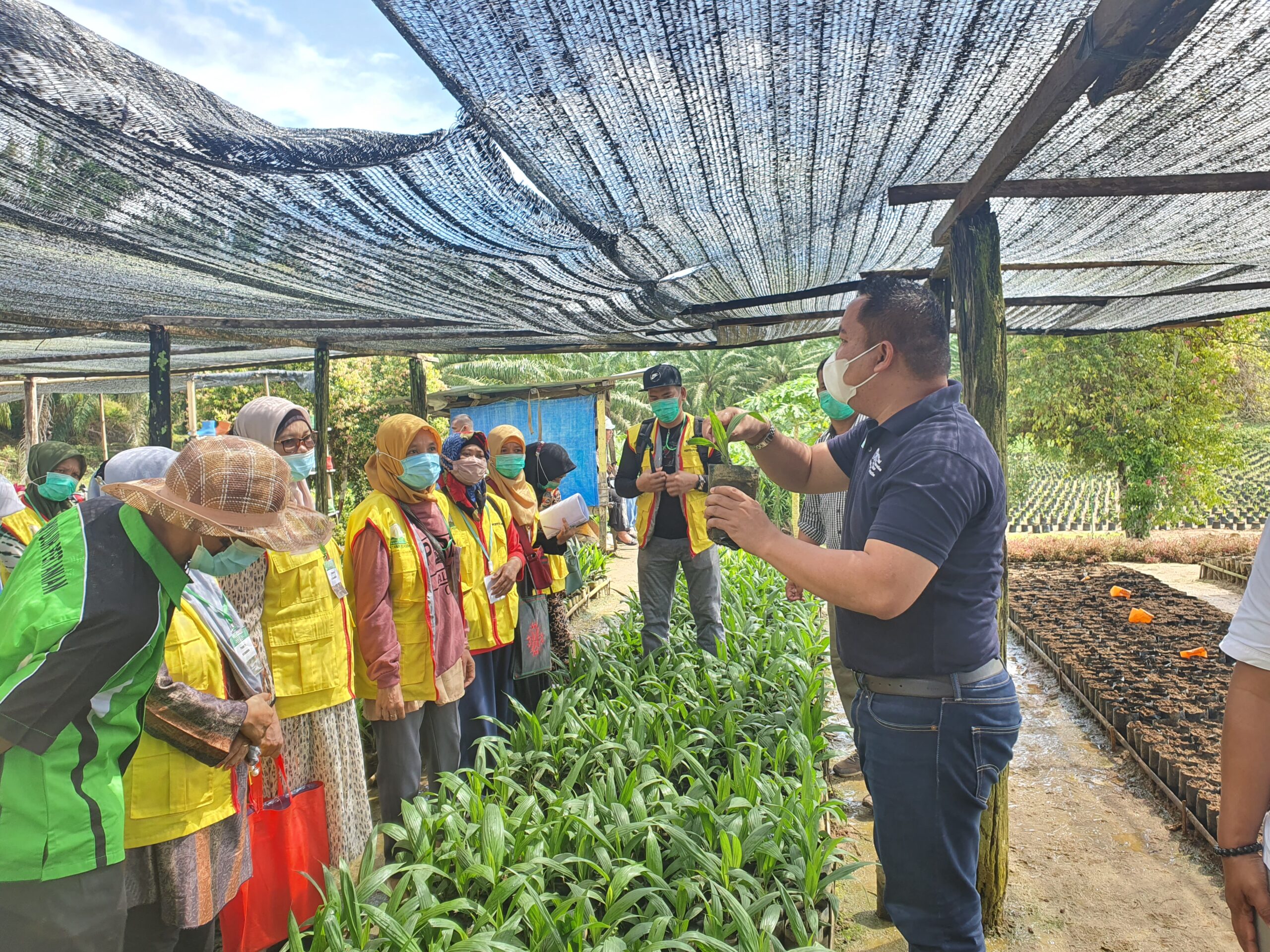
A training session on Good Agricultural Practices, an essential component of NDPE
For more than a decade, No Deforestation, No Peat, No Exploitation (NDPE) policies have shaped responsible palm oil production. NDPE has helped transform the sector by setting clear expectations for suppliers, improving transparency, and enabling companies to identify and address sustainability risks within their supply chains.
At the same time, NDPE policies are primarily implemented at the company and supply-chain level. While this approach is effective in driving compliance and accountability, many deforestation risks originate beyond the direct control of any single company. In complex production areas, smallholders, communities, forests, and multiple commodities often coexist across shared geographies, with overlapping sourcing relationships and land-use pressures.
Addressing these systemic challenges requires moving beyond an individual company perspective toward collaborative, landscape-level action. This is why Musim Mas has been advocating for a landscape-based approach — one that complements NDPE by bringing together governments, suppliers, buyers, communities, and other stakeholders to address shared risks, prevent deforestation before it occurs, and support sustainable livelihoods across entire production landscapes.
What Is a Landscape-Based Approach?
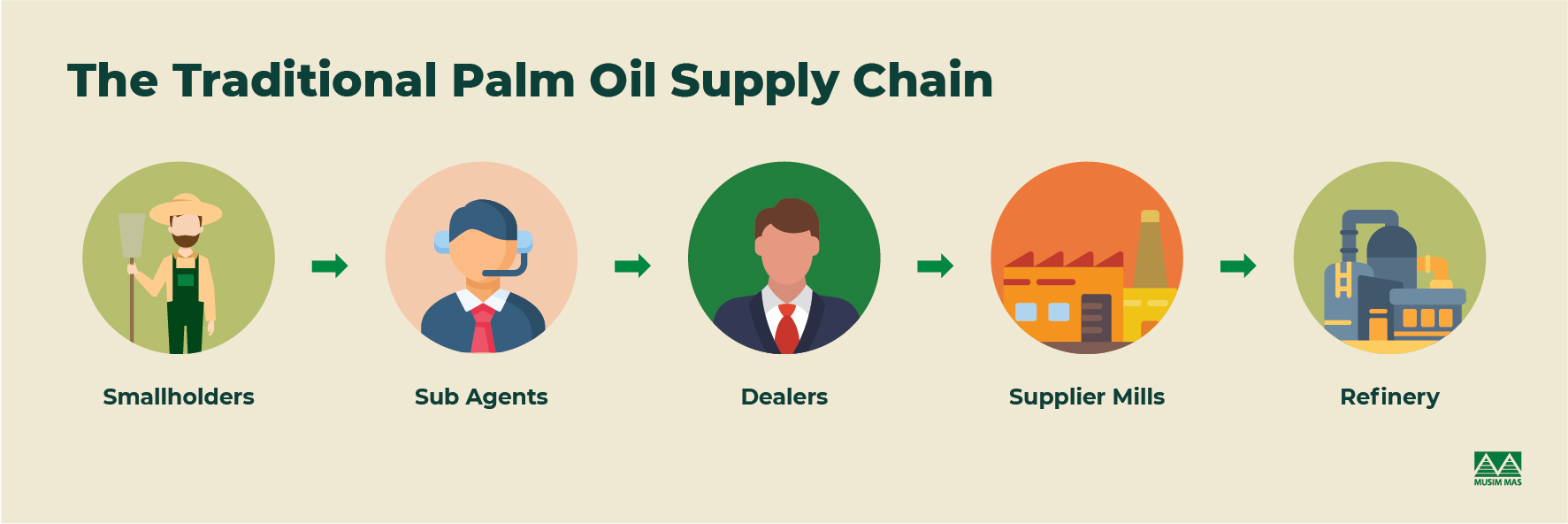
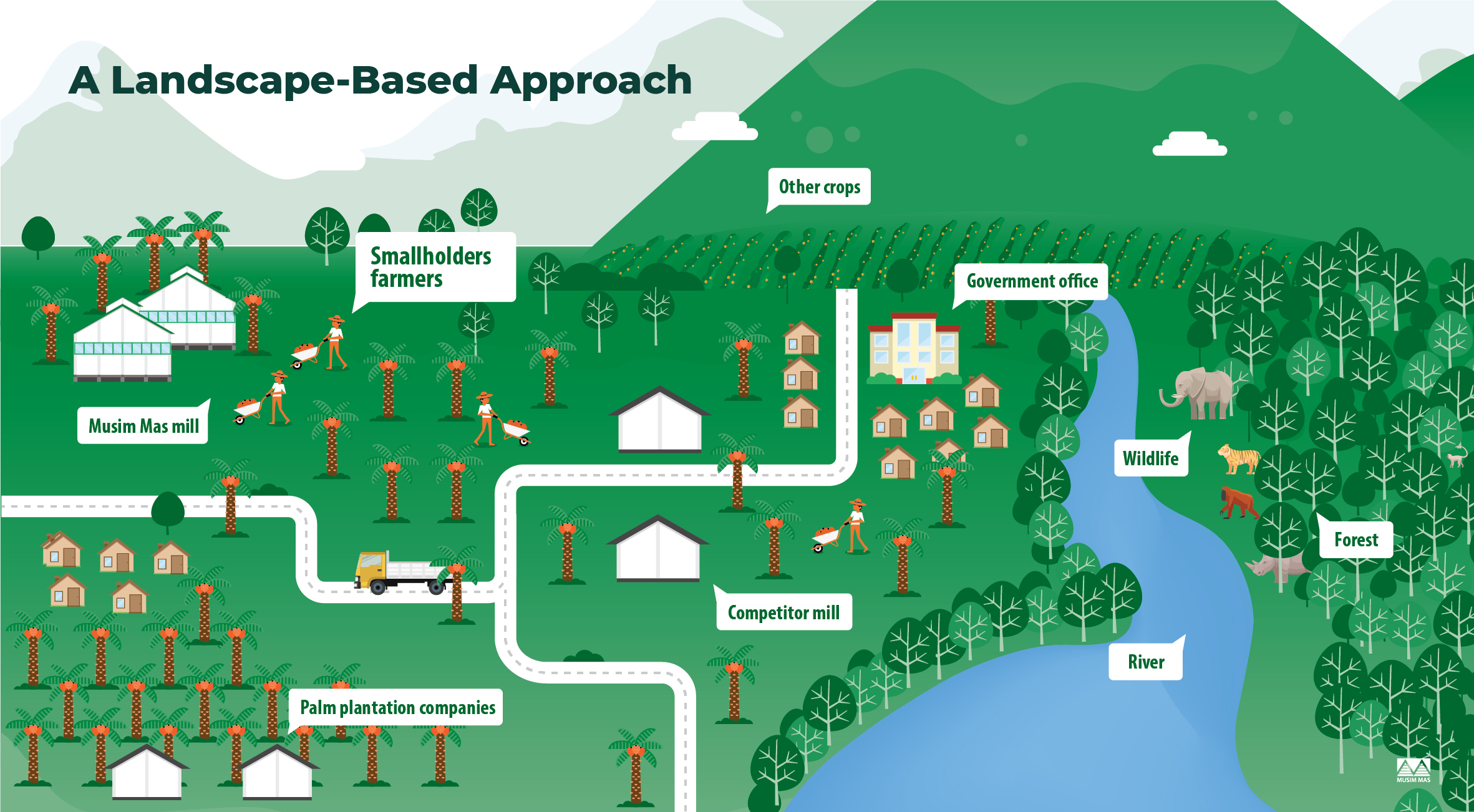
In simple terms, a landscape-based approach is about getting different stakeholders across the supply chain in a particular area to work together and jointly address environmental and social challenges.
A landscape-based approach looks at a geographic area holistically rather than as individual plantations or units. It recognises that environmental and social challenges are interconnected and must be addressed collectively. This includes climate change, economic pressures, among others. More importantly, landscape approaches help reconcile competing land-use priorities — such as agricultural production, forest conservation, and community development within the same geographic area.
In palm oil–producing regions, landscapes typically include:
- Smallholder farms and villages
- Company-managed and third-party plantations
- Forests, peatlands, and conservation areas
- Local governance including systems and land-use planning
Instead of managing risks in isolation, a landscape approach brings together stakeholders to address the root causes of deforestation, such as low productivity, limited access to training, land-use pressures, and governance gaps.
International organisations and sustainability experts — including the Center for International Forestry Research and World Agroforestry (CIFOR-ICRAF), Proforest, the UN Food and Agriculture Organization (FAO), IDH, and the Tropical Forest Alliance — increasingly recognise landscape and jurisdictional approaches as essential for achieving deforestation-free supply chains while supporting rural livelihoods.
Why NDPE Alone Is Not Enough
NDPE remains the foundation of Musim Mas’ responsible sourcing commitments. However, in practice, deforestation often occurs outside formal plantation boundaries. While such land-use change may be small in isolation, it can accumulate over time and result in significant impact.
When deforestation originates with smallholders, it is important to recognise that it is often driven by economic pressures and limited access to resources, rather than intentional non-compliance. These challenges are further compounded in landscapes with overlapping sourcing areas, where multiple buyers and commodities operate side by side.
A landscape-based approach complements NDPE by addressing these risks before deforestation occurs. It shifts the focus from enforcement to prevention — strengthening local capacity, improving livelihoods, and fostering shared responsibility across the landscape.
Our Landscape-Based Approach: Three Interconnected Pillars
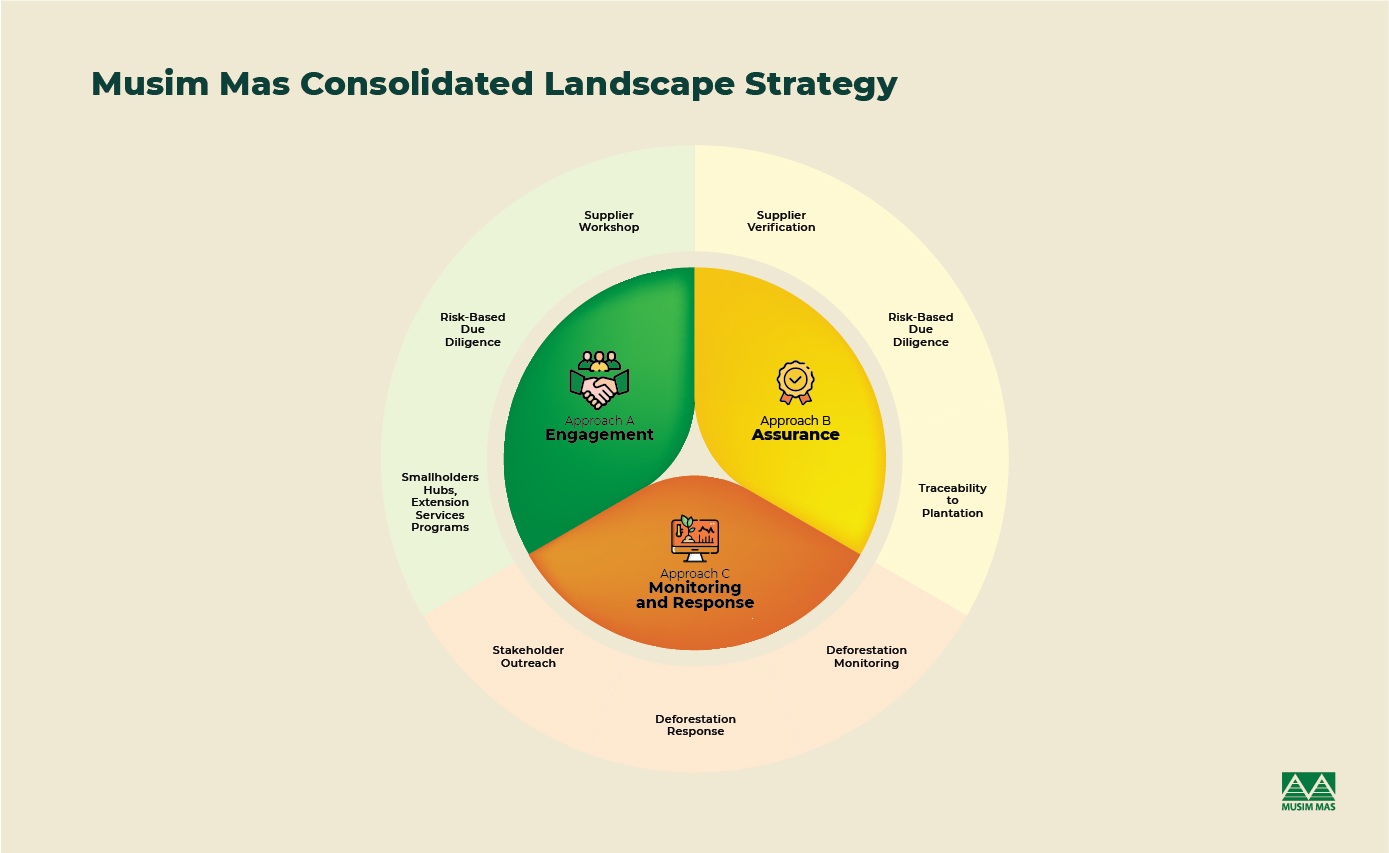
To apply this thinking consistently, Musim Mas has developed a comprehensive three-pronged framework that guides our landscape-based work across priority sourcing regions: Engagement, Assurance, and Monitoring & Response.
1. Engagement: Strengthening Capacity and Shared Responsibility
Engagement is the foundation of our landscape approach. Preventing deforestation requires people — smallholders, suppliers, communities, and local authorities — to have the knowledge, incentives, and support to adopt sustainable practices. Musim Mas’ key engagement initiatives include:
Smallholder Hubs: Our Smallholder Hubs provide on-the-ground training and extension services to independent smallholders. These hubs focus on:
- Good agricultural practices: Yield improvement and farm productivity from simple improvements in agricultural practices. For example, cleared vegetation and fronds from pruning can be stacked to return nutrients to the soil.
- Responsible fertiliser use: Learning to optimize fertilizer use is important to ensure the plants get sufficient nutrients without using too much which results in wastage, pollution, and potential disease.
- Environmental awareness and legality: By improving productivity and resilience, smallholders are better able to sustain their livelihoods without expanding into forested areas.
Supplier Workshops and Outreach: We work closely with suppliers through workshops and field engagement to strengthen understanding of NDPE requirements, traceability expectations, fire prevention, and environmental management.
Community and Village Engagement: Engaging communities helps align sustainability goals with local community needs, development priorities, and encourages collective responsibility for forest protection and land-use decisions.
2. Assurance: Embedding Responsible Sourcing at Scale
Assurance ensures that sustainability expectations such as NDPE compliance are met with robust systems and procedures. This includes:
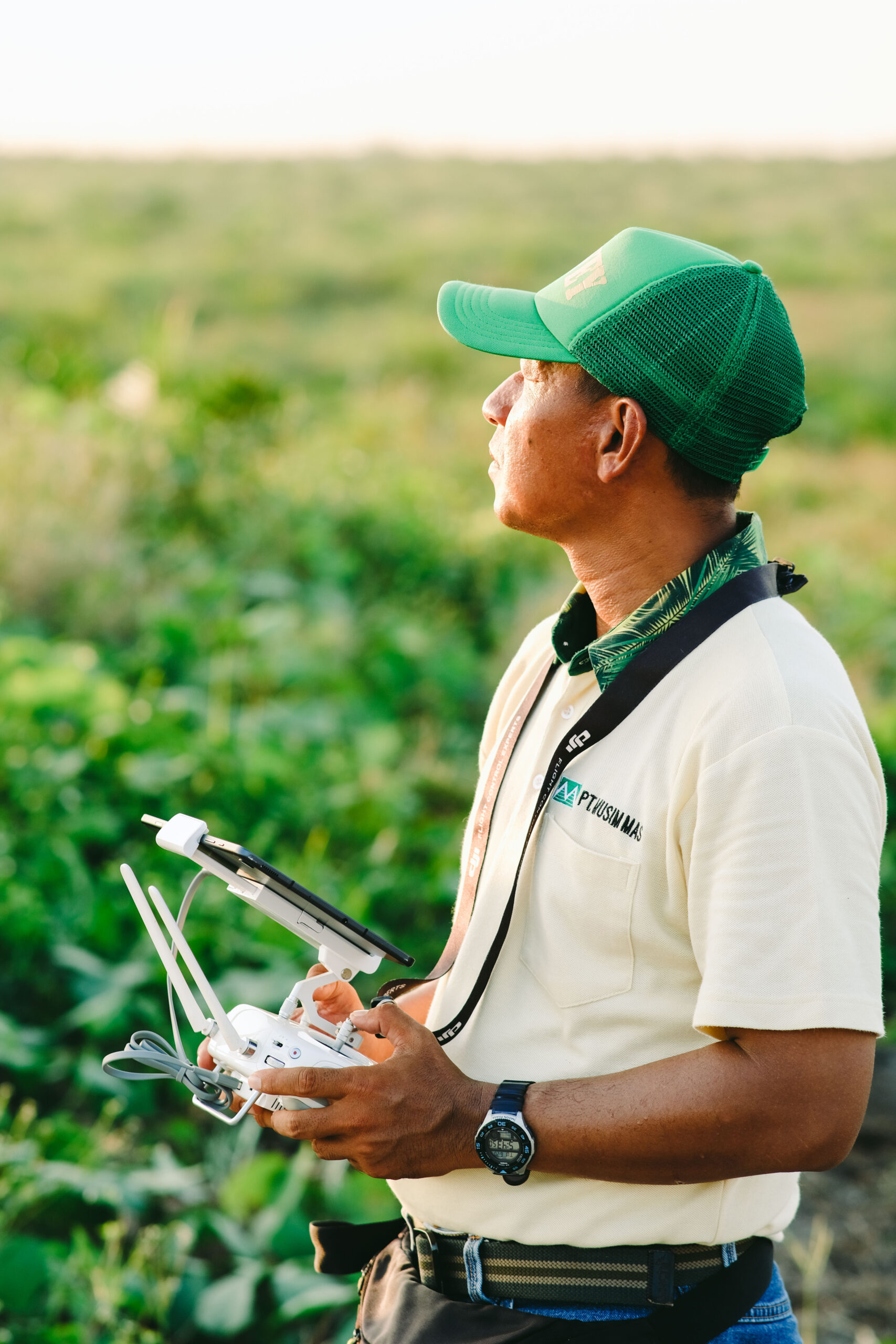
Deforestation risk monitoring
Supplier Verification: Field-based assessments evaluate supplier compliance with NDPE commitments, legality, and environmental management practices.
Traceability to Plantation (TTP): Traceability systems help identify the origins of Fresh Fruit Bunches (FFB), including through intermediaries and informal traders — an essential component of landscape-level risk management. All supplying mills have completed comprehensive supply shed and FFB-source audits. As of 2024, we have achieved 100% TTP in all regions, except North Sumatra (96%) and Central Kalimantan (94%).
Risk-Based Due Diligence: Musim Mas launched its NDP Risk Management Framework in 2021. It classifies suppliers into low, medium, or high-risk based on TTP data that is overlaid with supply shed maps that include High Conservation Value (HCV) and peat areas. Suppliers with close proximity to such areas are classified as high risk. This enables targeted, efficient use of resources. As of 2024, 34 of 388 mills across our supply base are classified as medium risk, while none are currently deemed high risk as of the time of writing.
Grievance Mechanisms: For non-compliance, we initiate corrective action. For critical cases, Musim Mas activates the Controlled Purchase Protocol (CPP). It is a structured process to evaluate supplier actions and monitors the progress of their action plans to resolve issues effectively.
3. Monitoring & Response: From Reaction to Anticipation
Monitoring and response systems allow Musim Mas to identify and address risks early — before they escalate.
Landscape-Scale Monitoring: Satellite-based tools monitor land-use change across entire landscapes, not only within supplier concessions. This provides early warning signals of emerging deforestation risks. The Group relies on the Earthqualizer (EQ) platform, the Integrated Deforestation Alerts system, and internal monitoring protocols to track deforestation risks by detecting changes across primary forests, plantations, and younger forests. Together, these platforms provide alerts that enable Musim Mas to respond swiftly to deforestation risks. As of 2024, we have fully operational deforestation alerts and field-checking partnerships in all our priority landscapes. 24 alerts were raised and addressed that year.
Stakeholder Outreach and Early Intervention: When potential risks are detected, we engage suppliers, communities, and local stakeholders to understand underlying drivers and prevent escalation.
Deforestation Response and Remediation: If deforestation occurs, we follow established NDPE response protocols while addressing contributing factors at landscape level, such as capacity gaps or governance challenges.
Why Collaboration Is Essential
Landscapes are shared spaces. Forest protection and sustainable production cannot be achieved by one company acting alone.
Our landscape-based approach involves collaboration with:
- Local and regional governments on land-use planning and jurisdictional initiatives
- Suppliers and mills operating within shared sourcing areas
- Buyers and off-takers seeking verified deforestation-free supply
- Other commodity players where land-use pressures overlap
- NGOs and technical partners providing expertise in conservation, monitoring, and capacity building
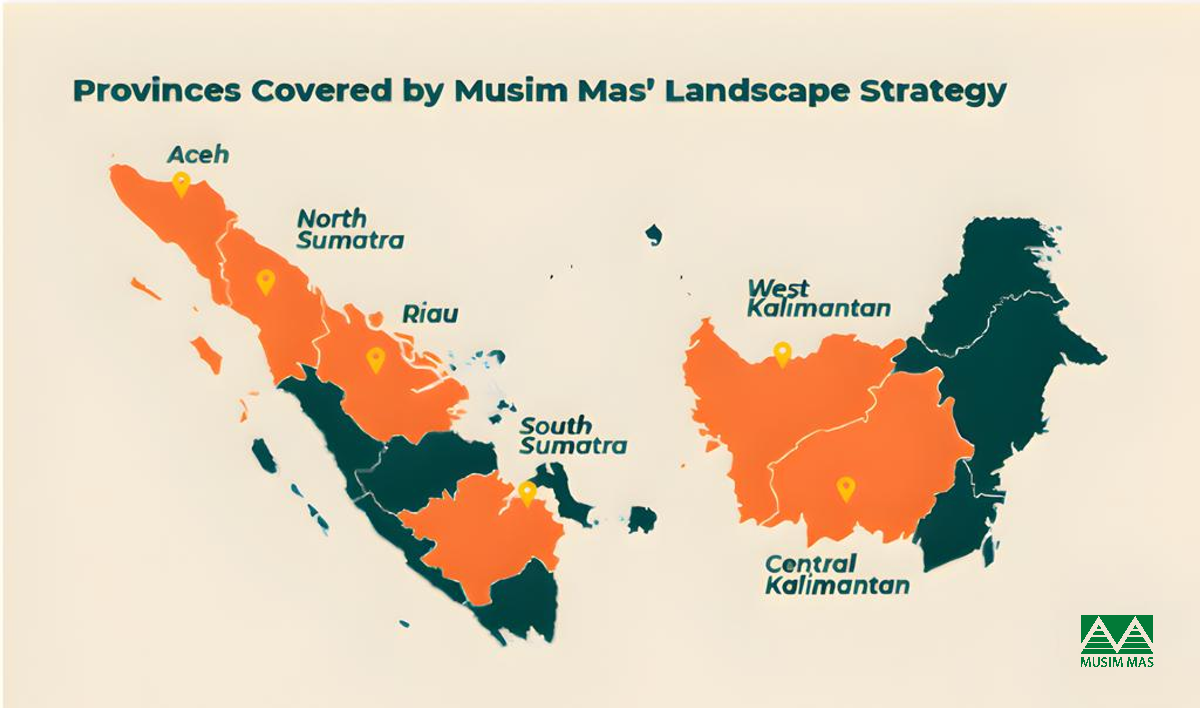
Musim Mas applies its landscape-based framework across several priority sourcing regions in Indonesia, where deforestation risks, smallholder livelihoods, and biodiversity considerations intersect. While each landscape has unique characteristics, our approach consistently integrates engagement, assurance, and monitoring to address local challenges.
Landscape Approaches by Region
Aceh
Aceh is a critical landscape for Musim Mas due to its proximity to the Leuser Ecosystem, one of the world’s most biodiverse and threatened tropical forest regions. Although Musim Mas has no operational presence in Aceh and it contributes less than 10% of our total supply base, its ecological importance and ongoing deforestation pressures make it a priority for prevention and engagement. Our work in Aceh builds on our Aceh Strategy launched in 2020, which served as the foundation for Musim Mas’ expanded Priority Landscapes Strategy 2024, covering all key sourcing regions in Indonesia.
In Aceh, our programs focus on mitigating risks of encroachment into sensitive forest areas, increasing smallholder capacity, and strengthening traceability and monitoring. We engage third-party suppliers and independent smallholders through training on good agricultural practices, land legality support, and dedicated Smallholder Hubs in districts including Aceh Tamiang, Singkil, Subulussalam, Timur, and Selatan. Participatory land-use planning and village outreach help align local stakeholders around shared sustainability goals, while satellite monitoring and risk assessments improve evidence-based decision-making. As of 2023, 100% of suppliers in Aceh have been mapped for risk-based traceability.
North Sumatra
North Sumatra represents one of Musim Mas’ largest supply regions, with both operational presence and substantial volumes of Fresh Fruit Bunches sourced from this province. The landscape approach here extends beyond compliance to innovation and capacity building, with particular emphasis on supporting smallholders through practical programs and market access.
Our work includes supporting regenerative agriculture practices among independent smallholders and facilitating access to replanting funds. For example, the smallholder program at PT. Siringo Ringo was the first of its kind to secure funding from Indonesia’s Oil Palm Plantation Fund Management Agency (BPDPKS), enabling smallholders to replant aging palms — a critical step toward improving productivity and long-term sustainability. Engagement also includes training on NDPE commitments, traceability, and best management practices that strengthen local systems and livelihoods.
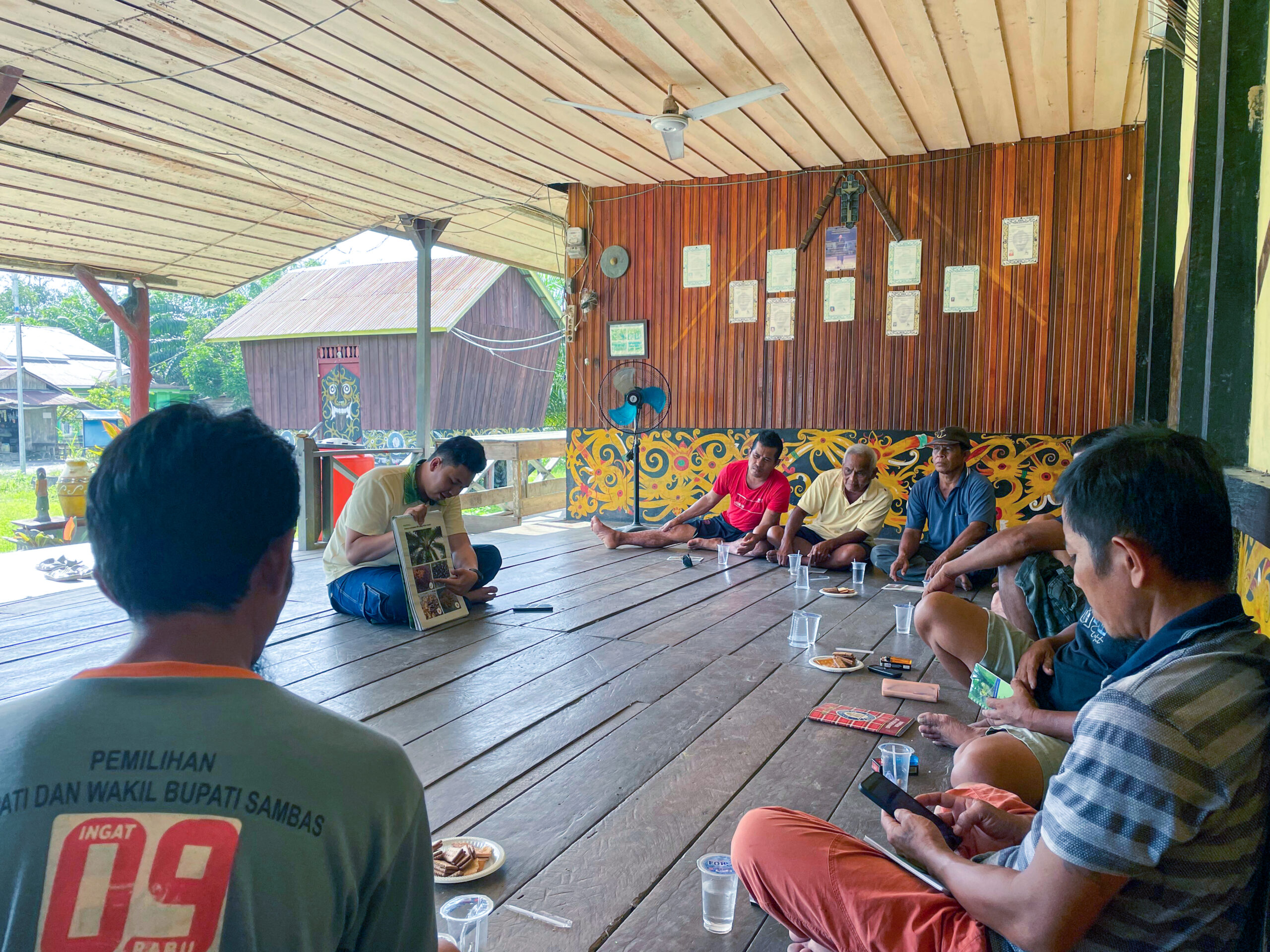
Smallholders undergoing a training session
Riau
Riau is a strategically important landscape for Musim Mas, as one of Indonesia’s largest palm oil production provinces and a key contributor to our procurement volume. The landscape approach in Riau is built around multi-stakeholder collaboration, risk mitigation, and smallholder engagement.
Programs here include village engagement initiatives that support peatland and forest conservation, training independent smallholders through Smallholders Hubs, and working with partners such as UNDP and local government to establish robust sustainable production programs. Fire prevention and mitigation are a core priority due to Riau’s susceptibility to peatland fires, and Musim Mas participates in landscape fire management efforts as part of broader community-based initiatives. We also work on tracking deforestation through systems like the Radar Alerts for Detecting Deforestation (RADD) and participatory mapping of High Conservation Value (HCV) and High Carbon Stock (HCS) areas, alongside financial literacy programs for smallholder farmers. In the Pelalawan region, our Tesso Nilo Flying Squad partnership, which started in 2006, helps mitigate human-elephant conflict.
South Sumatra
In South Sumatra, particularly in the Musi Banyuasin (MUBA) regency, Musim Mas focuses on improving traceability and smallholder agronomic practices to enhance productivity and sustainability outcomes. The landscape contains significant forest areas — including critical tiger habitats — alongside a high density of supplier mills within our supply base.
Our initiatives include the ‘Train the Smallholders’ program, which supports farmers in the supply chain of prioritized mills (such as PT Bastian Olah Sawit) by improving productivity through the adoption of good agricultural practices. This kind of targeted engagement strengthens local capacity and helps align smallholder production with NDPE commitments while reducing pressure on forested areas.
West Kalimantan
West Kalimantan plays an important role in Musim Mas’ broader landscape strategy, representing around 5% of our supply base and one of the six provinces that contribute the majority of our crude palm oil procurement. The Sambas landscape, covering production forests, peatlands, protected forests, and village areas, illustrates the complexity of challenges and opportunities in this part of Kalimantan.
Drawing on lessons from Aceh, our approach in West Kalimantan emphasises engagement with independent smallholders and suppliers, strengthening traceability, and integrating the three pillars of engagement, assurance, and monitoring & response. We have established Smallholder Hubs here — for example in Sambas, in partnership with organisations such as Bunge — to train independent producers on sustainable palm cultivation, business management, and NDPE requirements, while also exploring gender inclusion and market access support.
Central Kalimantan
Central Kalimantan is an important priority landscape where Musim Mas is advancing community-oriented land-use planning to support sustainable palm oil production. The region’s landscape approach emphasises the integration of High Carbon Stock Approach (HCSA) assessments and community land-use planning into development processes, ensuring that activities respect social requirements related to community rights, livelihoods, and conservation values.
This approach supports locally relevant decision-making while aligning with broader NDPE commitments and landscape strategy goals. By integrating participatory planning and conservation principles with production priorities, Musim Mas aims to balance sustainable economic development with environmental stewardship, building stronger systems for landscape governance and stakeholder engagement.
Supporting Climate Action
Musim Mas’ landscape approach recognises that climate action in agriculture must go beyond reducing emissions within company operations.
Preventing deforestation, improving land productivity, and strengthening land-use governance are essential to reducing land-use emissions and building climate-resilient agricultural systems. Landscape approaches provide the framework to deliver these outcomes at scale.
Frequently Asked Questions (FAQ)
What is a landscape-based approach in palm oil?
A landscape-based approach focuses on sustainability across an entire geographic area, rather than individual plantations. It addresses deforestation, livelihoods, and land-use governance collectively.
How does a landscape-based approach differ from NDPE?
NDPE primarily manages risks at supplier or concession level. A landscape approach complements NDPE by preventing deforestation through proactive engagement, capacity building, and landscape-level monitoring. Landscape approaches do not replace NDPE. Instead, they extend its impact by addressing deforestation risks beyond individual supply chains.
Why are smallholders important in landscape approaches?
Independent smallholders play a major role in palm oil production. Supporting smallholders with training and productivity improvements helps reduce deforestation pressure while improving livelihoods.
Does a landscape approach replace certification or traceability?
No. Landscape approaches complement certification, traceability, and NDPE policies. All tools are needed to address sustainability challenges effectively.
Why is collaboration essential for landscape approaches?
Landscapes involve multiple stakeholders — governments, companies, communities, and NGOs. Collaboration enables shared responsibility and greater impact than efforts led by one company alone.
How does a landscape-based approach support climate goals?
By preventing deforestation and strengthening land-use governance, landscape approaches help reduce land-use emissions and support alignment with climate commitments such as net-zero.
Where does Musim Mas implement its landscape-based approach?
Musim Mas applies its landscape framework across priority sourcing regions. Details of specific initiatives are available in Musim Mas’ Consolidated Landscapes Progress Report.