By: Devane Sharma
Index
- How Hand Soaps Actually Clean
- Where 1,4-Dioxane Comes In
- A Global Regulatory Patchwork
- Meeting Market Demands: Two Pathways
- Regulatory Spotlight on 1,4-Dioxane
- Musim Mas’ Commitment to Safer Soaps
- Palm Oil: A Responsible Feedstock for Soap
- From Ancient Ash to Modern Responsibility
Soap is so ordinary that most of us barely give it a second thought. From the foamy lather of hand wash in the bathroom to the rich bubbles of a dish detergent, soap is a quiet but constant part of our daily routine. But behind those bubbles lies a surprisingly sophisticated science — and an important conversation about product safety.
One area of discussion in the cleaning and personal care industry today is 1,4-dioxane, a chemical by-product that can appear in trace amounts in some surfactants. Different markets around the world treat it differently: some prefer strict “free-from” formulations, while others allow carefully controlled levels. At Musim Mas, we offer both solutions, giving customers the flexibility to meet diverse regulatory standards and consumer preferences without compromising on quality.
How Hand Soaps Actually Clean
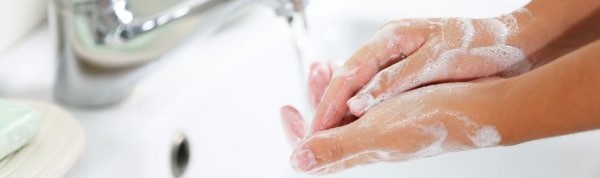
The story of soap begins in ancient Mesopotamia, where people first made crude cleaning pastes by mixing animal fats with ash and water. What they didn’t know at the time was that they had stumbled upon surfactants — molecules with two different “personalities.”
- One end of the molecule is lipophilic (oil-loving), binding to grease, oils, and dirt.
- The other end is hydrophilic (water-loving), pulling that trapped dirt into water so it can be rinsed away.
This dual nature makes surfactants powerful tools against both visible grime and invisible microbes. It’s also why soap is more effective than water alone: without surfactants, oils and germs cling stubbornly to skin and surfaces.
Modern soaps and detergents build on this principle, but with surfactants engineered to be gentler on skin, effective in hard water, and soluble at lower temperatures. These innovations make today’s soaps more versatile and sustainable compared to the fat-and-ash mixtures of our ancestors.
But refining surfactants to make them milder involves chemical processes that can introduce by-products like 1,4-dioxane — which is where regulations and consumer expectations come into play.
Where 1,4-Dioxane Comes In
To make surfactants less harsh, manufacturers often use a process called ethoxylation. For example, sodium lauryl sulfate (SLS), a strong but sometimes irritating cleanser, can be transformed into sodium laureth sulfate (SLES), which is gentler on the skin.
During ethoxylation, trace amounts of 1,4-dioxane may form as a by-product. Importantly:
- 1,4-dioxane is not intentionally added to soaps or shampoos.
- It may remain in finished products unless carefully removed through purification.
- It has been classified as a possible human carcinogen and is persistent in water systems, which is why regulators keep a close eye on it.
While this may sound concerning, it’s worth stressing that regulators around the world set safe limits, and manufacturers have developed purification processes to keep levels within those limits.
A Global Regulatory Patchwork
Regulatory perspectives on 1,4-dioxane vary depending on region:
- United States: New York State introduced the strictest limits in the country, requiring ≤ 2 ppm in household products in 2022 and tightening to 1 ppm in 2023. Cosmetics are capped at 10 ppm. Meanwhile, the U.S. Environmental Protection Agency (EPA) has concluded that 1,4-dioxane presents a risk to human health, raising the possibility of national standards.
- European Union: The EU takes a “safe at trace levels” approach. Under the EU Cosmetics Regulation, 1,4-dioxane is considered an impurity, and manufacturers must use best practices to minimize it. The European Scientific Committee on Consumer Safety (SCCS) concluded that up to 10 ppm in cosmetics is safe for consumers.
- Global markets: Other countries typically follow one of these two approaches, either aligning with the EU’s trace-safe framework or leaning toward stricter controls like New York.
Photo by Glambeau Design
Meeting Market Demands: Two Pathways
At Musim Mas, we recognize that there is no one-size-fits-all solution. Different markets and different brands prioritize different aspects of formulation, from regulatory compliance to consumer perceptions of “free-from” products. That’s why we provide two distinct pathways:
Non-ethoxylated surfactants (SLS, SCS):
- Manufactured without ethoxylation, meaning they are free from detectable 1,4-dioxane.
- Suitable for brands that want to make “1,4-dioxane-free” claims or that operate in markets with strict ppm limits.
- Listed with CleanGredients® under the U.S. EPA Safer Choice Program.
- Compliant with USP and EP monographs, ensuring high safety and consistency.
Ethoxylated surfactants (SLES and related):
- Widely used for their balance of cleansing power and skin mildness.
- Produced under strict quality controls that keep 1,4-dioxane levels within regulatory limits.
- A familiar, proven solution that continues to serve consumer needs
By offering both, Musim Mas gives customers the ability to choose the option that best fits their regulatory, formulation, and marketing requirements.
This diversity creates a patchwork of requirements that global brands must navigate. The key is flexibility: companies need ingredients that can meet different thresholds while maintaining performance and consumer trust.
Environmental concerns:
It dissolves easily in water, doesn’t readily break down, and is difficult to remove from drinking water supplies.
Consumer concerns:
Because it’s a contaminant, it won’t show up on an ingredient label. Consumers may think a product is safe when in fact trace impurities remain.Thus, the same chemistry that makes soaps gentle can also pose hidden risks — unless strict process controls and ingredient choices eliminate the problem.
Regulatory Spotlight on 1,4-Dioxane
Growing evidence of these risks has prompted regulators to act.
New York State set the strictest limits in the U.S. Household cleaning and personal care products must contain ≤ 2 ppm of 1,4-dioxane since 2022 and that limit was tightened to 1 ppm by the end of 2023. Cosmetics are capped at 10 ppm.1
In 2024, the U.S. Environmental Protection Agency (EPA) completed its risk evaluation under the Toxic Substances Control Act (TSCA). The conclusion: 1,4-dioxane presents an unreasonable risk to human health, raising the likelihood of nationwide limits.2
Globally, regulators are paying attention too. The European Union’s Cosmetics Regulation also views 1,4-dioxane as a contaminant, requiring manufacturers to use “best practices” to keep it as low as technically feasible. The European Scientific Committee on Consumer Safety (SCCS) conducted an independent risk assessment and concluded that up to 10 ppm of 1,4-dioxane in cosmetic products is considered safe for consumers at trace levels.3
Major household and personal care brands have reformulated products to meet the 1 ppm threshold, showing that compliance is not only possible but increasingly expected. The trajectory is clear: stricter limits are coming, and companies must be ready.
Musim Mas’ Commitment to Safer Soaps
At Musim Mas, we believe consumers shouldn’t have to worry about contaminants in their everyday soap. That’s why our Sodium Lauryl Sulfate (SLS) and Sodium Coco Sulfate (SCS) are manufactured without ethoxylation, meaning they are free from detectable 1,4-dioxane.
Our ingredients are:
- Listed with CleanGredients® under the U.S. EPA Safer Choice Program.
- Compliant with USP and EP monographs, ensuring consistency and safety.
- Produced under strict quality controls, minimizing risk and maximizing transparency.
This approach eliminates the 1,4-dioxane concern at its source rather than relying only on post-production testing. It also aligns with growing consumer demand for ingredient transparency and safer formulations.
Palm Oil: A Responsible Feedstock for Soap
Of course, safety is only part of the equation. The feedstock used to make surfactants also matters. Palm oil has emerged as one of the most versatile and resource-efficient raw materials for soaps:
- According to a study by the International Union for the Conservation of Nature (IUCN) on palm oil, it accounts for about 40% of global vegetable oil supply but uses only about 5.5% of the land devoted to oil crops.
- With yields of about 2.9 metric tons per hectare per year, palm far outpaces alternatives like soy (0.46 t/ha) or sunflower (0.7 t/ha).
When processed into fatty acids, fatty alcohols, and glycerin, palm oil provides the key building blocks of surfactants. Its efficiency reduces land pressure, and when sourced responsibly, palm oil can be both a performance and sustainability win.
From Ancient Ash to Modern Responsibility
Photo by Tabitha Mort
Soap has come a long way since ancient times. What started as a crude fat-and-ash mixture has become a highly engineered product at the intersection of chemistry, safety, and sustainability.
- Surfactants remain the backbone of cleaning science.
- 1,4-dioxane shows why careful chemistry and quality manufacturing matters.
- Regulations are pushing the industry toward safer, cleaner standards.
- Sustainable palm oil provides a feedstock that balances performance with environmental responsibility.
At Musim Mas, we see soap not just as a cleaner, but as a symbol of trust. By eliminating 1,4-dioxane and committing to sustainable sourcing, we help ensure that every lather is safe for people and respectful of the planet.
1: https://dec.ny.gov/sites/default/files/2024-09/352-114dioxaneadoption.pdf
2: https://www.epa.gov/assessing-and-managing-chemicals-under-tsca/final-risk-evaluation-14-dioxane