At the heart of Musim Mas’ Sustainability Strategy is our Sustainability Policy. First launched in 2014, the Policy established the framework for our No Deforestation, No Peat, and No Exploitation (NDPE) commitments.
In September 2020, Musim Mas updated the Policy, which lays out a renewed and deepened commitment to improving the livelihoods of smallholders, workers, and communities; while maintaining a strict stance on NDPE.
Our latest 2026–2030 iteration builds on this legacy and is structured around three Impact Areas — Sustainable Production, Responsible Sourcing, and Thriving Smallholders & Landscapes — supported by commitments across Environment & Climate, Human Rights, and Business Ethics. This framework guides how we deliver meaningful impact while strengthening accountability and clarity across our business and partnerships.
As with our 2nd iteration of the policy, this latest policy applies to Musim Mas’ global operations as well as the third parties we work with, including suppliers and contractors. It embodies our commitment to continuous improvement, innovation, and industry leadership — from advancing sustainable production practices to supporting resilient smallholders and landscapes.
Musim Mas’ 2026–2030 Sustainability Policy focuses on three impact areas: Sustainable Production, Responsible Sourcing, and Thriving Smallholders & Landscapes. Together, the impact areas and their commitments are structured around three key subjects: Environment and Climate, Human Rights, and Business Ethics.

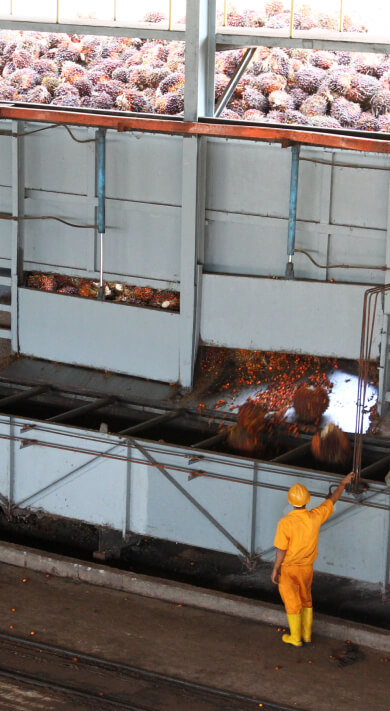
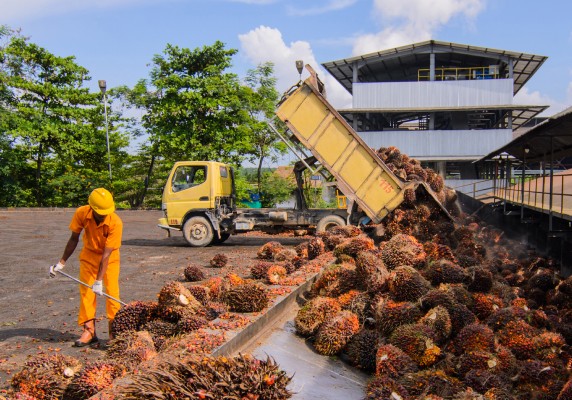
The scope of this impact area covers our plantations and mill operations throughout Indonesia, i.e. the upstream portion of our business, as well as the mid- and downstream operations worldwide. Building upon our experiences from various certification schemes, such as RSPO, ISCC, POIG, and ISPO, and the realization that sustainable production is an ongoing process, we have adopted the latest best management practices throughout our operations.

Roughly 85% of the palm oil that we refine, process, or trade currently comes from external suppliers. This also includes all of the coconut oil and copra, as well as the minor volumes of other oils and fats used in some of our overseas operations. Our NDPE commitment encompasses materials sourced from third-party sources, so we are tasked with ensuring that the hundreds of suppliers and the hundreds of thousands of smallholders who supply them are made aware of and compliant with our sourcing requirements.

Our supplies of raw materials in Indonesia are derived mainly from six priority landscapes (Aceh, Riau, North and South Sumatra, and West and Central Kalimantan). We extend our commitment beyond our immediate sourcing areas and those of our suppliers to support sustainable development and to address deforestation within landscapes and jurisdictions.
We have applied our longstanding NDPE commitments to our palm oil business and recognize we must extend it to our coconut oil facility and its supply chain. We have extended the commitments to our processing and refining of coconut oil in 2022, in line with the pledge made in our 2020 – 2025 Sustainability Policy.
Our 2026 – 2030 Sustainability Policy reinforces and elevates our commitments for coconut oil, reflecting our ongoing leadership in responsible sourcing.
To read our sustainable coconut sourcing strategy, please click here.