By: Chang Rui Jia
What Is Vitamin E? | Vitamin E Benefits | Natural Sources of Vitamin E Sources | How Much Vitamin E Do Adults Need? | Vitamin E and Palm Oil | Frequently Asked Questions (FAQ)
Across the global food industry, Vitamin E is gaining attention as a key nutrient in products designed to support long-term wellness.[1] For food manufacturers, understanding Vitamin E benefits and identifying reliable Vitamin E sources is increasingly important — not only for nutritional value, but also for formulation performance and product positioning.
This is particularly relevant for manufacturers using palm-based ingredients, as palm oil is one of the richest natural sources of Vitamin E. It offers a unique combination of nutritional value and functional performance across a wide range of food applications.
What Is Vitamin E?
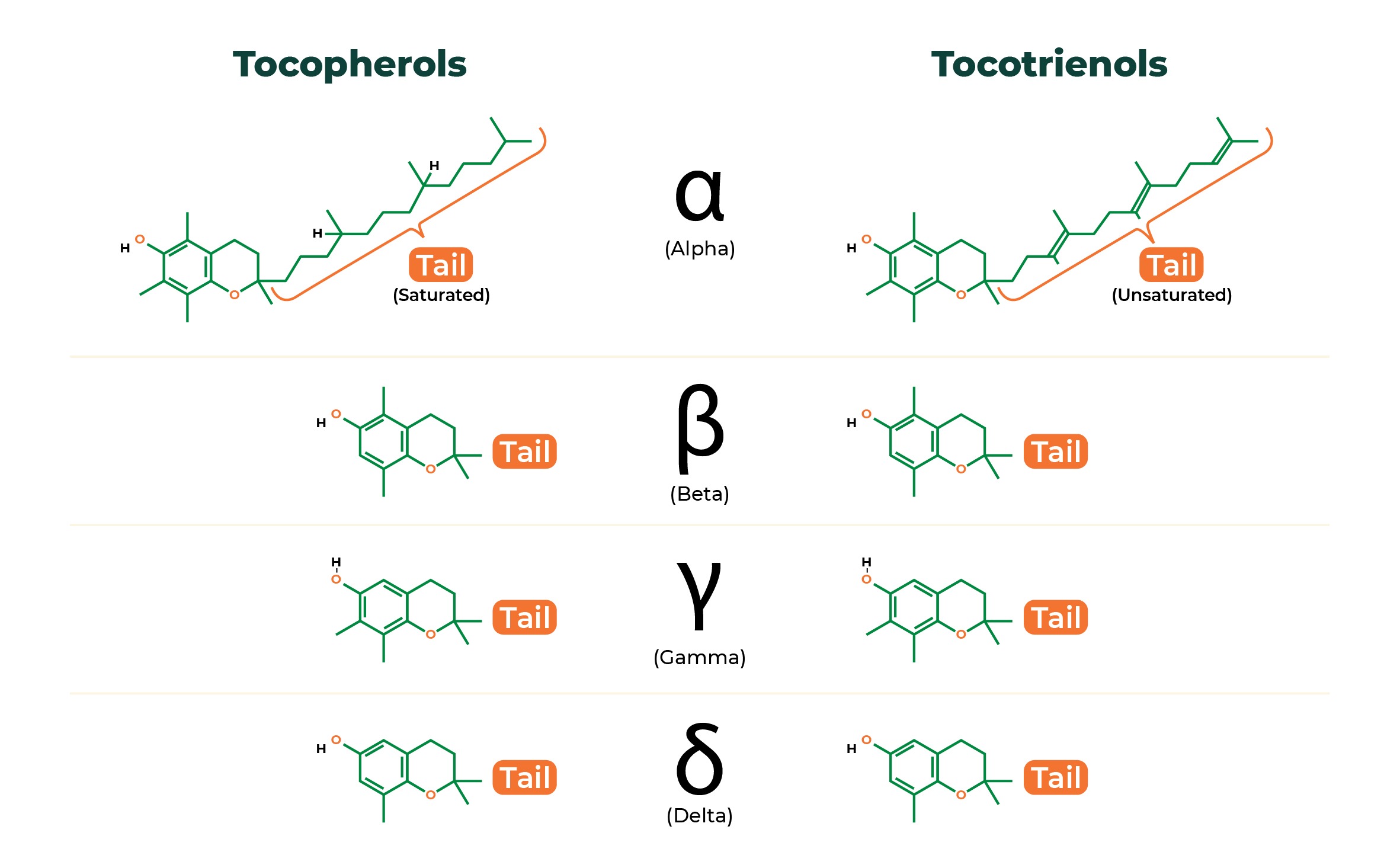
Vitamin E is a fat-soluble antioxidant that helps protect cells from damage caused by free radicals. Rather than a single compound, it refers to a family of eight structurally related molecules, divided into two groups: tocopherols and tocotrienols, each consisting of four forms — alpha (α), beta (β), gamma (γ), and delta (δ). [2]
Most commercially available Vitamin E products are dominated by alpha-tocopherol, which serves as the standard reference for dietary requirements. While well-established, this focus has contributed to the misconception that tocopherols represent the full spectrum of Vitamin E functionality.
In contrast, tocotrienols have attracted growing interest due to their enhanced biological activity. When concentrated as a Tocotrienols Rich Fraction (TRF), they have been shown to exhibit significantly stronger antioxidant activity — estimated to be 40-60 times more potent than alpha-tocopherol.[3] This remarkable efficacy has driven their use in applications spanning functional nutrition, cardiovascular health, metabolic wellness, and beauty-from-within formulations.
All Vitamin E compounds share a chromanol ring, which enables them to neutralize free radicals. [4] Their key difference lies in the structure of their side chains:
- Tocopherols have a saturated phytyl tail
- Tocotrienols have an unsaturated isoprenoid tail with three double bonds
Because of this structure, tocotrienols can move more efficiently within lipid layers. This contributes to their higher activity in both biological systems and food matrices.
Palm oil is one of the few widely used edible oils that naturally contains both tocopherols and tocotrienols. Tocotrienol-rich ingredients derived from palm oil, such as Vitrenol®, provide a standardized source of TRF for consistent application across food, nutraceutical, and personal care formulations.
Vitamin E Benefits
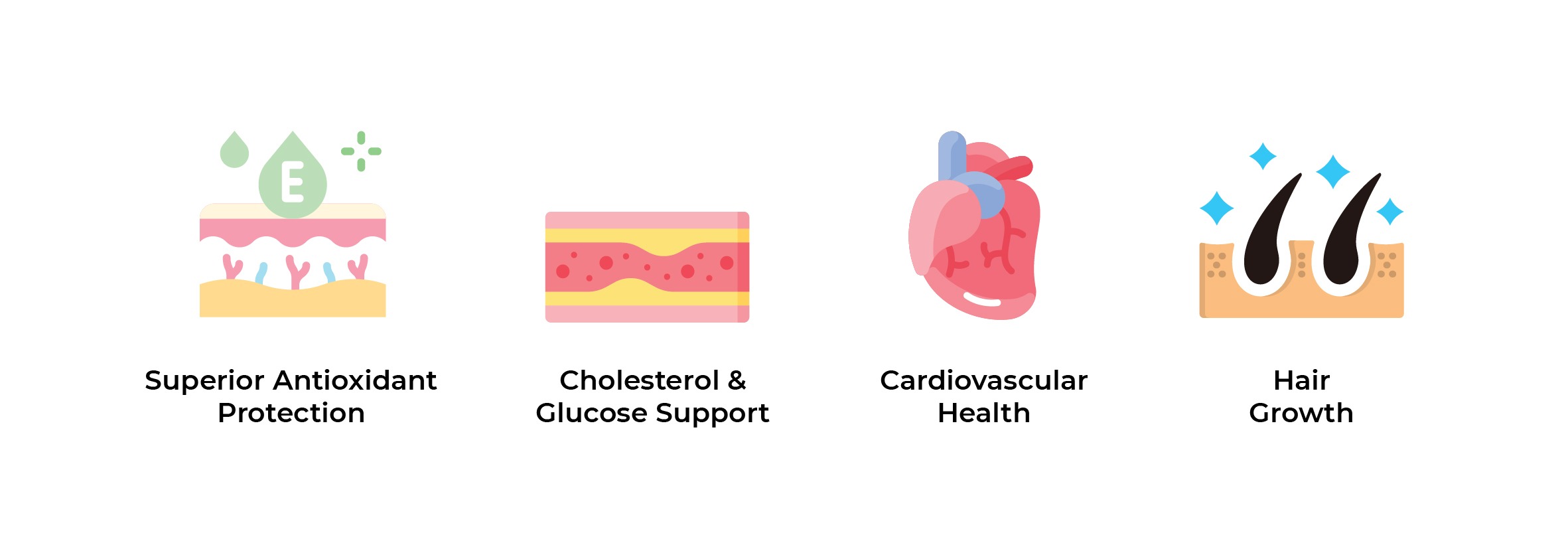
Vitamin E supports multiple physiological functions, primarily through its role as an antioxidant that protects lipids and cell membranes from oxidative damage.
Antioxidant Protection
Both tocopherols and tocotrienols help neutralize free radicals that threaten cellular lipids. While tocopherols provide baseline antioxidant protection, tocotrienols demonstrate significantly stronger efficacy due to their unique molecular structure. Studies show that tocotrienols more effectively scavenge chain-propagating peroxyl radicals in lipid systems, providing enhanced protection against lipid peroxidation in cell membranes and lipoproteins.[5] This superior antioxidant performance has driven growing interest in tocotrienols for applications in healthy aging and maintaining cellular balance.
Cardiometabolic Health
Research suggests that tocotrienols may support cholesterol and glucose regulation by limiting oxidative stress linked to lipid and insulin metabolism.[6] Studies have reported potential reductions in LDL cholesterol, total cholesterol, and circulating glucose levels, positioning tocotrienol-rich Vitamin E as a promising ingredient for cardiometabolic health formulations.
Cardiovascular Support
Tocotrienols have been widely studied for their role in cardiovascular health. Research has associated tocotrienols with improvements in vascular function, including indications of a positive impact on reversing plaque build-up[7] and reducing arterial blockage, such as in the carotid artery[8]. By helping protect circulating lipids from oxidation, tocotrienols may support long-term cardiovascular health and vascular integrity.
Hair and Skin Health
Vitamin E is also increasingly used in beauty-from-within and nutricosmetic products. Tocotrienols support hair and skin health by reducing oxidative stress and improving microcirculation. Clinical observations have reported increased hair counts in individuals experiencing hair loss following tocotrienol supplementation.[9]
Together, these benefits make tocotrienol-rich Vitamin E solutions such as Vitrenol® attractive for brands developing products targeting functional nutrition, cardiovascular support, metabolic wellness, and beauty applications.
Natural Sources of Vitamin E 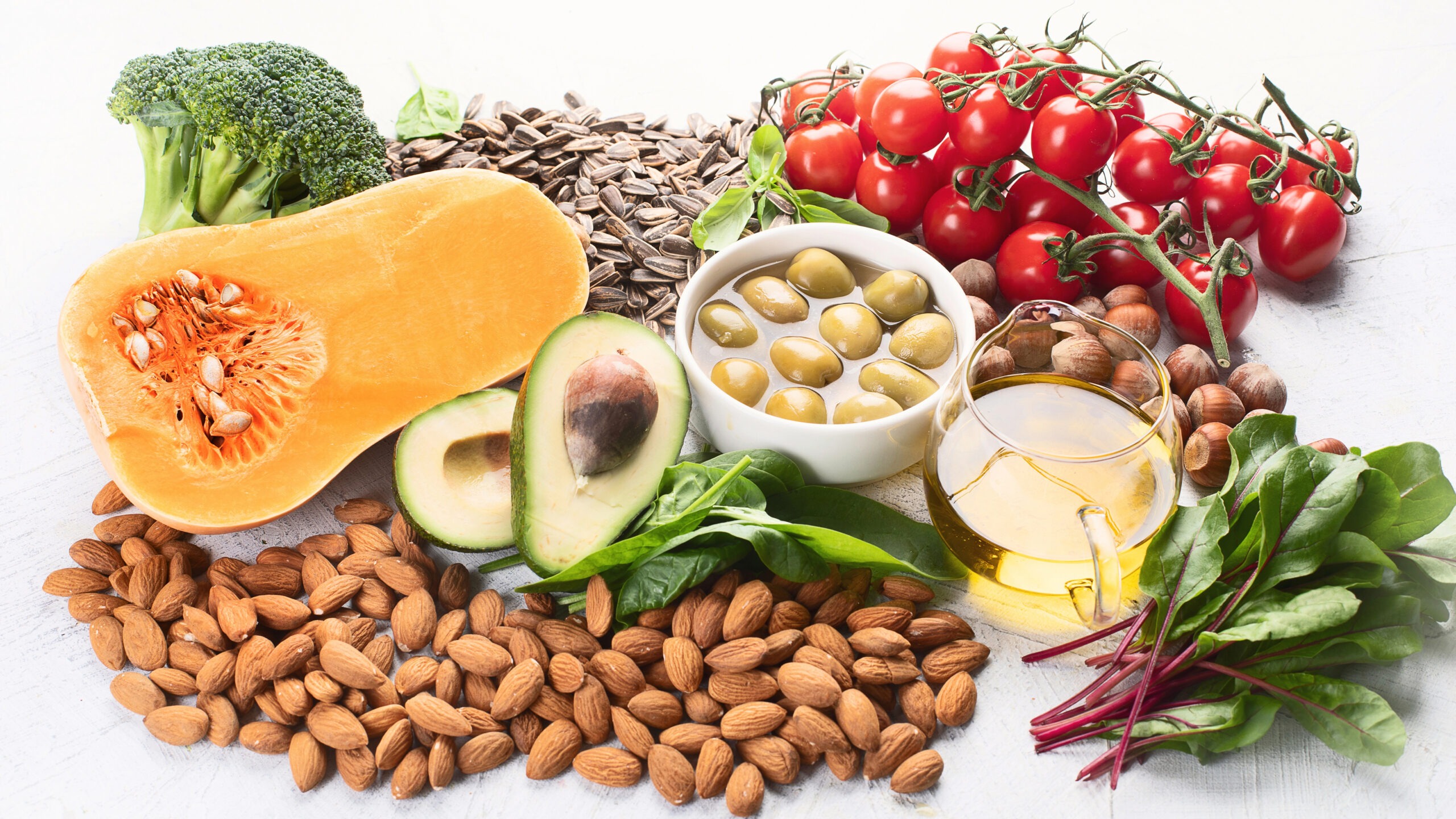
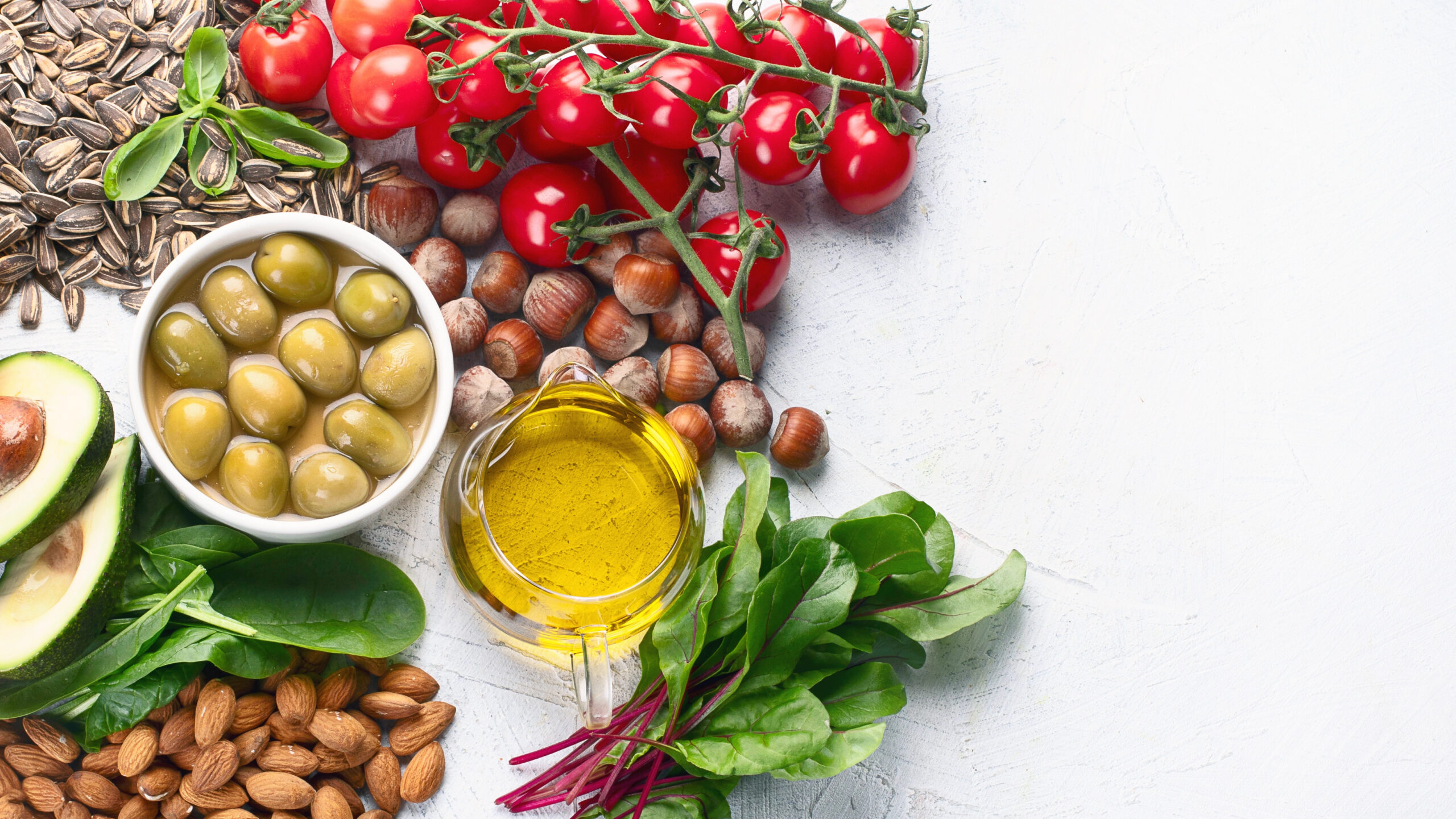
Vitamin E occurs naturally in a variety of plant-based foods:
- Palm oil
- Sunflower oil
- Soybean oil
- Wheat Germ oil
- Olive oil
These oils represent some of the primary dietary sources of Vitamin E globally.
Nuts and Seeds
- Almonds
- Sunflower seeds
- Hazelnuts
- Pine nuts
Vegetables and Fruits
Food manufacturers can incorporate these ingredients — or palm-derived Vitamin E solutions such as Vitrenol® — to support consumer demand for antioxidant-rich foods.
How Much Vitamin E Do Adults Need?
Most healthy adults require approximately 15 mg of Vitamin E per day.[10]
As a fat-soluble nutrient, Vitamin E is best absorbed when consumed with dietary fats. Foods containing natural oils therefore support efficient Vitamin E absorption.
Individuals who consume a balanced diet including plant oils, nuts, seeds, and vegetables typically meet their daily Vitamin E needs without supplementation. Those with medical conditions should consult healthcare professionals before changing their dietary intake.
Vitamin E and Palm Oil
Palm oil is unique among commonly used edible oils because it naturally contains both tocopherols and tocotrienols.
Depending on processing methods, palm-derived ingredients retain measurable levels of Vitamin E while maintaining the functional properties required for food manufacturing. Naturally occurring Vitamin E contributes to oxidative stability, helping slow lipid oxidation and support shelf-life.
Palm-based fats and oils are widely used in:
- Bakery
- Confectionery
- Spreads
- Dairy alternatives
- Culinary oils
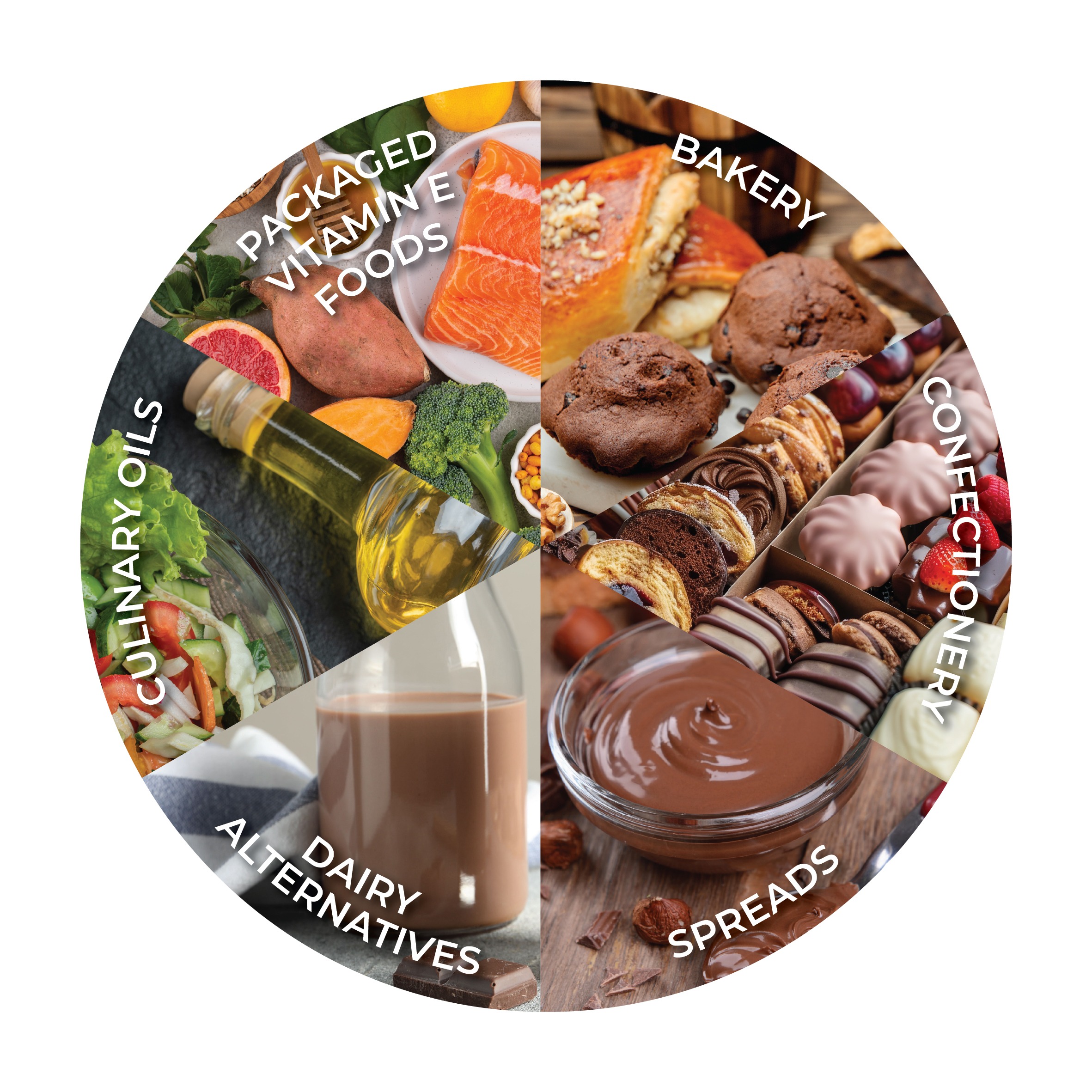
In these applications, palm oil provides both nutritional value and functional performance, supporting texture, structure, and processing consistency at scale.
At Musim Mas, we integrate responsible sourcing, traceability, and sustainability across our palm oil supply chain. Through high-quality palm-based ingredients and technical expertise, we support partners in developing products that deliver both nutritional value and manufacturing reliability.
To learn how we can support your formulation or product development goals, connect with our team.
Frequently Asked Questions (FAQ)
What is Vitamin E?
Vitamin E is a fat-soluble antioxidant found naturally in foods such as palm oil, nuts, seeds, and leafy vegetables. It includes tocopherols and tocotrienols, including TRF-based solutions like Vitrenol®.
What are the benefits of Vitamin E?
Vitamin E supports antioxidant protection, cardiovascular health, metabolic wellness, and hair and skin health.
What foods are rich in Vitamin E?
Common Vitamin E foods include palm oil, sunflower oil, almonds, sunflower seeds, spinach, and avocado.
Does palm oil naturally contain Vitamin E?
Palm oil contains tocopherols and tocotrienols, making it one of the richest natural dietary sources of Vitamin E.
Can consumers get enough Vitamin E through diet alone?
Most people can meet their Vitamin E needs through a balanced diet that includes plant oils, nuts, seeds, and vegetables.
References:
[1]https://www.hilarispublisher.com/open-access/consumer-perception-of-functional-foods-trends-and-implications-for-the-food-industry.pdf
[2]https://ods.od.nih.gov/factsheets/VitaminE-HealthProfessional/?uid=65eefb1709ddfs16
[3] https://www.sciencedirect.com/science/article/abs/pii/089158499190033Y
[4] https://nutritionsource.hsph.harvard.edu/vitamin-e/
[5] https://pubmed.ncbi.nlm.nih.gov/11160563/
[6] https://pubmed.ncbi.nlm.nih.gov/2012010/
[7] https://pubmed.ncbi.nlm.nih.gov/8614310/
[8] cabidigitallibrary.org/doi/full/10.5555/20013102554
[8] https://pubmed.ncbi.nlm.nih.gov/24575202/
[10]https://ods.od.nih.gov/factsheets/VitaminE-HealthProfessional/?uid=65eefb1709ddfs16