A Story of an Independent Smallholder Supported by Musim Mas
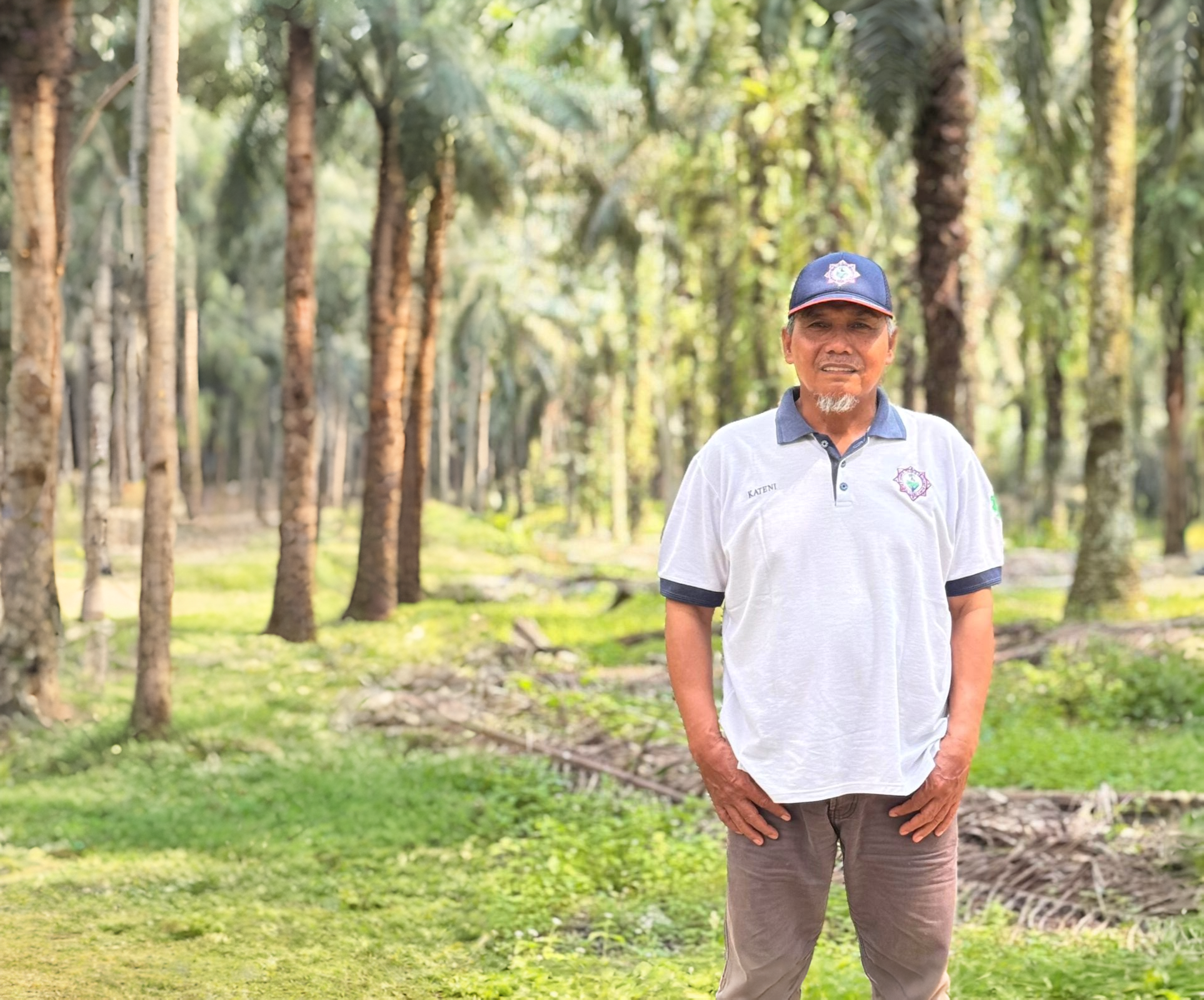
In a small village in Rokan Hilir, Riau, Kateni is known for more than just being an oil palm smallholder. To many independent smallholders around him, he represents something greater—proof that hard work, a willingness to learn, and the courage to change can transform lives.
At 58, Kateni’s journey has taken him far—from his early days as a fisherman along the coast of North Sumatra to becoming a source of inspiration and a driver of change for hundreds of smallholders in Rokan Hilir.
From the Sea to the Land
Kateni was born in Tanjung Balai Asahan, a coastal area in North Sumatra where most people depend on the sea for their livelihoods. He grew up as a fisherman, like many in his community,.
After getting married, however, his path began to shift. His father-in-law encouraged him to consider farming, as several family members had already found more stable incomes through it. That advice planted a seed—one that led Kateni to imagine a different future for his family.
Starting from Nothing in Riau
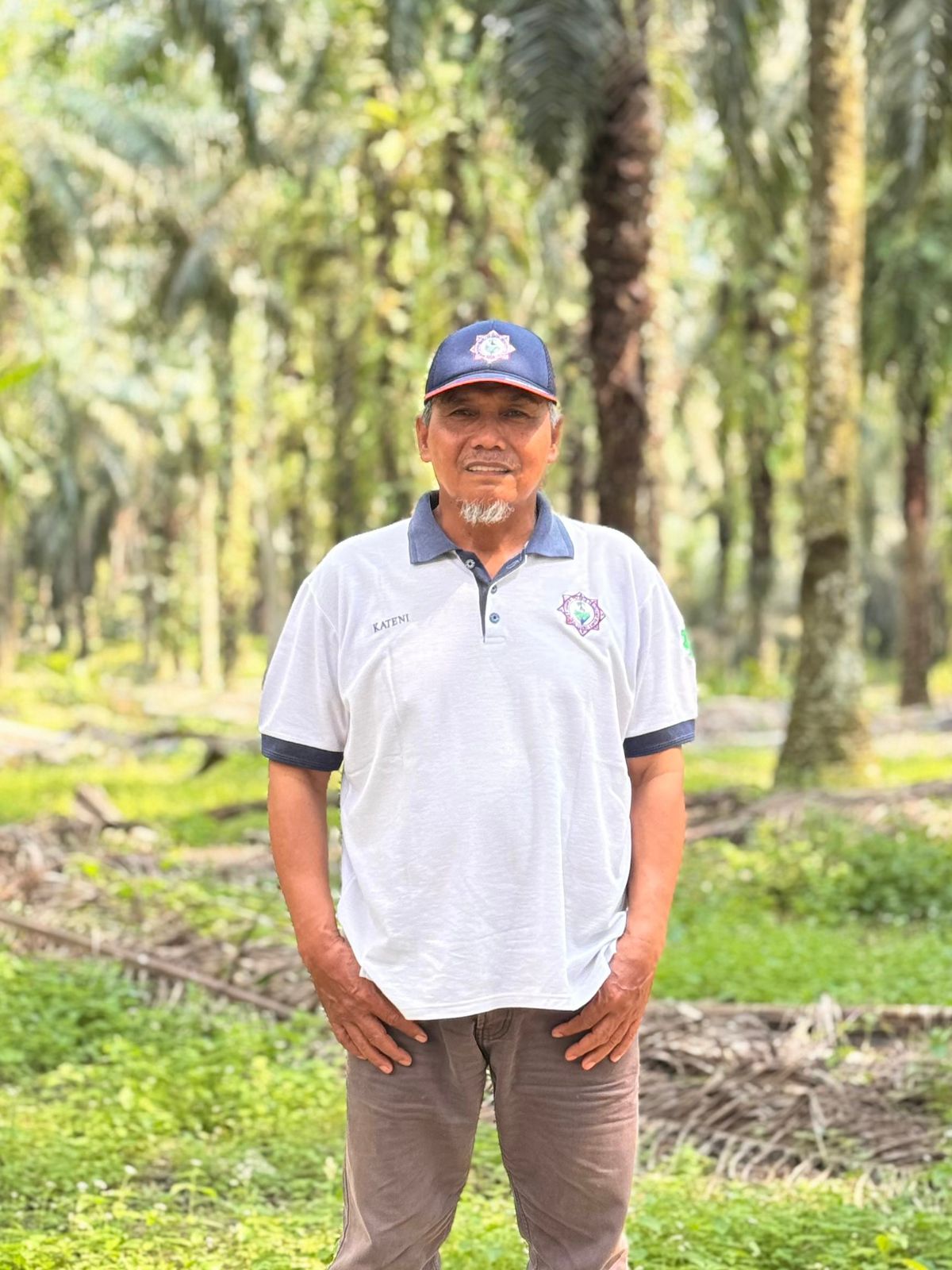
In 1997, Kateni and his wife made the life-changing decision to move to Riau. With savings built from years of hard work—ranging from wage labor and raising chickens to growing vegetables—they were eventually able to purchase two hectares of land to establish their oil palm plantation.
The journey, however, was far from easy. Kateni carefully managed their finances, choosing not to spend all their savings on the farm and instead setting aside emergency funds to ensure his family’s security. “If all the money is spent on fertilizer, what will my family eat tomorrow?” he recalled.
In the early days, he and his wife managed the plantation on their own. His motivation was simple yet deeply personal—to give his children the opportunity for a better education than he had, having never completed primary school.
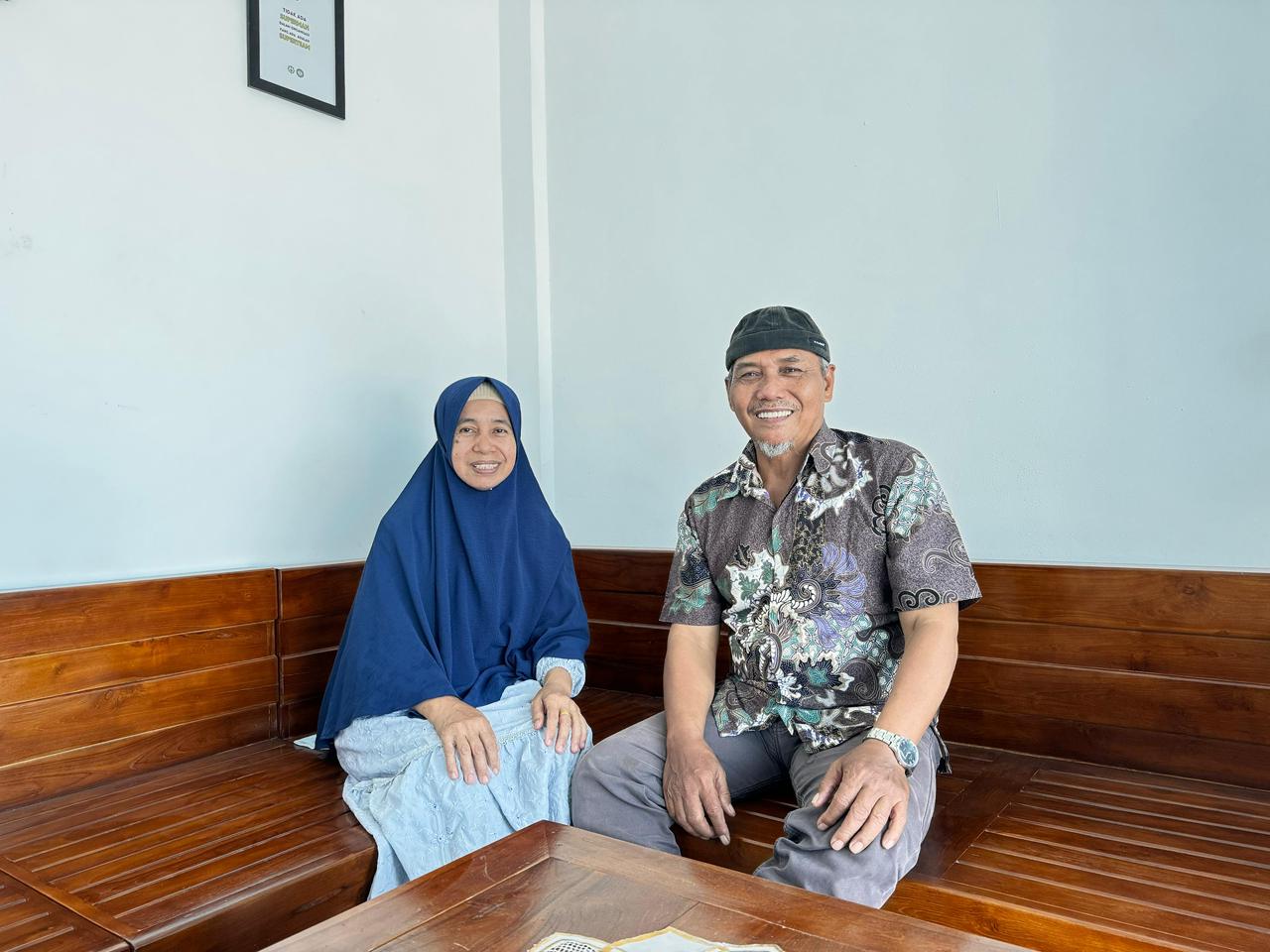
Kateni and his wife care for their oil palm plantation with great dedication, driven by their determination
to support all three of their children through higher education.
Standing Strong Through Challenges
The first years were full of obstacles. Wild animals such as wild boars and porcupines frequently damaged young crops. While some farmers gave up, Kateni chose to persist. He even stayed away from his hometown for five years to focus entirely on building his plantation.
“I didn’t want to fail—at least not before my farm could truly produce,” he said.
At the time, his farming practices were still very basic. Fertilizer was applied without proper measurement, pesticides were used without clear control, and there was no record-keeping.
“Back then, I thought everything I did was already right,” he said with a smile.
A Turning Point with the Musim Mas Smallholder Program
A major turning point came in 2017, when the Musim Mas Smallholder Program was introduced in his village. The program aims to strengthen smallholders’ capacity through training in good and sustainable agricultural practices.
At first, Kateni was skeptical. Past experiences with several organizations had left him cautious, making it difficult for him to place his trust easily. However, a small unexpected moment started to change his perspective.
One day, a program staff member ordered snacks from his wife for a training session. When Kateni delivered the order, he overheard part of the training—and his curiosity was sparked.
At the next session, he began asking questions and eventually invited the Musim Mas field team to visit his plantation. During the visit, they identified signs of urea deficiency in his oil palm trees, visible in the yellowing leaves.
Though he had his doubts at first, Kateni chose to give the recommendations a chance. Within three months, he began to see the difference—his trees looked greener, healthier, and full of life. Encouraged by these results, he decided to fully join the program in 2018.
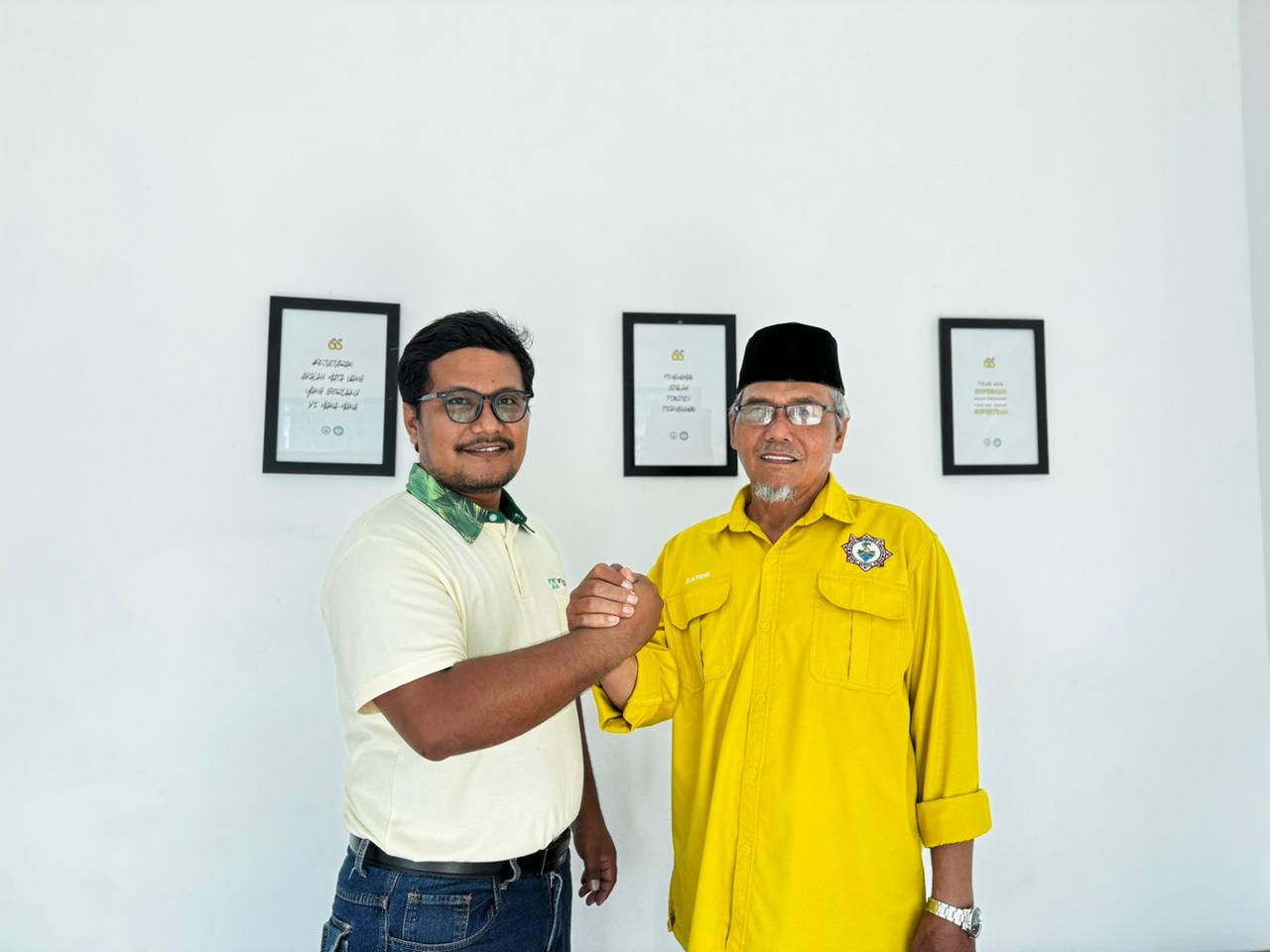
Kateni with Mastor P. Sitorus, a Musim Mas field officer who has continuously supported and accompanied him from the early days of the program through to today.
Doubling Productivity
Since then, Kateni has applied what he learned—proper fertilization, improved maintenance, better harvesting techniques, and systematic record-keeping.
When he first began tracking his yields, his productivity was around 12 tons per hectare per year. Over time, it increased significantly.
“In 2023, I reached 25 tons per hectare per year,” he said.
This progress reinforced his belief that knowledge and good practices truly make a difference.
Driving Change Across Rokan Hilir
Kateni’s dedication and persistence in applying good agricultural practices have made him a respected example among fellow independent smallholders in his village.
In 2019, when smallholders in Rokan Hilir came together to establish the Negeri Seribu Kubah Oil Palm Smallholders Association (APSKS-NSK), with guidance from the Musim Mas Smallholder Program, Kateni was entrusted to serve as its chairman.
Under his leadership, the association has grown significantly—from 341 members at its inception to 995 members in 2025, managing a combined area of more than 2,600 hectares.
For Kateni, the association’s vision is to nurture knowledgeable, environmentally responsible, and sustainable smallholders who can thrive both locally and internationally. He brings this vision to life through concrete actions, particularly by guiding members toward certification under the Roundtable on Sustainable Palm Oil (RSPO) and Indonesian Sustainable Palm Oil (ISPO) standards—an effort that aligns closely with the goals of the Musim Mas program.
According to Kateni, adopting sustainable farming practices in line with certification principles has not been the greatest challenge for the association, as members already have a strong awareness of sustainability. In the early stages, the main challenges lay in audit preparation and financing. With the support and close guidance of Musim Mas, however, these challenges were successfully addressed.
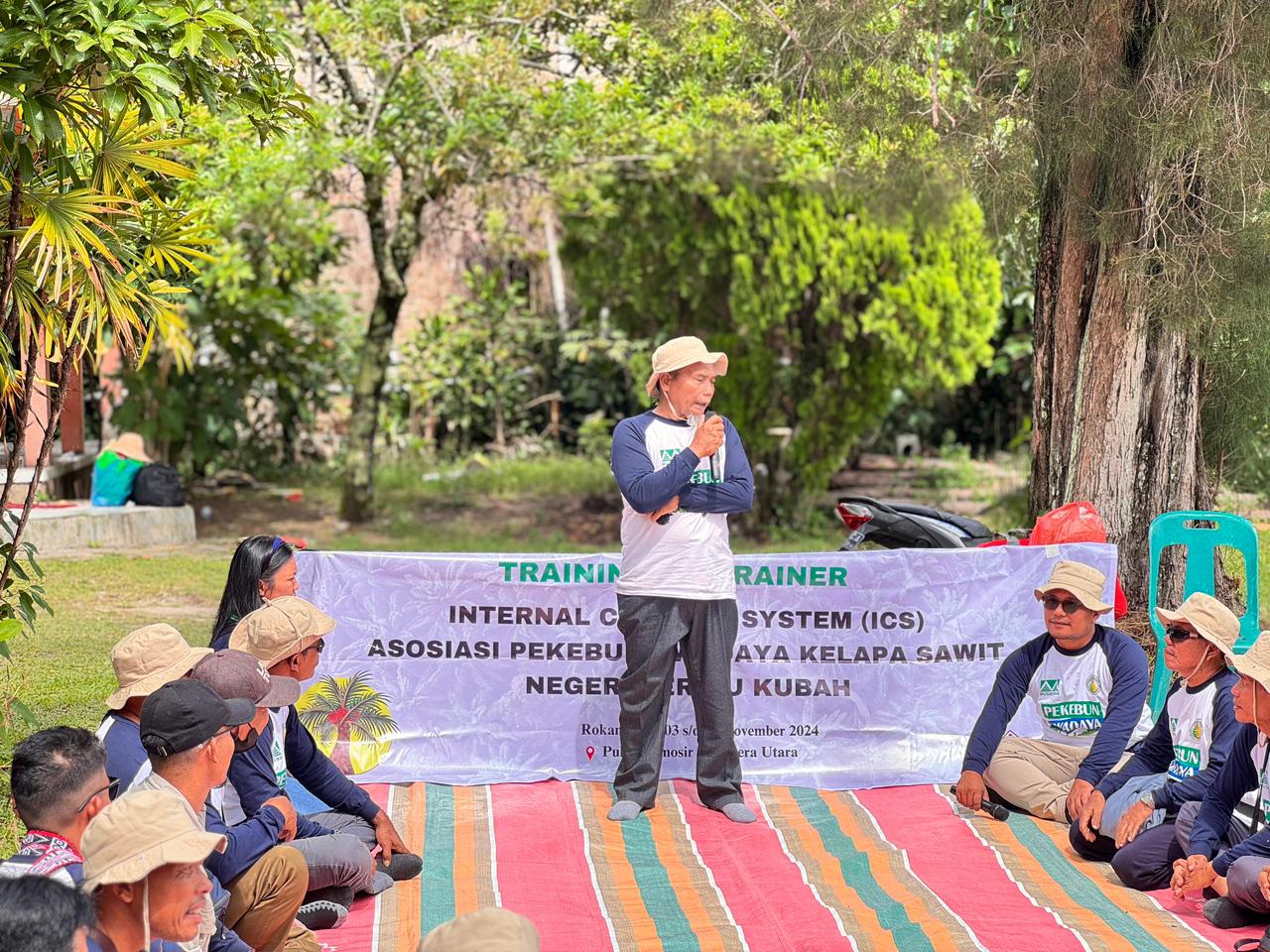
Kateni’s activities with fellow members of the Negeri Seribu Kubah Oil Palm Smallholders Association (APSKS-NSK) reflect a shared journey—learning from one another and growing together as independent smallholders.
“Today, the main challenge lies in land legality and obtaining the STDB land title, which is required for ISPO certification. As an association, together with the Musim Mas team, we are committed to supporting and guiding our members so they can meet these certification requirements, which are mandated by the Government of Indonesia.”
Building Shared Prosperity
Under Kateni’s leadership, the association has also been able to unlock economic opportunities from sustainability certification. With the support of Musim Mas, APSKS-NSK has successfully traded RSPO credits, generating more than IDR 21 billion in sales between 2021 and 2025. These incentives have been used to strengthen the organization’s capacity, to provide insurance in line with government guidlines (BPJS Ketenagakerjaan), and reinvest in the well-being of its members.
A significant milestone was achieved in 2025, when the association successfully built its own office independently. For Kateni, the building—situated on a 2,000-square-meter plot—is more than just a physical structure; it represents the shared journey and collective progress of APSKS-NSK members.
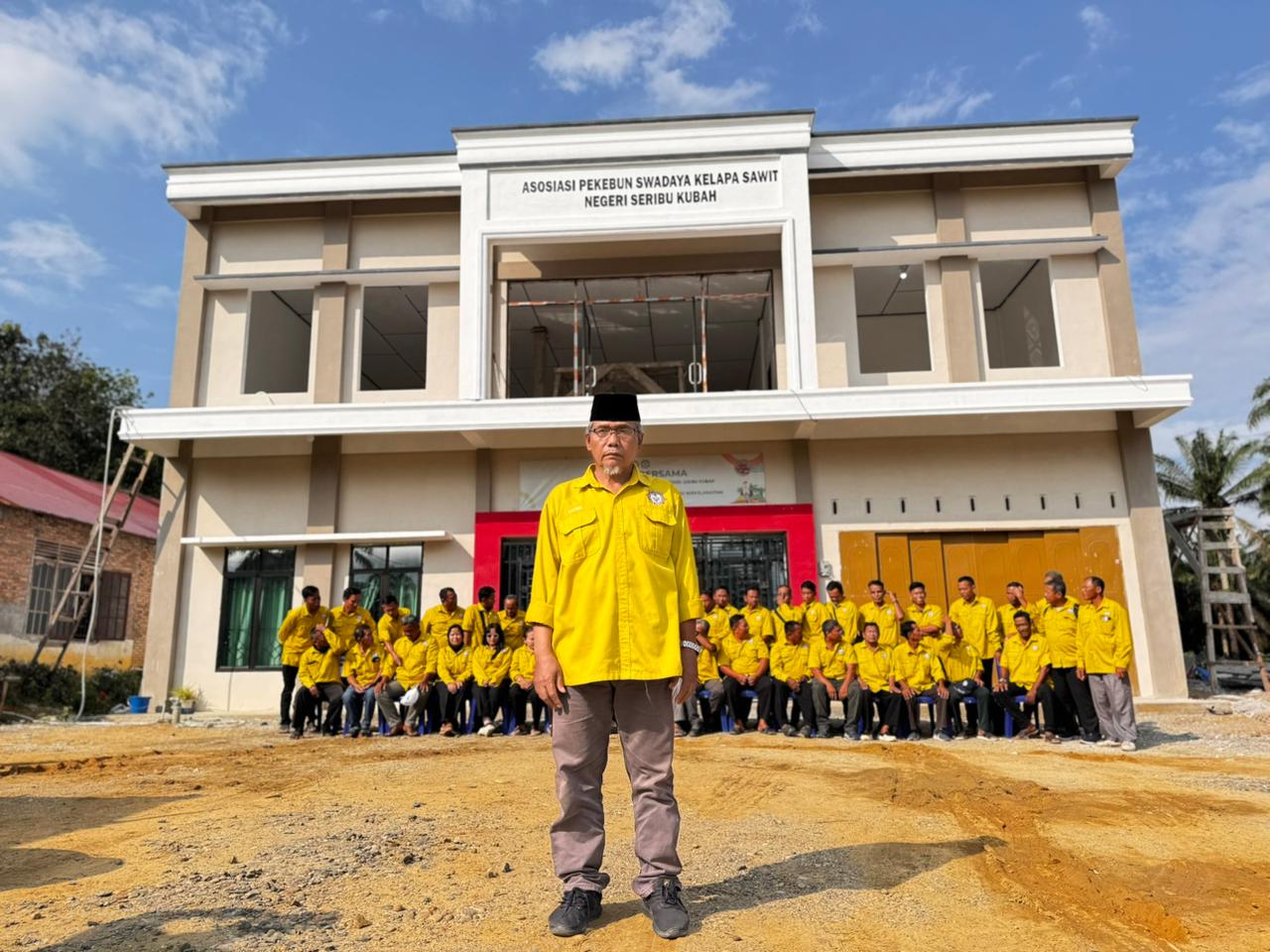
Kateni’s long-held dream of establishing an association office finally came to life last year. This achievement stands as a testament to the group’s hard work and collaboration, dedicated as a lasting legacy for future generations.
“This association does not belong only to me or the current management, but also to those who will come after us. That is why I want to leave something meaningful for them. We also hope to pass on the values behind the journey we are building today,” he said.
A Legacy for the Next Generation
For Kateni, this journey is not only about improving farm productivity, but also about building a better future for the smallholder community. He has even begun sharing his experiences as a guest speaker at a local secondary school in Rokan Hilir, while preparing a book that reflects the life lessons he has gathered along the way.
“I may not have completed primary school,” he said, “but that has never stopped me from continuing to learn.”
From a fisherman on the coast of North Sumatra to a driving force for change among more than a thousand smallholders in Riau, Kateni’s story shows that meaningful transformation often begins with a simple step—the courage to learn and to try a better way. Today, his journey continues to inspire many others to grow together toward a more sustainable future.
“Thank you to Musim Mas for patiently supporting us from the very beginning until now. We have learned so much—not only about farming, but also about how to support one another and grow together. We hope this partnership continues, and that in the years ahead, our lives as smallholders will keep improving, and our children will have even brighter futures,” Kateni concluded.