By: Frances Lam
What is PCF and how to calculate it | Why does PCF matter and its connection to SBTi? | Leading the way: PCF at Musim Mas
What is PCF and how do you calculate it?
Climate change isn’t just a buzzword anymore; it’s shaping how we live, work, and decision making. By the end of 2025, almost 12,000 companies around the globe had pledged to hit net-zero emissions through the Science Based Targets initiative (SBTi). The list is growing fast as more brands race to prove their climate commitments.
With climate change and sustainability dominate global conversations, companies are moving beyond short-term goals to embed emissions reductions into their core business model. As part of this shift, many companies measure their Product Carbon Footprint (PCF). This involves collecting data on greenhouse gas emissions across the entire product life cycle.
Measuring PCF is more than just a technical exercise; it’s a way of shining a light on where emissions are spreading across in supply chains, factories, transportation, and even product use.
For businesses, these insights can be game-changing, helping them manage costs, meet climate targets, and appeal to eco-conscious customers. For consumers, it offers a way to make more informed, greener choices. In this post, we’ll explore what PCF is, why it matters, and how both companies and consumers can use it to drive real climate impact.
A Product Carbon Footprint (PCF) is the total amount of greenhouse gas emissions a product creates throughout its entire life cycle, from making it, to using it, and eventually disposing of it.
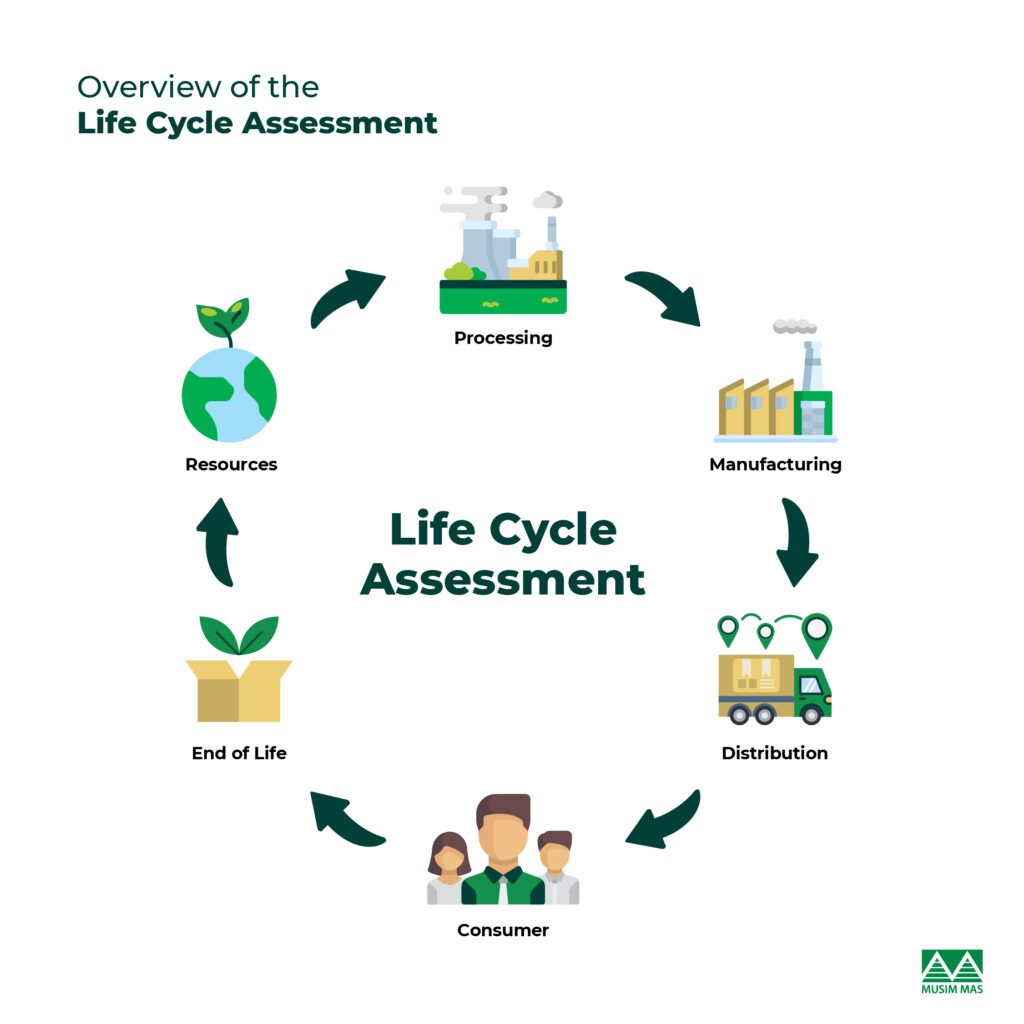
PCF calculation follows the framework of Life Cycle Assessment (LCA) which is a broad methodology for assessing a product’s entire life cycle. While LCA is looking at multiple environmental impacts, PCF focuses on GHG (Greenhouse Gas emissions) which is often expressed in CO2e. It is essentially an LCA limited to the climate change impact category.
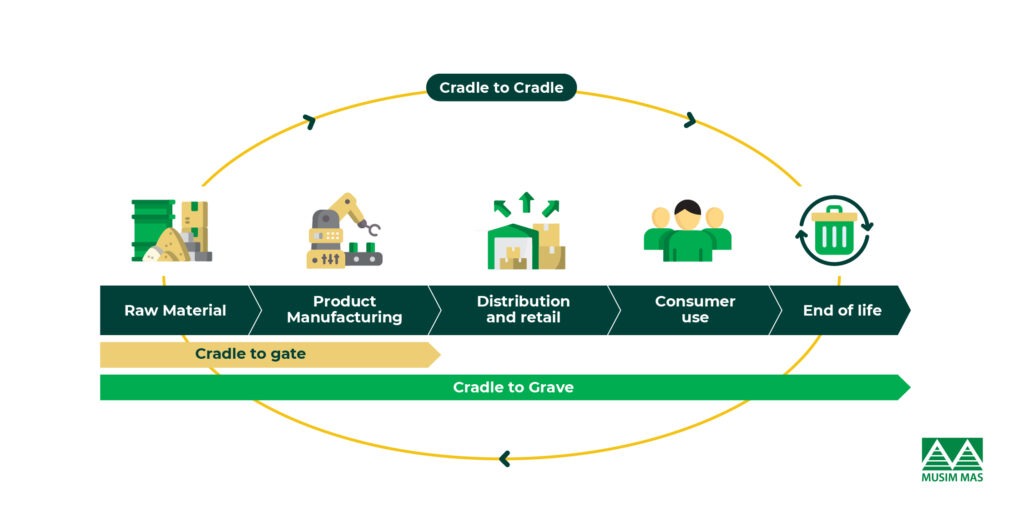
To account for a PCF, we need to look at the life cycle of a product. There are 3 types of the product’s life cycle:
- Cradle-to-Gate examines the impacts from raw material sourcing (“cradle”) until the manufacturing of the product (“gate”), useful for B2B contexts.
- Cradle-to-Grave refers to analysing a product’s entire journey from “cradle” to its disposal or end of life (“grave”).
- Cradle-to-Cradle is a concept linked to the circular economy, where the “grave” stage is replaced with recycling or reuse, allowing materials to be fed back into new production cycles, effectively “closing the loop.”
Several recognized frameworks such as ISO 14067, GHG Protocol Product Standard, and Together for Sustainability (TfS) PCF Guideline provide guidance for companies in calculating PCF.
Each of these Standards provides structured approaches and methodologies for accounting emissions across a product’s life cycle. Business can refer to these Standards to provide transparent PCF data to support decarbonization efforts while meeting customer expectations.
Why does PCF matter and its connection to SBTi?
Driven by global climate pledges, major consumer goods companies are increasingly engaging their suppliers to decarbonize. They now require suppliers to share emissions data, prioritize low-carbon materials, and participate in climate programs.
Many companies have made bold commitments and ambitious targets to reduce emissions such as SBTi Net-Zero Targets which require company to reduce emission by 90% or more by 2050.
These targets go beyond a company’s own operations (Scope 1 and 2 emissions) and extend across the entire value chain (Scope 3 emissions). This means suppliers, and even customers, play a crucial role in the push to reducing emissions, making them key partners in the journey toward a low-carbon future.
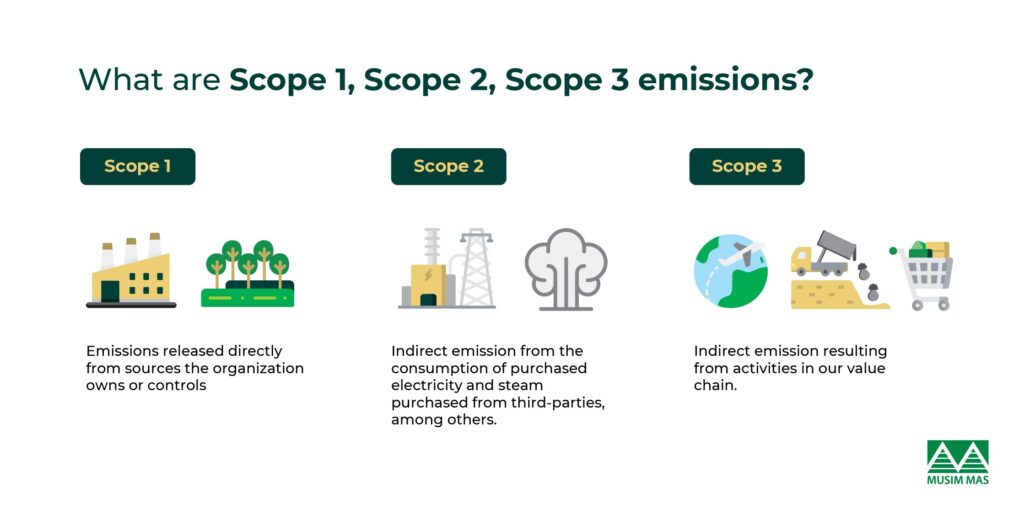
With Scope 3 emissions making up the bulk of the corporate carbon footprint, most companies are engaging their suppliers for emission data and collaboration for decarbonization. For our customers, understanding the Product Carbon Footprint (PCF) of the products they buy from us is critical.
It enables them to:
- Evaluate suppliers based on their climate performance and thus have leverage to choose partners aligned with their sustainability goals.
- Track and report progress toward their Science Based Targets initiative (SBTi) commitments with confidence.
- Collaborate with suppliers, like Musim Mas, to collectively contribute to decarbonizing the value chain.
Over time, this kind of transparency can shift the entire ecosystem toward lower-carbon solutions, and that’s how real change begins.
Leading the way: PCF at Musim Mas
Our PCF assessment began with the LCA study conducted in 2019 for our upstream products. In 2023, we completed LCA for selected downstream products, with the scope from cradle to gate covering our entire production cycle, from cultivating FFB at our plantations to manufacturing of the final product.
The LCA assessments complement our PCF calculations, allowing us to uphold our sustainability commitments while meeting the increasingly stringent requirements of our customers for a wide range of palm-oil derivative products. To ensure compliance with the highest standards, we have two in–house GHG specialists who received LCA Expertise Certification from BNSP (Badan Nasional Sertifikasi Profesi).
The expertise has enabled us to provide reliable and transparent Product Carbon Footprints (PCFs) to our customers. can seamlessly integrate these figures into their Scope 3 reporting, and showcase their progress toward climate commitments to all stakeholders including investors and regulators.
Path to Responsible Palm oil
For Musim Mas, investing in Product Carbon Footprint (PCF) accounting is not just a box-ticking exercise; It gives us market access by meeting the growing demand from Global North customers and multinational buyers for transparent emissions data.
This strengthens our risk management by helping us prepare for regulatory shifts which will enhance our reputation as a sustainability frontrunner, and boosts efficiency by pinpointing emissions hotspots that can be reduced by company own efforts or collective collaboration from multi stakeholders.
Addressing Product Carbon Footprints (PCFs) becomes essential for businesses, consumers and the planet. By measuring emissions across a product’s life cycle, companies can uncover where the biggest impacts occur and take meaningful steps to reduce them.
This reveals opportunities for collaboration in reducing emissions, and by investing in calculating and analysing PCF we not only meet today’s expectations but also prepare for a future where transparency and accountability will be increasingly demanded for all climate-related matters.
References:
- CarbonChain. (n.d.). Product carbon footprint explained. Retrieved [insert retrieval date], from https://www.carbonchain.com/carbon-accounting/product-carbon-footprint
- Rhodes, O. (2024, October 3). Introducing product carbon footprints (PCFs): The essentials. PACT Insights from https://www.carbon-transparency.org/insights/introducing-product-carbon-footprints-pcfs-the-essentials
- European Commission. (n.d.). Life cycle assessment & the EF methods. Green Forum. Retrieved [2025, September 11], from https://green-forum.ec.europa.eu/green-business/environmental-footprint-methods/life-cycle-assessment-ef-methods_en
- Musim Mas. (n.d.). Greenhouse gas (GHG) emissions reduction [Webpage]. Retrieved September 4, 2025, from https://www.musimmas.com/sustainability/positive-environmental-impacts/greenhouse-gas-ghg-emissions-reduction
- World Economic Forum. (2022, November 2). How 4 leading companies are tackling supply chain emissions. Retrieved from https://www.weforum.org/stories/2022/11/scope3-supply-chain-emissions-cop27-ikea-philips-zf-unilever/