By: Devane Sharma
Building on a Culture of Inclusion | The DIWA Perspective: Supporting Inclusive Transformation | The Managerial Perspective: Leading with Empathy | A Journey Worth Continuing
Building on a Culture of Inclusion
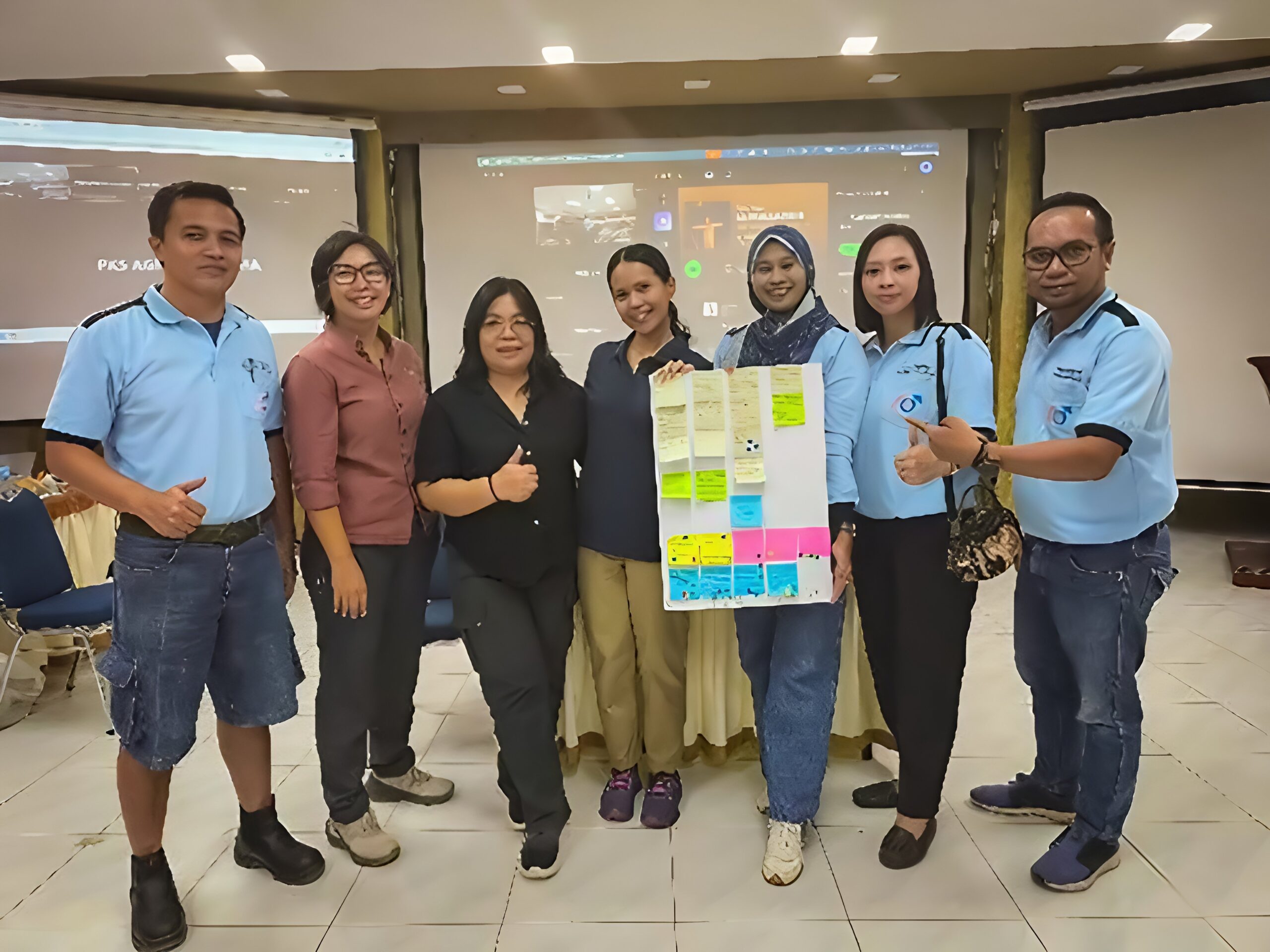
A Team Discussion at a Musim Mas Gender Committee meeting
Musim Mas has long recognized that empowering people is fundamental to sustainable business. Since we launched our Sustainability Policy in 2014, respect for the rights of smallholders, workers and the communities we serve has been the first pillar. This aligns with international standards such as those set by the United Nations. Our participation in the Roundtable on Sustainable Palm Oil (RSPO), and later in the Palm Oil Innovation Group (POIG), has shaped a progressive approach to workplace fairness and community well-being.
Gender equality is central to that approach. We long saw the need to ensure our work environments are conducive for women to succeed and thrive, hence Musim Mas established Gender Committees in 2008 , demonstrating our commitment. For many of our colleagues, these programs have also been personally transformative. As Polmas Simbolon, one of our Mill Managers, reflected:
“In my Bataknese cultural tradition, sons were often valued more than daughters. But through my involvement in the DIWA program, I’ve come to realize that daughters and sons must be treated equally. Both deserve the same opportunities and respect.”
In 2016, we partnered with Verité (now DIWA – Dignity In Work for All in Southeast Asia) to conduct an independent labor assessment across our operations. DIWA is a global non-profit organization with a vision to ensure all workers are empowered to advocate for their rights and well-being in global supply chains. Known for its expertise in labour and human rights, DIWA provides independent assessments, research, and capacity-building to help companies identify and address risks related to forced labour, discrimination, and other workplace violations. In 2022, we followed-up with a second labour assessment, reaffirming our strong systems, while also recommending we strengthen our Gender Committees to become proactive agents of change. These insights led to our third project in this area, which focuses on deepening the role and capacity of Gender Committees across our upstream operation (plantations and mills).
In this article, we reflect on the progress made in an interview with DIWA experts and two Musim Mas employees—one in a managerial role and one on the ground—to better understand how these efforts are shaping our culture and communities.
The DIWA Perspective: Supporting Inclusive Transformation
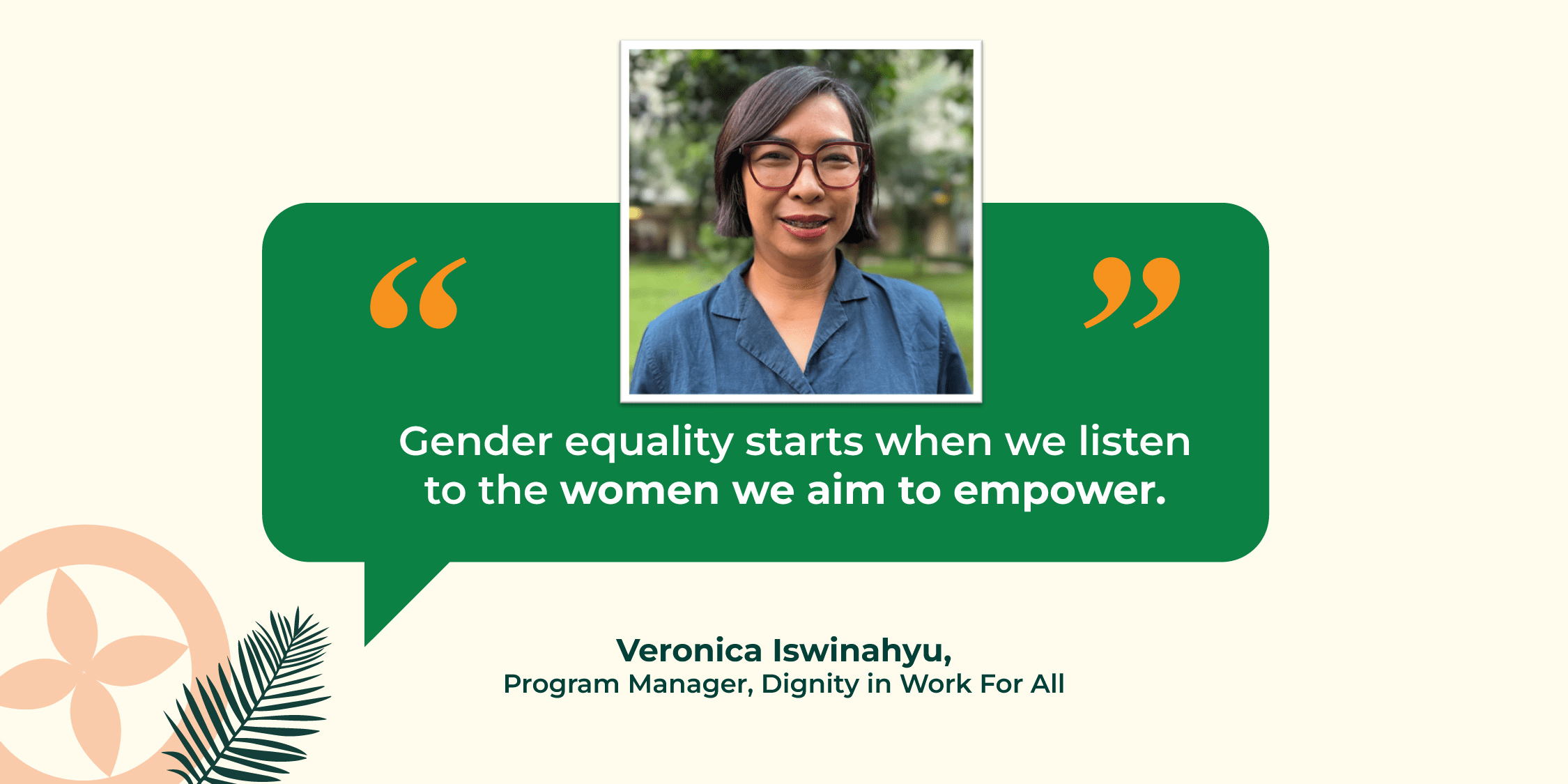
We spoke with two DIWA team members: Veronica and Maecel, who are Program Managers at DIWA, all of whom played key roles in our gender program.
Q: This is the third DIWA-Musim Mas partnership. How would you describe the progress since your previous assessment?
Veronica: I was involved in both the 2021 labour assessment and the current gender program. Back then, we already recognized that Musim Mas has strong support systems in place for their workers but we felt more could be done to go further—especially for their Gender Committees. They had the potential to be much more impactful. Musim Mas then decided to go further with this collaboration. We see a genuine willingness from Musim Mas to evolve, and that willingness is key. Some companies have ability, but lack that willingness.
Maecel: Yes, continuing from that earlier work and investing in a long-term gender program is a sign of real commitment. This isn’t just about checking boxes—Musim Mas is building capacity within the organization, which is rare in the industry.
Q: What initiatives have stood out to you as most impactful?
Veronica: Gender intervention stood out to me. It’s significant in a male-dominated industry like palm oil. Women in this sector are often marginalized—they’re not seen as key contributors, and their voices are rarely heard. By giving visibility and support to women, Musim Mas is disrupting long-held assumptions.
Q: In your view, how effective are our Gender Committees outreach and education modules?
Maecel: These programs are a vital part of the Gender Committees’ work and Musim Mas does this well. It’s important to reach not only female workers but also the broader community. In terms of the education modules, there’s room to deepen the content, especially around workplace dynamics and power structures, but the commitment is there.
Veronica: The committees are doing their best with the resources and guidance available. We see the potential for them to move beyond domestic-focused content into areas that can influence systemic change. For example, providing opportunities and encouraging Women to expand or take major leadership role which are a leap beyond traditional boundaries.
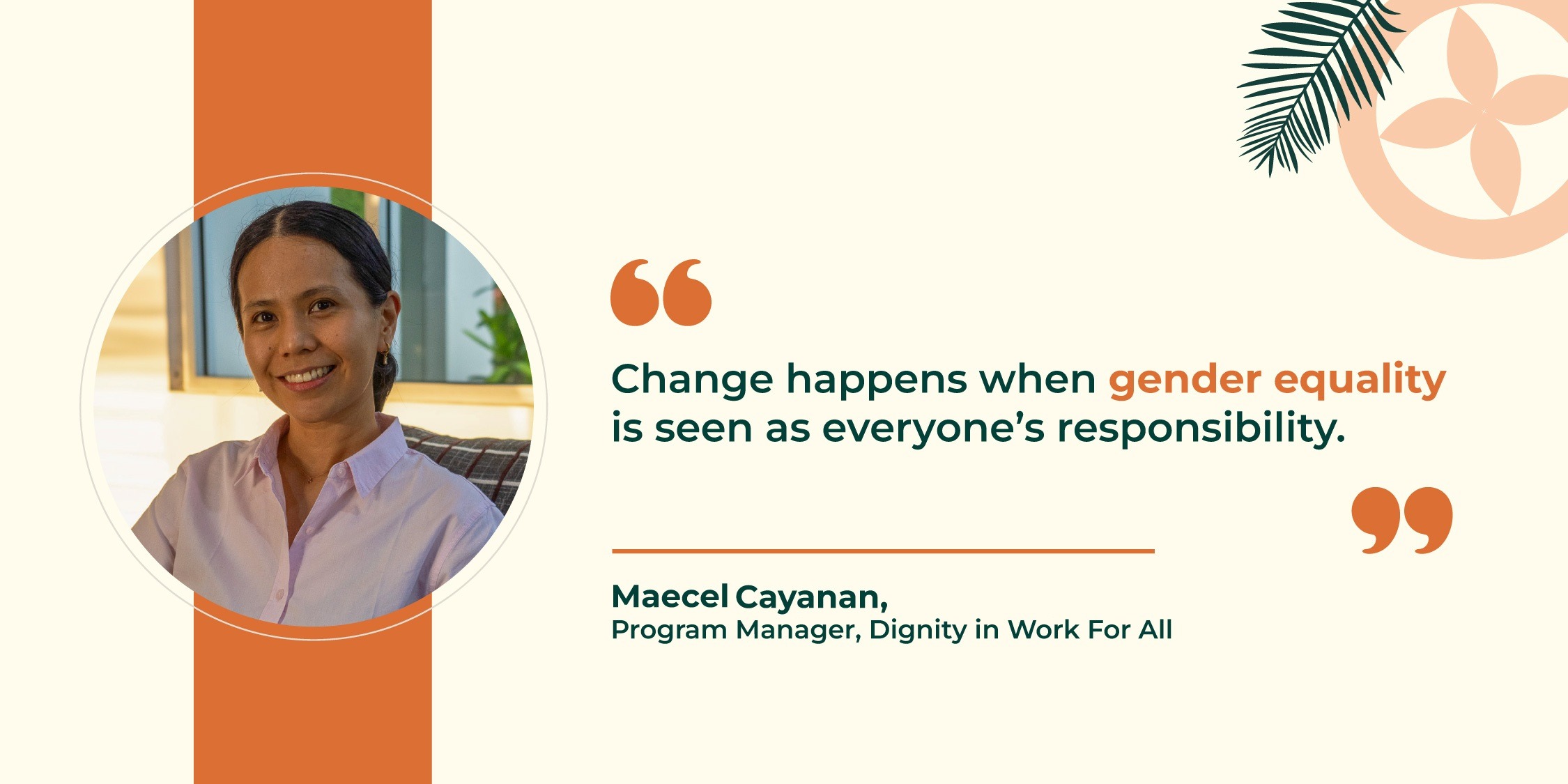
Q: What do you think about the healthcare-focused initiatives?
Maecel: Healthcare is a huge area, especially for pregnant workers. But it is not only about pregnancy. Women face unique health and safety risks which are often overlooked in health and safety assessments. Gender Committees can play an important role in analysing safety risks from a gendered lens.
Veronica: In many audits we’ve done, we see that assessments tend to be carried out by male-led teams without involving the female workers, this includes the healthcare-focused initiatives. It should be “nothing about us, without us.” Musim Mas is continually making efforts to strengthen this inclusivity.
Q: How important is it to involve men in gender programs?
Maecel: It’s essential. Gender is not just about women. If you want to shift perceptions and culture, men must be part of the journey. Musim Mas has done well to include men in these discussions and workshops.
Veronica: Yes, involving male colleagues is just as important. Fact is, they still form majority portion in the management structure and getting their buy-in will accelerate lasting change. But, we must still ensure women’s meaningful participation.
Q: Are there any best practices from other companies on measuring gender program impacts?
Maecel: Honestly, in this regard, Musim Mas is ahead of the curve in the palm oil industry. Most companies are not yet doing this kind of work. Musim Mas is pioneering by building real capacity with the committees instead of just setting up token structures.
Q: What improvements can Musim Mas make to further strengthen its Women’s Empowerment Program?
Veronica: Expansion. From these three sites in the current assessment to more subsidiaries, and share the lesson learnt to suppliers. Let the current committee members mentor others. That’s how impact is achieved.
Maecel: Also, share the load. Gender Committees are small teams. Finding ways to involve more staff or rotate roles can make these programs more resilient and impactful.
The Managerial Perspective: Leading with Empathy
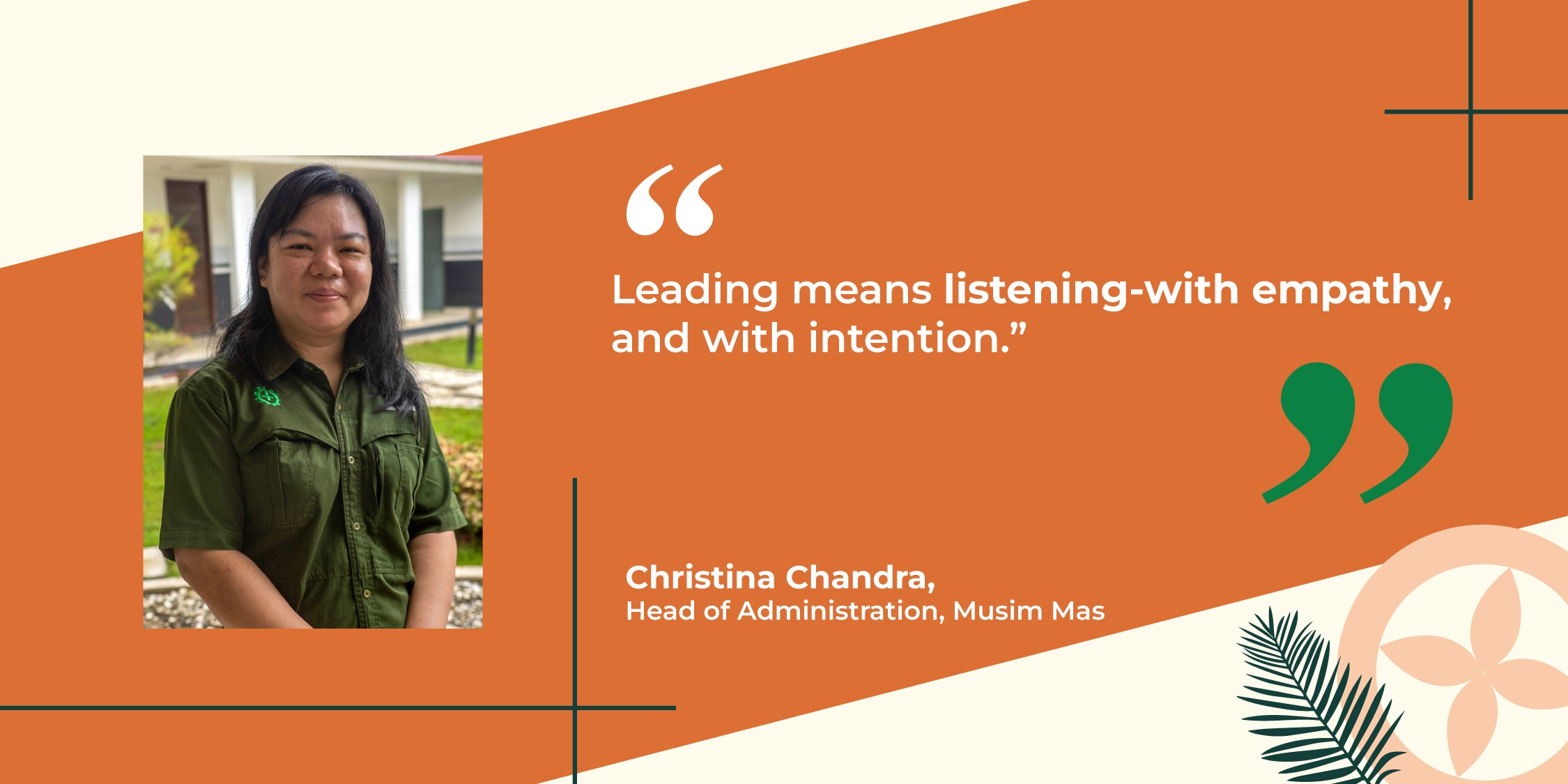
Christina Chandra, Head of Administration
With over two decades of experience at Musim Mas, Christina Chandra has risen through the ranks—from starting her career as a warehouse staff member to now serving as Head of Administration. Her journey reflects a deep understanding of the operational heartbeat of the company. As a leader, she brings a grounded perspective to the Gender Committee, combining years of on-the-ground experience with a clear vision for inclusive leadership.
Q: What motivated you to join the Gender Committee?
I support the mission of the Committee, which is to empower all employees regardless of gender, age, or marital status. I also learned the importance of listening—really listening—to different perspectives.
Q: How do you apply what you’ve learned?
At work, I create safe spaces for female employees to speak up through targeted discussion sessions. At home, I strive for an equal partnership with my husband in managing household responsibilities.
Q: As a managerial employee, how do you guide junior female staff in the work place?
I always strive to be a supportive mentor by giving clear directions, finding opportunities for skill development, and encourage them to have self-confidence on taking leadership roles.
Q: Has the Committee helped open communication channels with your staff?
Yes. Particularly about clear and open communication channels. My staff are more open to speak up about their challenges and ideas, and it’s helping us work better together and find better solutions.
Q: Any areas you’d like the Committee to focus on next?
The program is working well. The key is to keep it going and ensure the skills are taught to future employees—continuing the momentum and increasing our impact.
We also spoke with Polmas Simbolon, Mill Manager, who reflected on how the Gender Committees and DIWA collaboration have shaped his own perspective. “In my Bataknese cultural tradition, sons were often valued more than daughters. But through my involvement in the DIWA program, I’ve come to realize that daughters and sons must be treated equally. Both deserve the same opportunities and respect.”
The Staff-Level Perspective: Balancing Work and Family
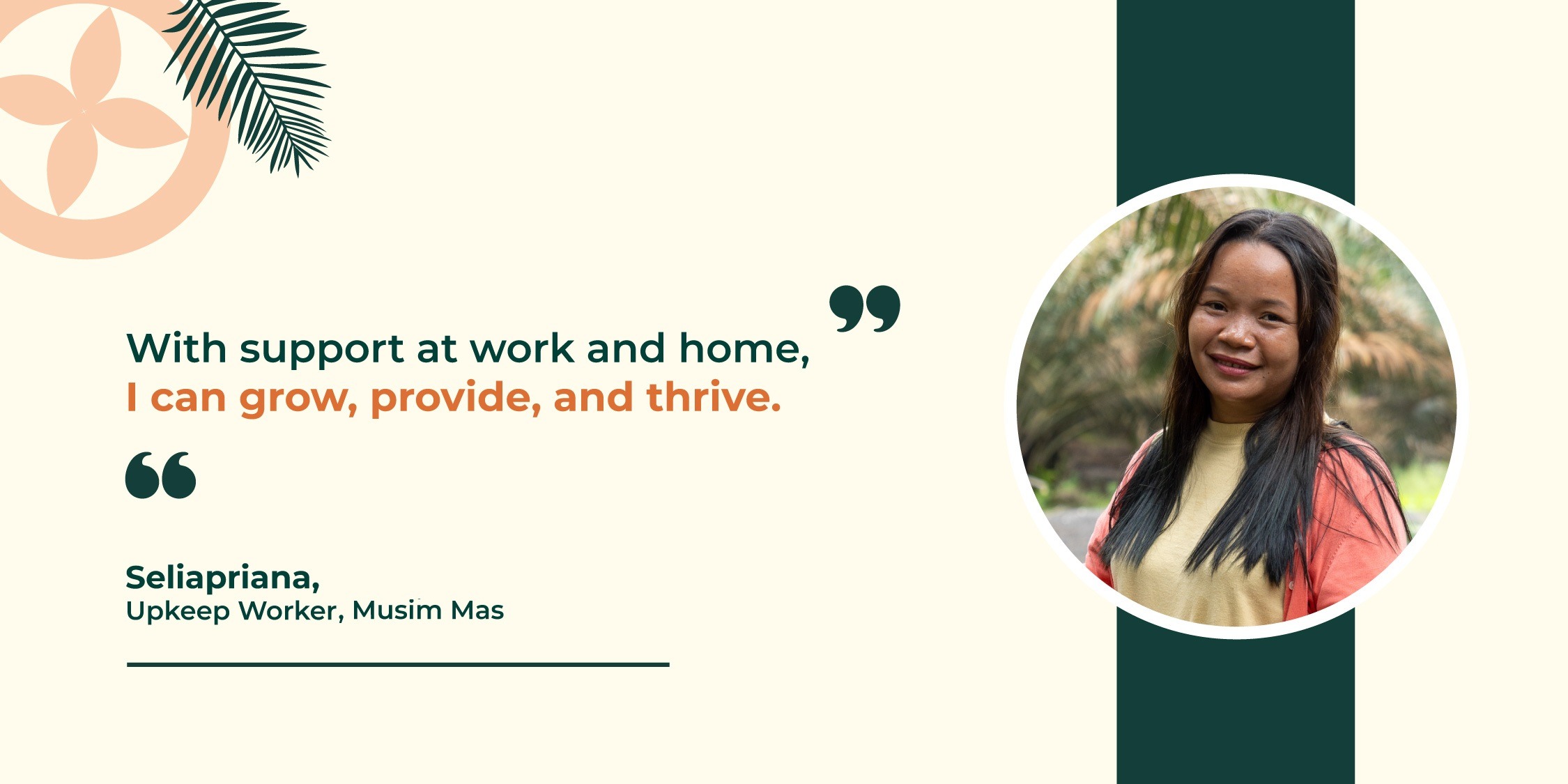
Seliapriana, Upkeep Worker
Seliapriana is a 31-year-old employee at the Musim Mas subsidiary PT Sarana Esa Cita, . Originally from Landak and a member of the Dayak community, she balances her responsibilities at work with family life. Her husband, Nohendri, is also employed at the same company as a harvesting clerk.
Q: What challenges have you faced, and how have you managed them?
One of the biggest challenges I face is balancing my responsibilities at work with my role as a mother and worker. It takes careful time management to ensure I can give my best in all areas. I’ve been able to manage this because of the strong support from my husband—we share household duties equally, which helps lighten the load and makes everything more manageable.
Q: What does gender equality at the workplace mean to you?
Equal opportunities for everyone, regardless of gender. No discrimination. That’s how it should be.
Q: What achievements are you most proud of?
I’m glad that me and my husband could hand-in-hand bought a small palm oil plot to financially support our parents in our hometown and I’m thanking Musim Mas that has been enabling equal opportunities for Women like me to have job/careers as such my husband, while also being present for my children with the provided supports and facilities (e.g. child care facility).. Thank you for making this possible.,
Q: What advice would you give to other women looking to build a career in this field?
My advice to other women who want to build a career in this field is to go for it! And show that we women do great things too.
A Journey Worth Continuing
Musim Mas’s approach to gender equality is built on action, collaboration, and an understanding that sustainable business must include everyone. From DIWA’s insights to the voices of employees at all levels, the message is clear: our Gender Committees are not just administrative tools, but powerful platforms for change. We remain committed to expanding and evolving this work. By listening, reflecting, and acting together, we are making Musim Mas a place where women can thrive, and where communities grow stronger, one empowered voice at a time.