By: Devane Sharma
The BIPOSC Project at a Glance | A Focus on the Composting Aspect: Why Does It Matter? | Home Composting in the BIPOSC Project | Introducing the Composting Unit: A Sustainable Business Model | How the Composting Unit Works | The Composting Unit Business Model | Why the Composting Unit Matters | Voices from the Ground
As the world grows increasingly conscious of sustainability, the palm oil sector continues to face scrutiny over its environmental and social impact. In North Sumatra, Indonesia, a powerful collaboration is proving that palm oil can indeed be grown more responsibly. The Biodiverse and Inclusive Palm Oil Supply Chain (BIPOSC) project is doing more than promoting regenerative agriculture—it is transforming livelihoods, empowering smallholder farmers, and fostering a scalable model for sustainable farming. One of the standout innovations to emerge from this initiative is a Composting Unit that is reshaping how smallholders manage soil health.
The BIPOSC Project at a Glance
Launched in 2021 and set to run until 2031, the BIPOSC project brings together a coalition of committed partners: Livelihoods Funds for Family Farming (L3F) SNV Indonesia, Musim Mas, World Agroforestry, and sustainable palm oil buyers, Danone, Mars, and L’Oréal. The project is currently focused on 13 villages in the Labuhan Batu District of North Sumatra, targeting 2,500 independent smallholders. The farmers taking part are certified by the Roundtable on Sustainable Palm Oil (RSPO) and part of a farmers’ association, Asosiasi Pekebun Swadaya Kelapa Sawit Labuhan Batu (APSKS LB).
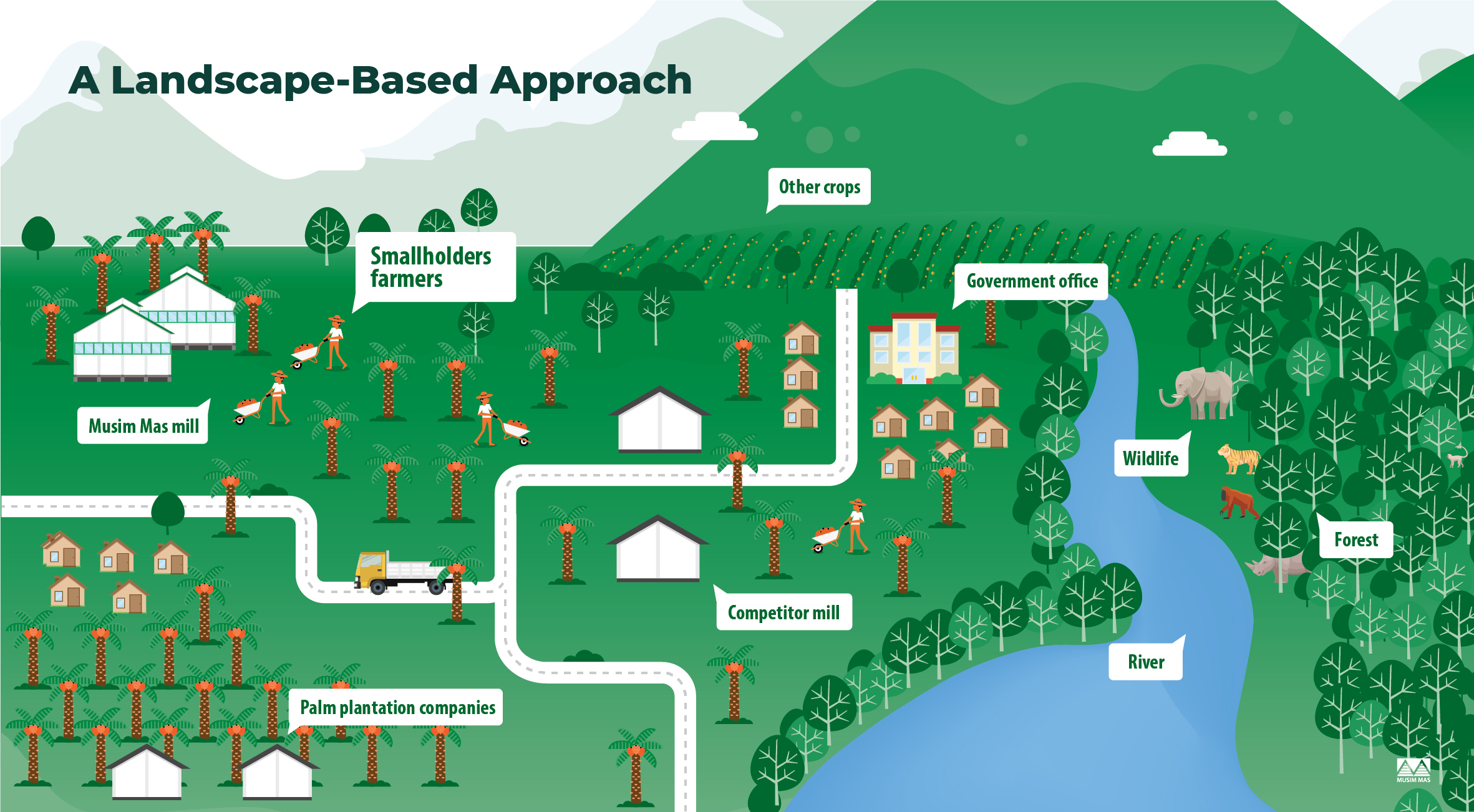
Its core goal is to build a deforestation-free, sustainable palm oil supply chain by empowering smallholders through Training on Better Management Practices (BMP) including regenerative, agriculture approaches through composting and agroforestry, empowering women in the community, and institutional capacity-building for farmer cooperatives and associations.
Institutional capacity-building refers to how this project develops systems and training models that communities can use and pass on—even after the project ends. This way, the knowledge keeps spreading and the practices continue to grow. Think of it like teaching someone to fish—but also giving them the tools to teach others how to fish. The project creates a system that communities can adopt and adapt, turning today’s trainees into tomorrow’s trainers.
Training on Better Management Practices (BMP) such as regenerative agriculture and composting is delivered through demonstration plots and a cohort of village facilitators, creating a hands-on, scalable approach to sustainable farming. Read more about how BIPOSC is enabling regenerative agriculture for smallholder farmers.
A Focus on the Composting Aspect: Why Does It Matter?
Composting is a natural process that transforms organic waste—like food scraps, manure, and agricultural by-products—into a nutrient-rich soil enhancer. Microorganisms break down these materials in a controlled environment that balances moisture, oxygen, and temperature. The result is compost: a dark, earthy substance that improves soil structure, boosts water retention, and supplies essential nutrients to plants. Importantly, composting supports biodiversity by enriching the soil with organic matter, which feeds a wide range of beneficial organisms—from microbes and fungi to insects and earthworms. This underground ecosystem is vital for healthy plant growth, pest control, and nutrient cycling. By fostering soil biodiversity, composting strengthens the resilience of farming systems and contributes to long-term environmental sustainability.
Home Composting in the BIPOSC Project
The BIPOSC project equips smallholder farmers with the skills to compost at home using available organic materials like food scraps, crop residues, and livestock manure. Through training, Farmer Field Schools and demonstration plots, farmers learn simple, low-cost techniques to turn everyday waste into valuable compost for their own use. This not only reduces their reliance on expensive chemical fertilizers but also empowers them to improve soil health independently. Home composting complements a central Composting Unit developed in this project by encouraging more widespread adoption of regenerative agriculture practices, right at the household level.
Introducing the Composting Unit: A Sustainable Business Model
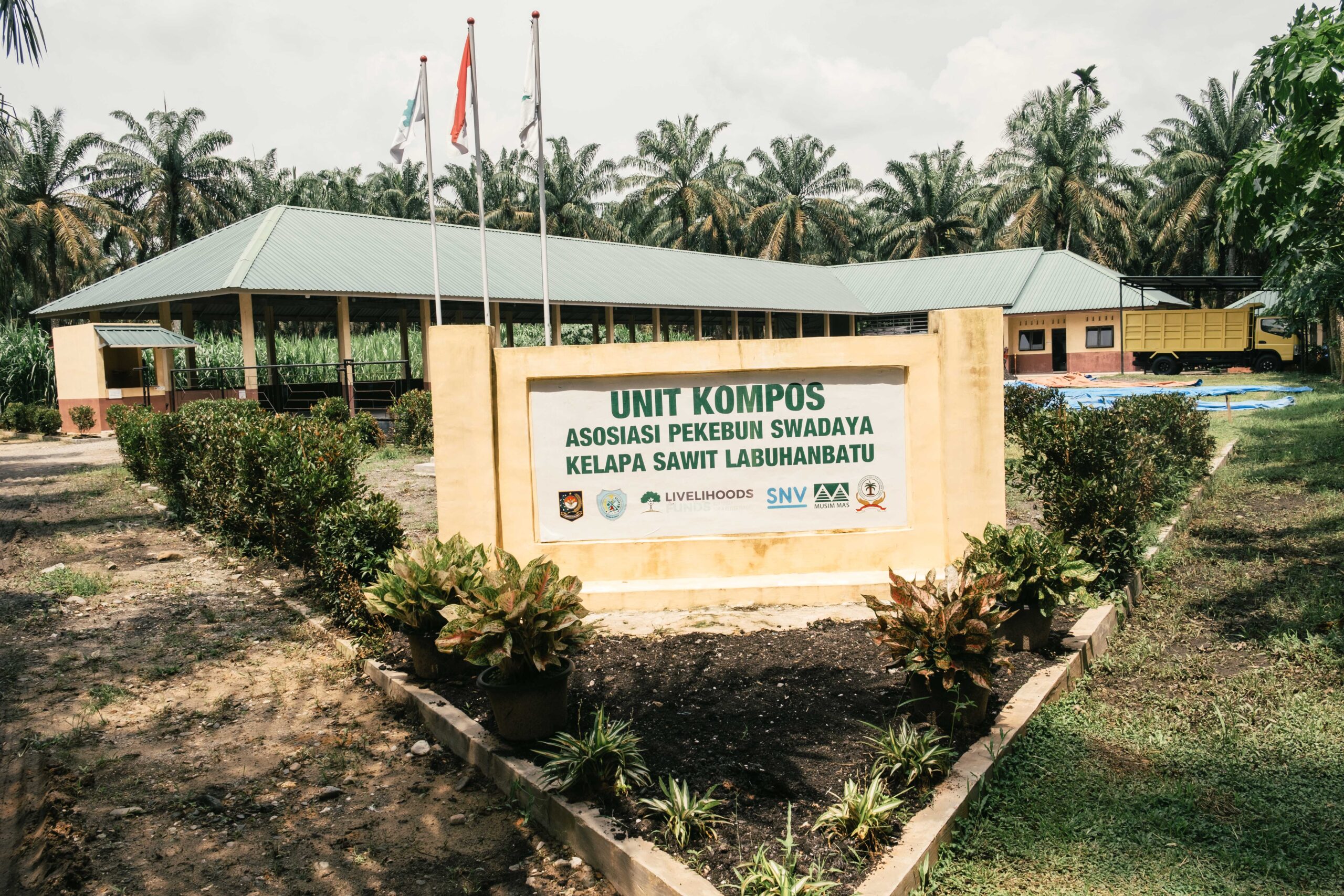
The BIPOSC Composting Unit
Among the most impactful outcomes of the BIPOSC project is the establishment of a Composting Unit. More than just a facility, this unit represents a micro-enterprise that epitomizes the project’s vision of sustainability, inclusivity, and innovation.
The Composting Unit collects raw materials such as boiler ash from nearby Musim Mas palm oil mills and manure from livestock farms. This organic waste is then processed and carefully monitored to achieve optimal composting conditions, including ideal temperatures and curing times. Once the compost matures, it is packed and sold to the association.
The association plays a key role by distributing the compost equitably among its members and preventing misuse. Through this system, smallholder farmers access organic compost at one-third the market price, dramatically reducing their input costs while enhancing soil fertility. Better yet, the unit is financially self-sustaining, operating as a business that benefits the entire community.
How the Composting Unit Works
At its core, the Composting Unit is a community-based circular economy initiative. It sources its input materials locally—using by-products that would otherwise go to waste. The main raw materials are dried decanter solids, sourced from a Musim Mas palm oil mill which are provided for free as an initiative to support smallholder farmers, and manure from local cattle farms. These inputs are transported to the composting site where trained workers manage the decomposition process, ensuring proper aeration, moisture levels, and temperature for optimal compost quality.
Sitting on a site of 3,167 m2, the Composting Unit features five stations that run a sequence of processes:
Step 1: Sorting & Fermentation: The first station is where the raw materials are sorted, mixed and put on the production line. Ensuring good quality raw material is important to the quality of the compost produced.
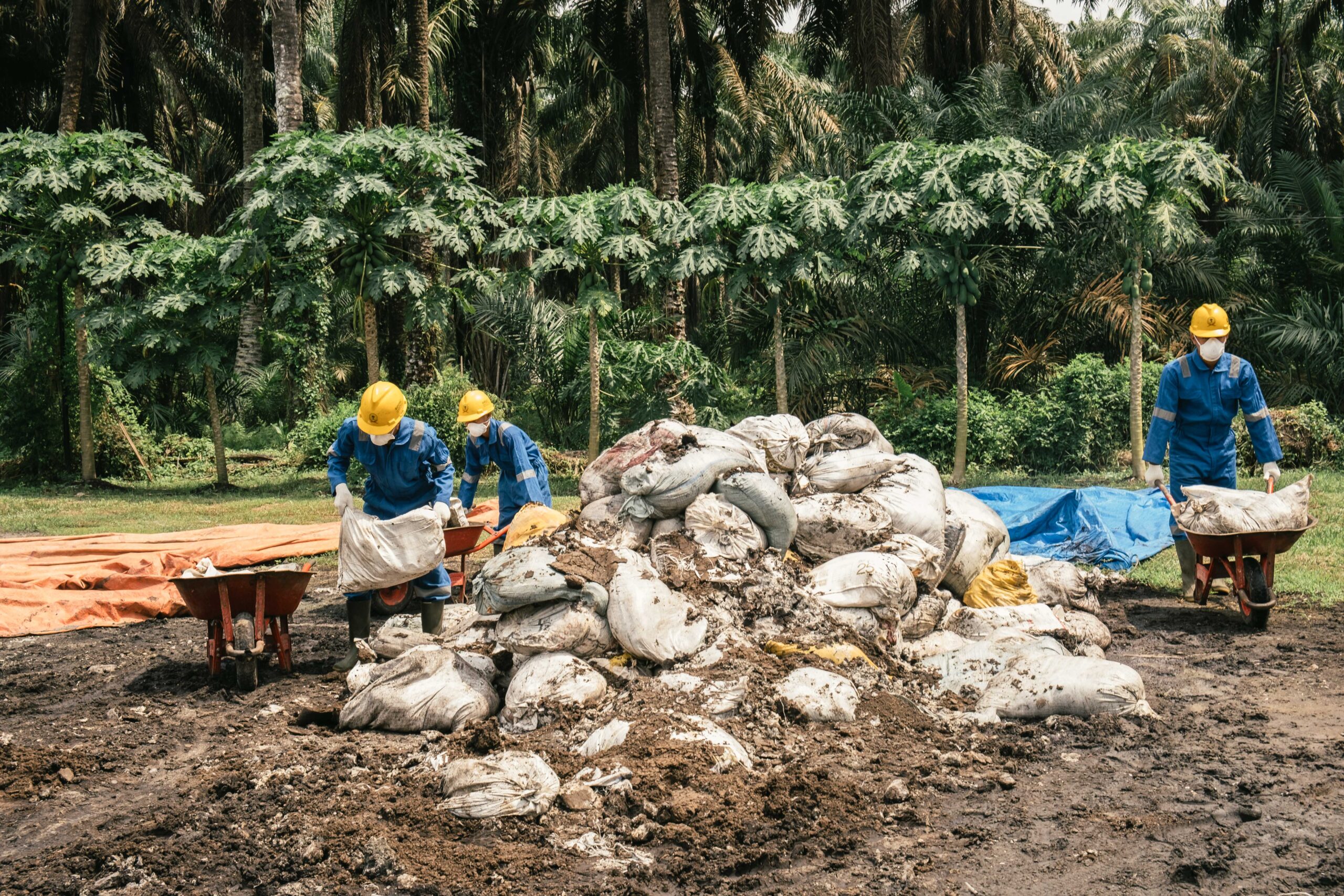
Step 2: Regular Temperature Checks: During the fermentation process, temperature checks are conducted daily as a control measure. If the temperature exceeds 60°C, stirring will be carried out.
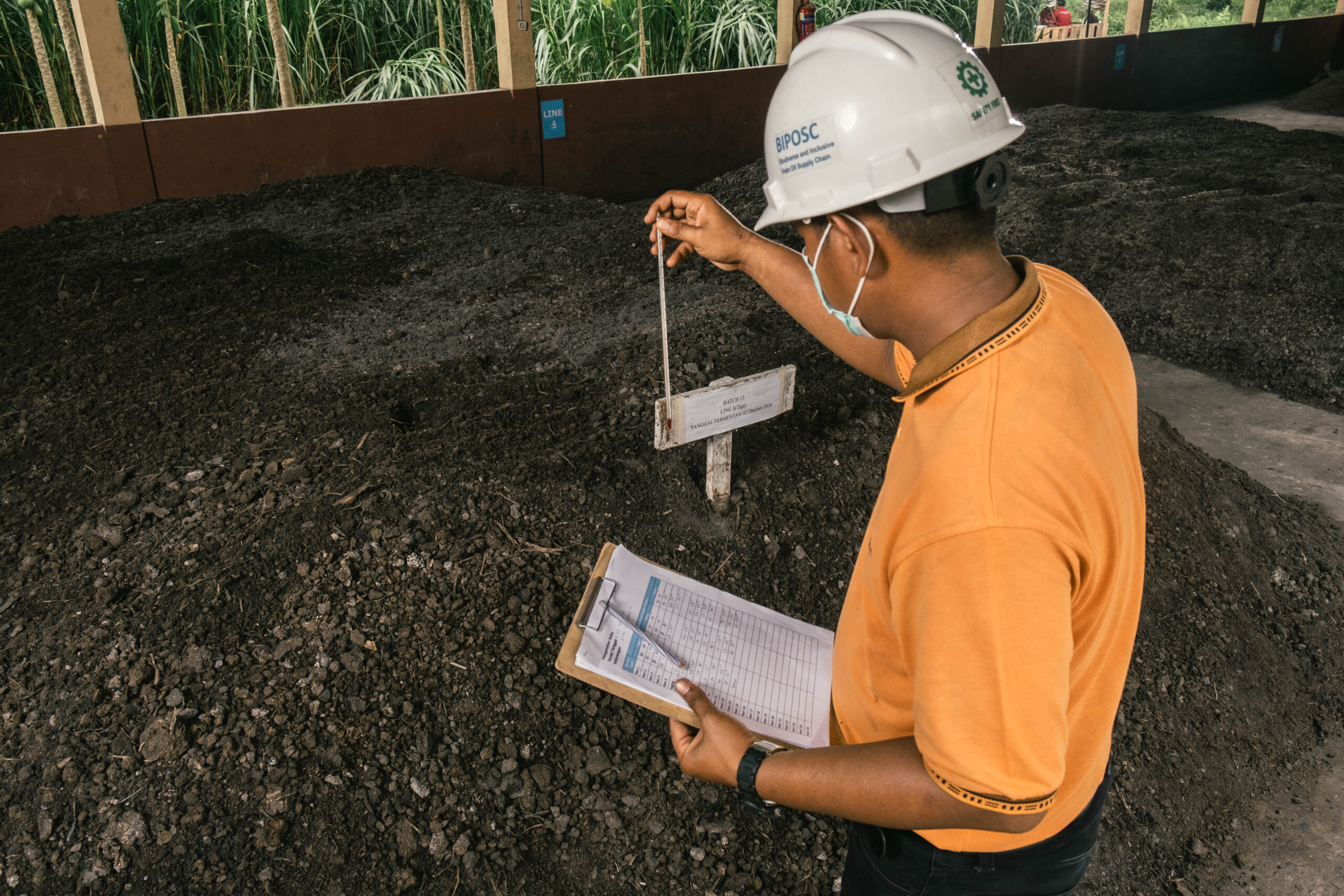
Step 3: First & Second Stirring: Stirring helps regulate oxygen, moisture, and temperature—key elements for effective composting. After the raw materials are stacked in fermentation rows, microbial activity causes the temperature to rise. When it exceeds 60°C, the first stirring is done to improve airflow, release gases, and keep decomposition on track.
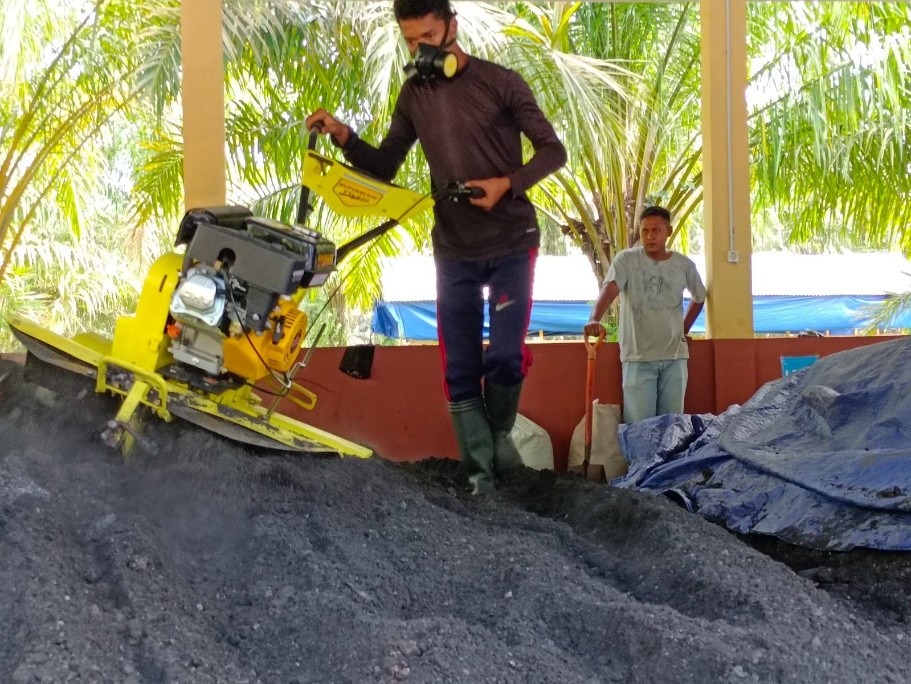
Step 4: Chopping: This is done after completing the 10-12 day’s fermentation period. This process utilizes a chopper machine to refine the fermented product into fine particles, resulting in a smooth fertilizer form that facilitates application on farmers’ fields.
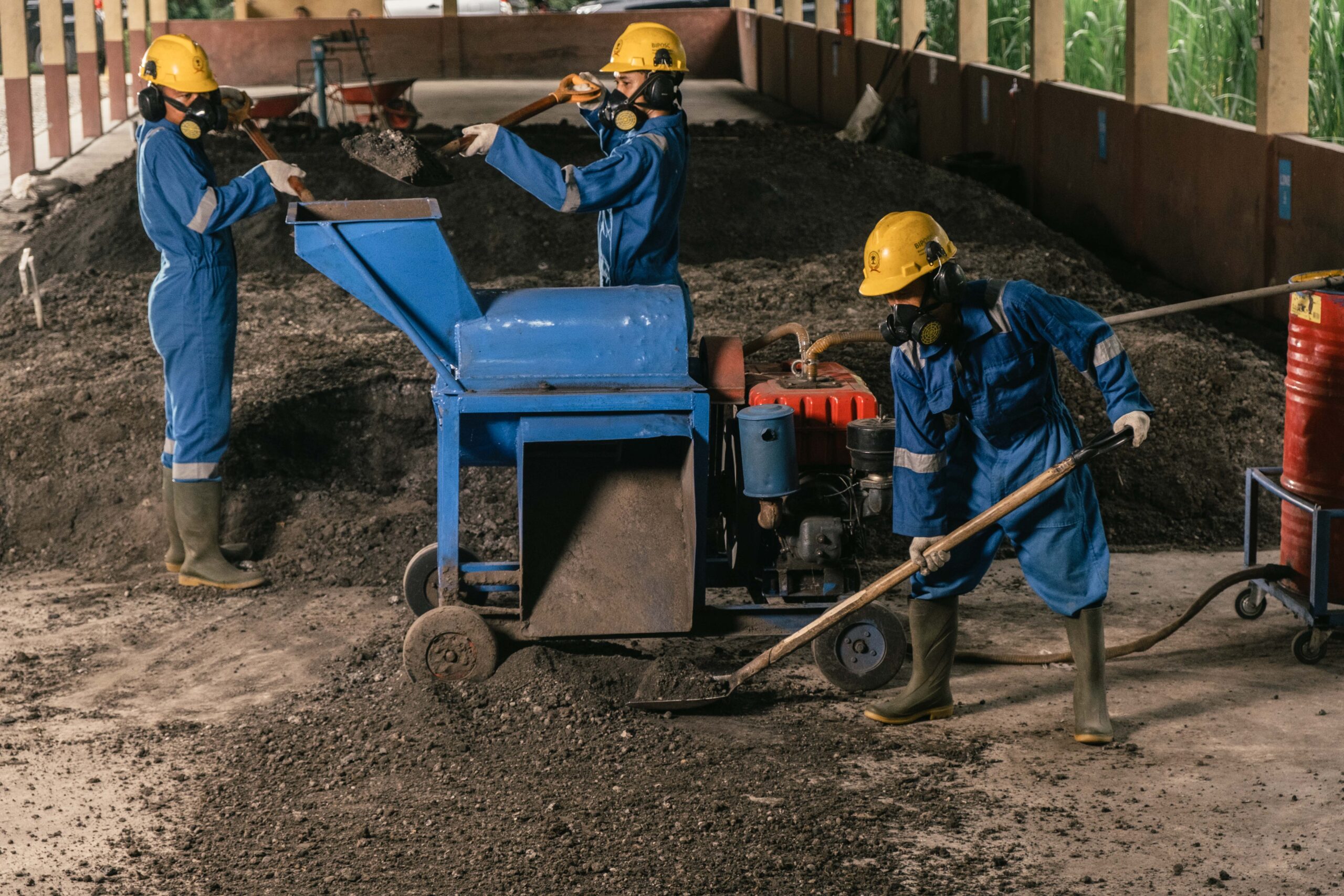
Step 5: Packaging: The compost is then ready-to-use and packed into 50kg sacks
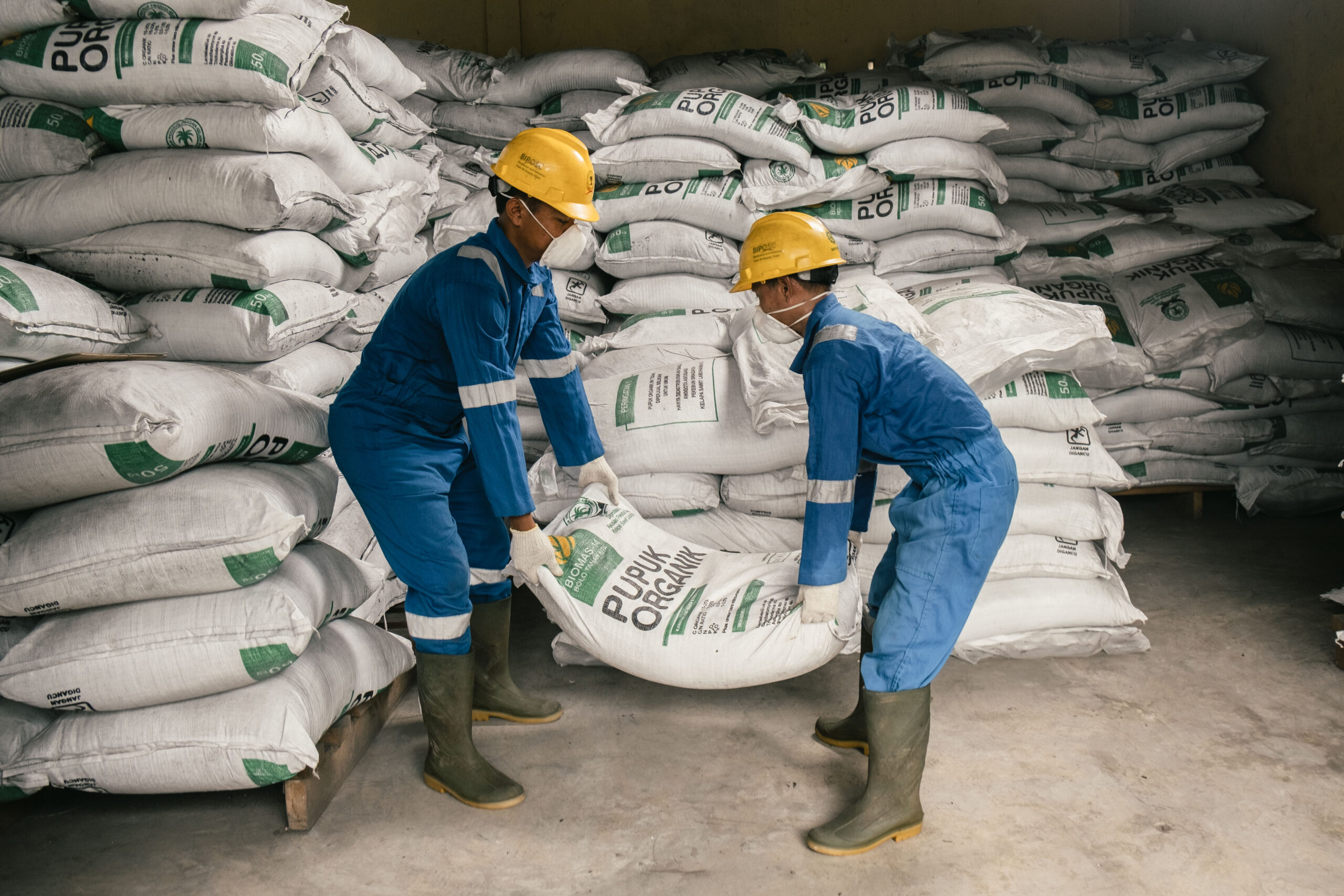
The process produces has a monthly production capacity of 150 tons. Workers are trained not only in composting techniques but also in monitoring and maintaining the composting environment. This ensures consistency in product quality. Once cured, the compost is bagged and sold to the local association.
The Composting Unit Business Model
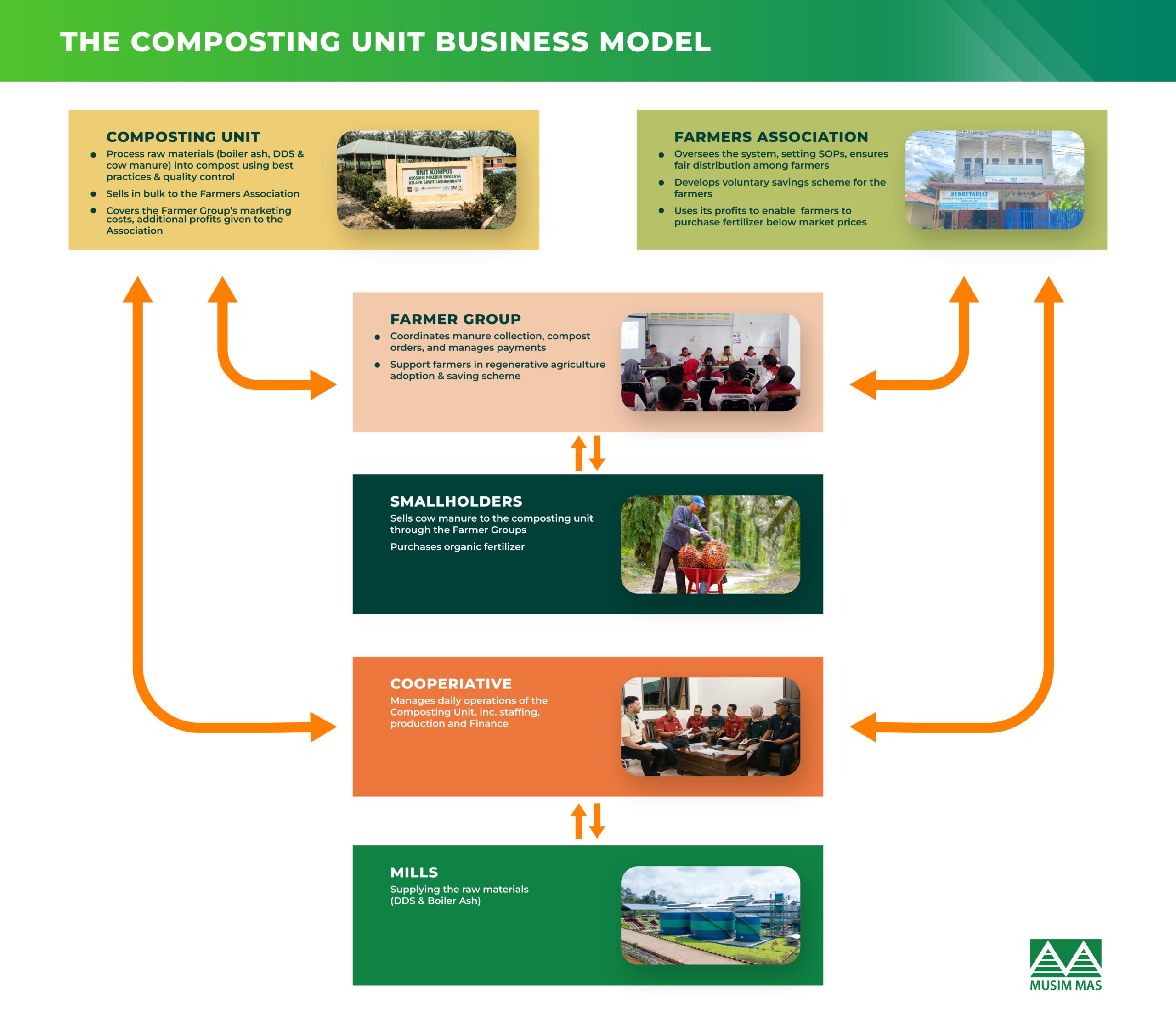
At the heart of the Composting Unit’s success is a community-driven business model designed to be transparent, inclusive, and self-sustaining. Here’s how it works:
- Smallholders
The smallholders are entitled to purchase organic compost based on the association’s Standard Operating Procedures, which support the adoption of regenerative agriculture practices. Farmers can also sell cow manure from their farms to the Composting Unit—providing an additional source of income.
- Farmers’ Association
The association oversees the business side of the Composting Unit. It sets Standard Operating Procedures (SOPs), manages sales, ensures fair distribution, and prevents hoarding by allocating compost based on the registered land size and number of oil palm trees per smallholder. The association uses profits from the sale—to bulk-purchase compost and subsidize the cost, enabling resale to farmers at up to 62% below market price. To support consistent fertilizer use, a savings scheme helps farmers set aside funds regularly, promoting financial literacy and ensuring compost use aligns with actual needs. The association also used the funds it obtained from the sale of RSPO credits to purchase the site of the composting unit.
- Village Farmer Groups
These are informal clusters of ~30 farmers led by a small committee. The group helps coordinate manure collection from the farmers, manage orders for compost, and guides members in managing payments. They also support farmers in adopting regenerative agriculture and Better Management Practices (BMPs) on their land. Village farmer groups also play a role in overseeing the voluntary savings scheme.
- Composting Unit
Operated by a cooperative, the unit processes raw materials which are cow manure, boiler ash, and dried decanter solids (DDS). into compost. It follows established SOPs and maintains quality control. The compost is then sold to the association in bulk.
- Mills
Musim Mas’ mills provides by-products of the milling process, boiler ash, and dried decanter solids (DDS) to the Composting Unit for free.
- Cooperative
Established by the association, the cooperative handles daily operations, manages profit and loss, and oversees compost production. Process raw materials (boiler ash, DDS & cow manure) into compost using best practices & quality control
The BIPOSC project team—led by SNV, Livelihoods Funds, and Musim Mas—provides technical guidance and supervision to ensure the system runs smoothly and can be scaled elsewhere.
Revenue generated from compost sales covers operational costs, pays workers a fair wage, and covers equipment maintenance. Any surplus is reinvested into the composting business or other community agriculture programs, making the unit not only self-sustaining but also an economic engine for the village. At the end of the project, the project will be handed over to the farmers’ cooperative, where it would become an asset.
This business model is built on principles of transparency, inclusion, and local ownership—ensuring long-term sustainability beyond the life of the BIPOSC project.
Why the Composting Unit Matters
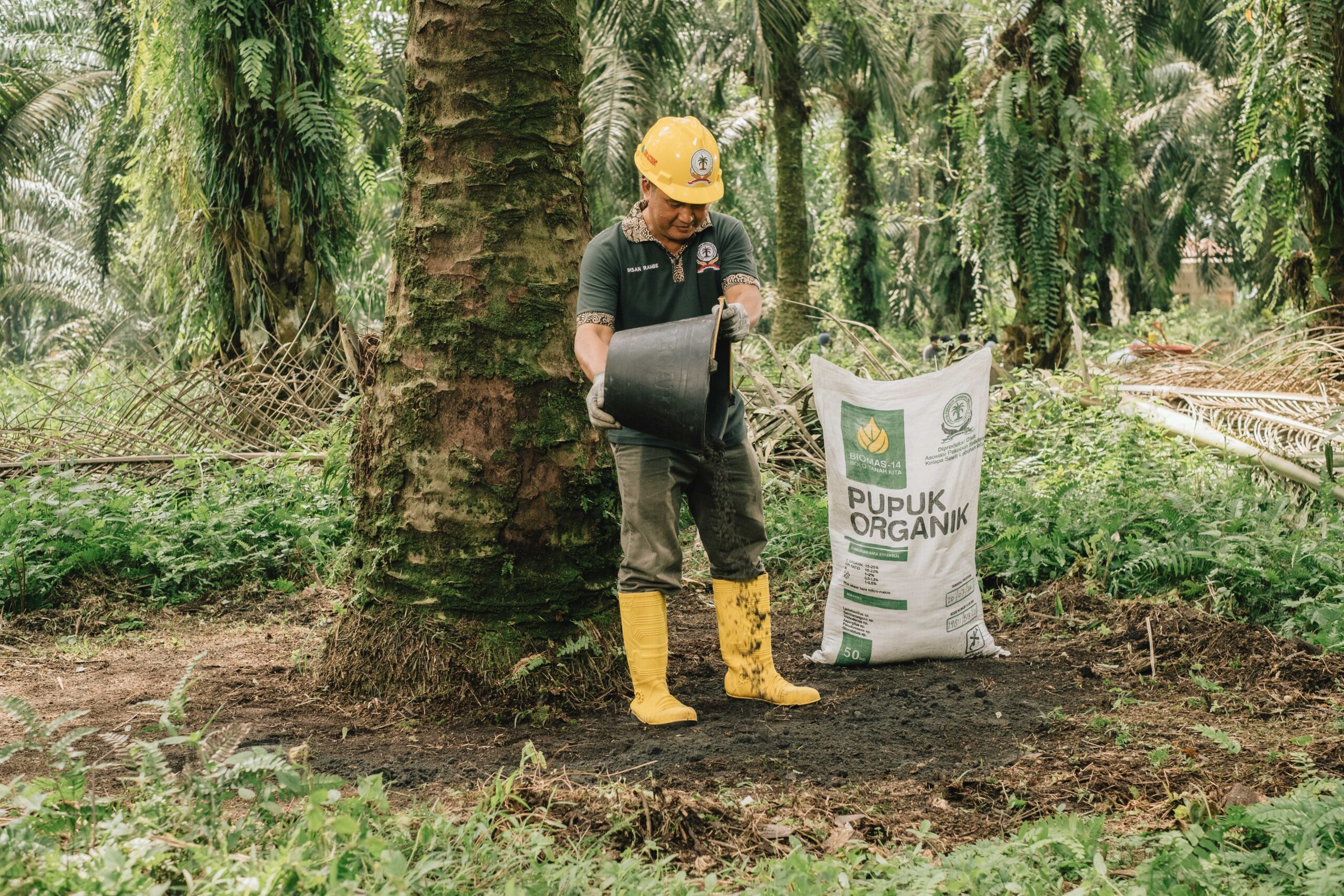
A farmer applying compost to a palm
The Composting Unit addresses multiple barriers that have long hindered smallholder farmers. Traditionally, the high cost of inputs like fertilizers has limited smallholders’ ability to improve yields. In many cases, chemical fertilizers are used inconsistently or in excess, harming long-term soil health and diminishing productivity over time.
By providing high-quality organic compost at a fraction of the market price, the Composting Unit significantly lowers these barriers. It also reinforces soil health by increasing organic matter and microbial activity, improving nutrient cycling and water retention. The compost serves as a natural alternative to chemical inputs, aligning with the BIPOSC project’s broader regenerative agriculture goals.
But perhaps most critically, this model proves that sustainable agriculture doesn’t have to come at a financial loss. The Composting Unit generates income, creates jobs, and adds value to agricultural waste, offering a scalable and replicable model for other regions in Indonesia and beyond.
Moreover, the unit builds local resilience. In times of fluctuating fertilizer prices or supply chain disruptions, smallholders can rely on a consistent, affordable supply of organic compost. It empowers communities to take charge of their farming systems and embrace environmentally-friendly practices without compromising on productivity or profitability.
The composting unit has a monthly production capacity of 100 to 150 tons per month. Over 40% of the smallholders in the project are active customers of it. Over 1,000 hectares of land have is treated with compost from this unit. In 2024, the composting unit turned a profit of over USD 31,000. These figures underscore the significant, tangible impact of integrating composting into the broader sustainability framework.
Voices from the Ground
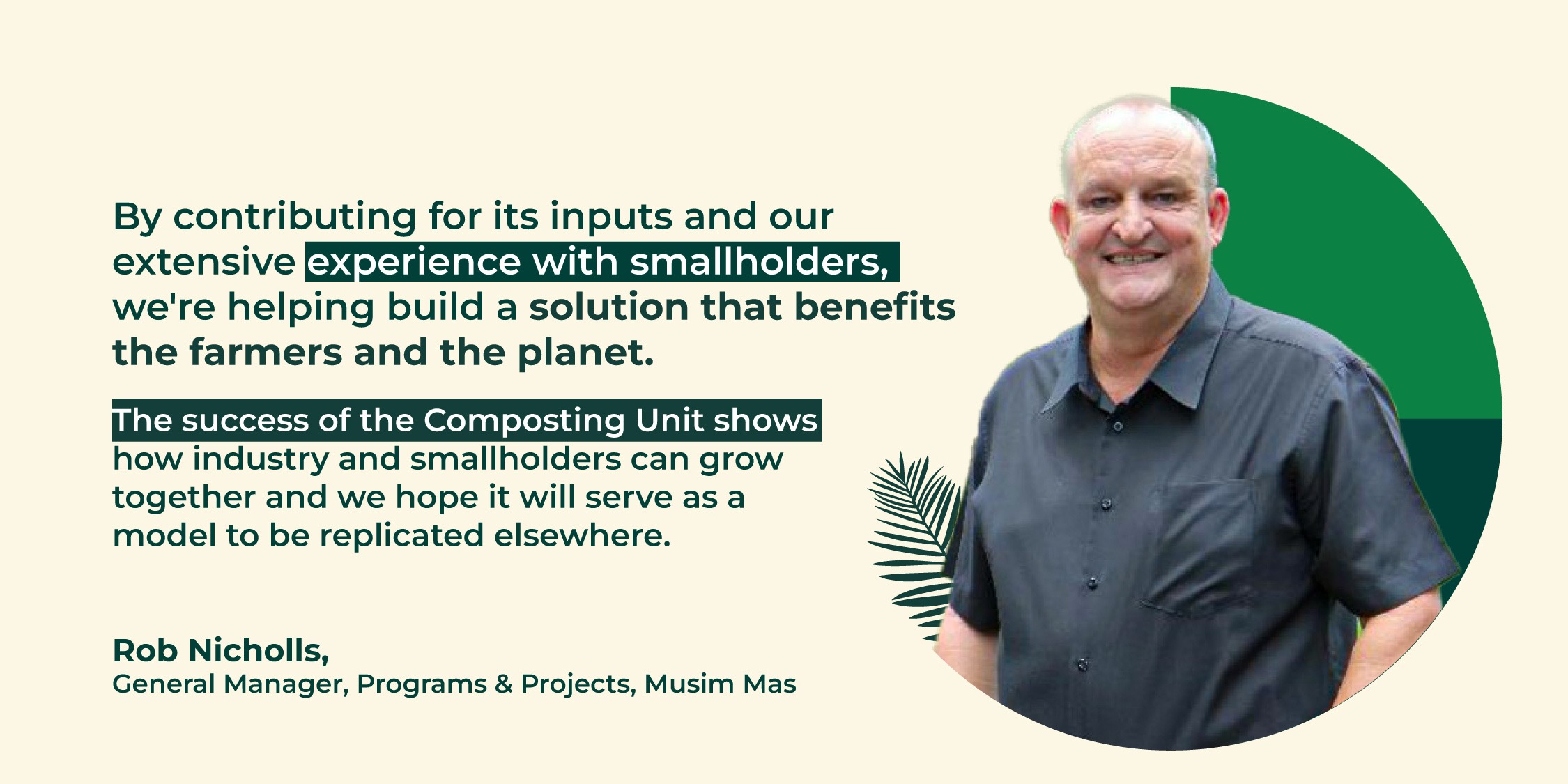
“The Composting Unit represents the spirit of innovation embedded in the BIPOSC project. It creates both economic and environmental value, proving that sustainability can be scalable and community-driven.” – Rizki Pandu Permana, Country Director, SNV Indonesia
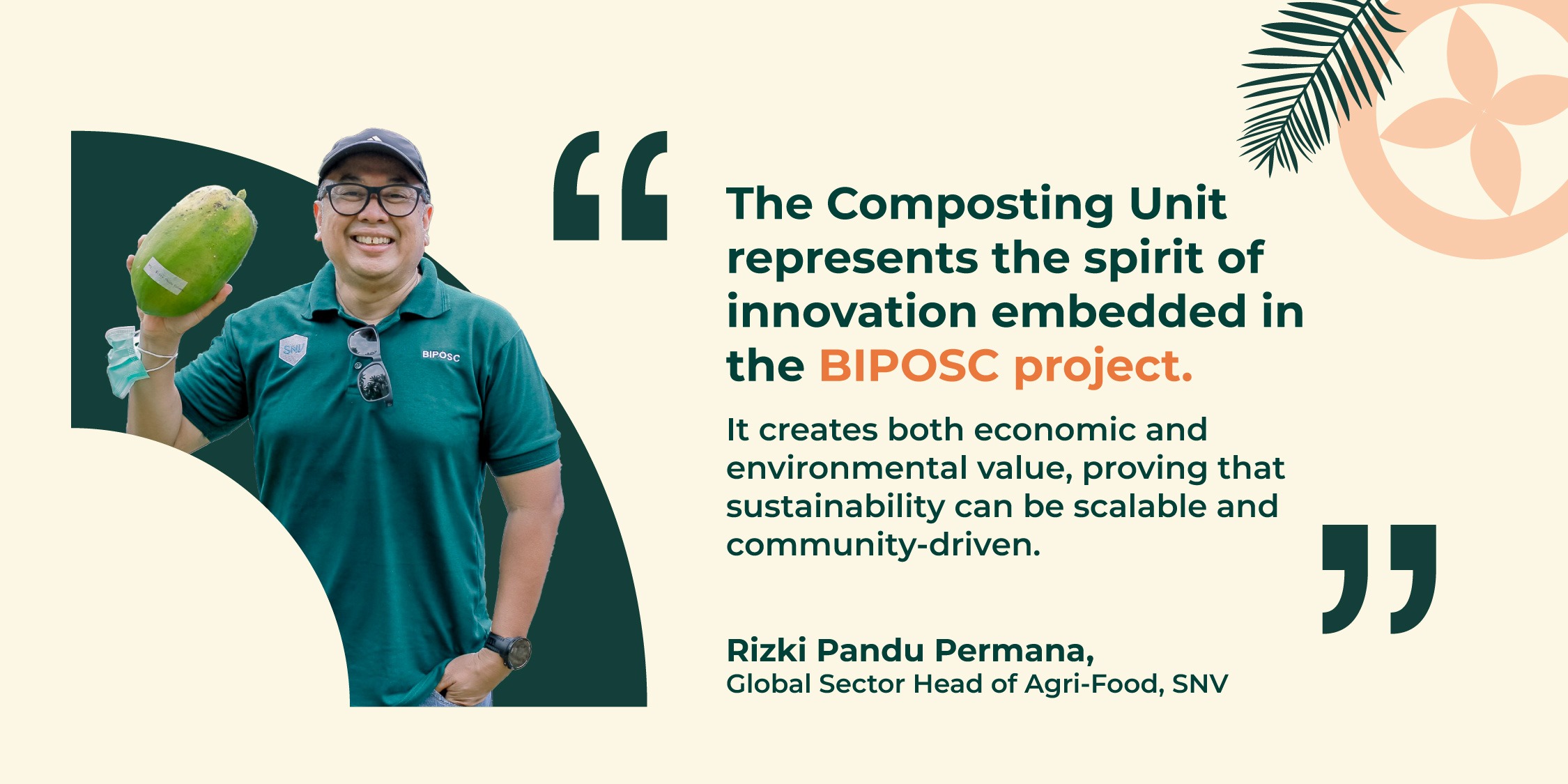
“The Composting Unit shows what’s possible when communities lead the change. It improves soil health, cuts costs for farmers, and runs as a sustainable local business—that’s the kind of lasting impact we strive for.” — Sébastien De Royer, Senior Project Manager, Southeast Asia, Livelihoods Funds for Family Farming
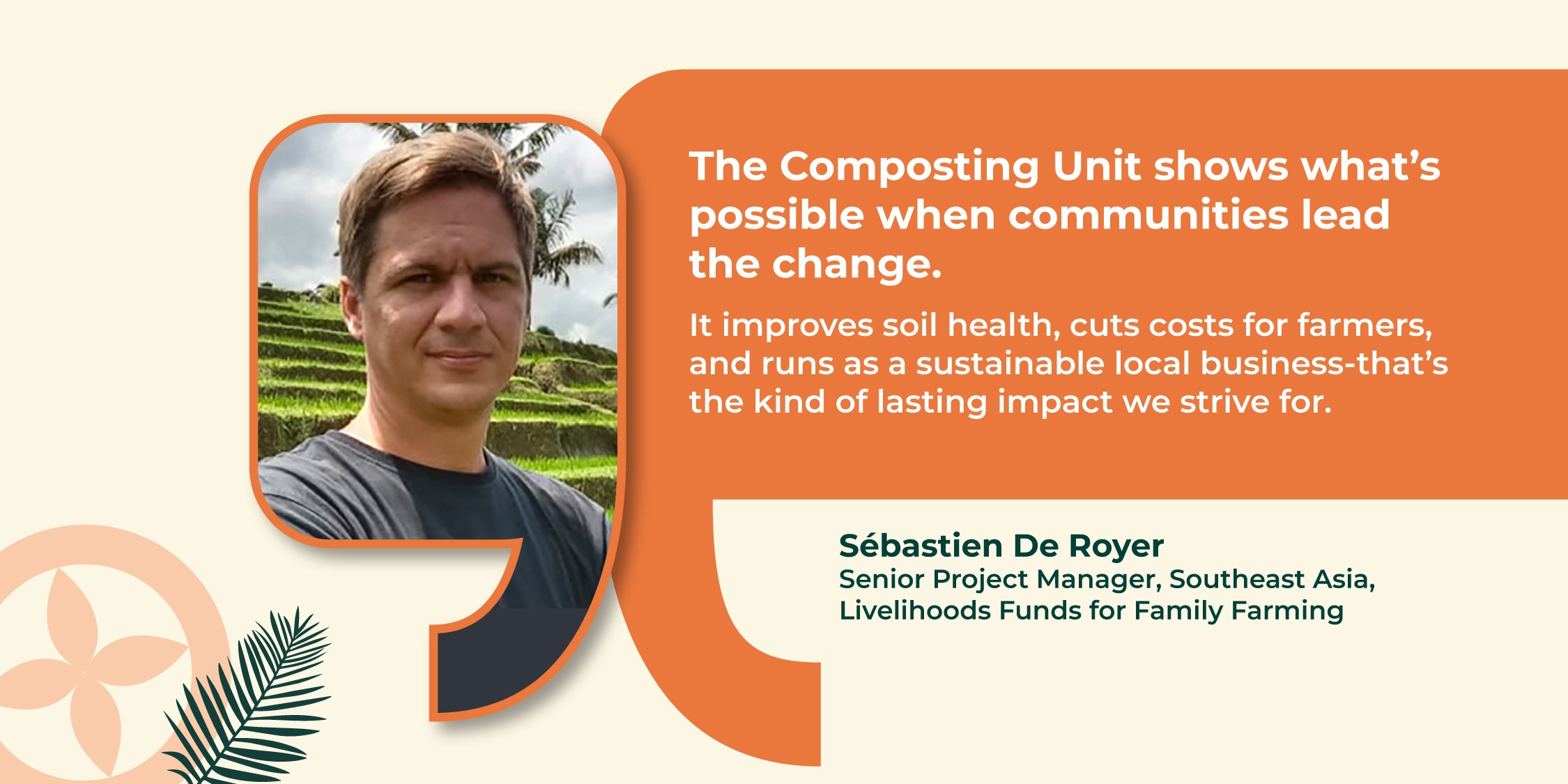
“By contributing for its inputs and our extensive experience with smallholders, we’re helping build a solution that benefits the farmers and the planet. The success of the Composting Unit shows how industry and smallholders can grow together and we hope it will serve as a model to be replicated elsewhere.” – Rob Nicholls, General Manager, Programs & Projects, Musim Mas
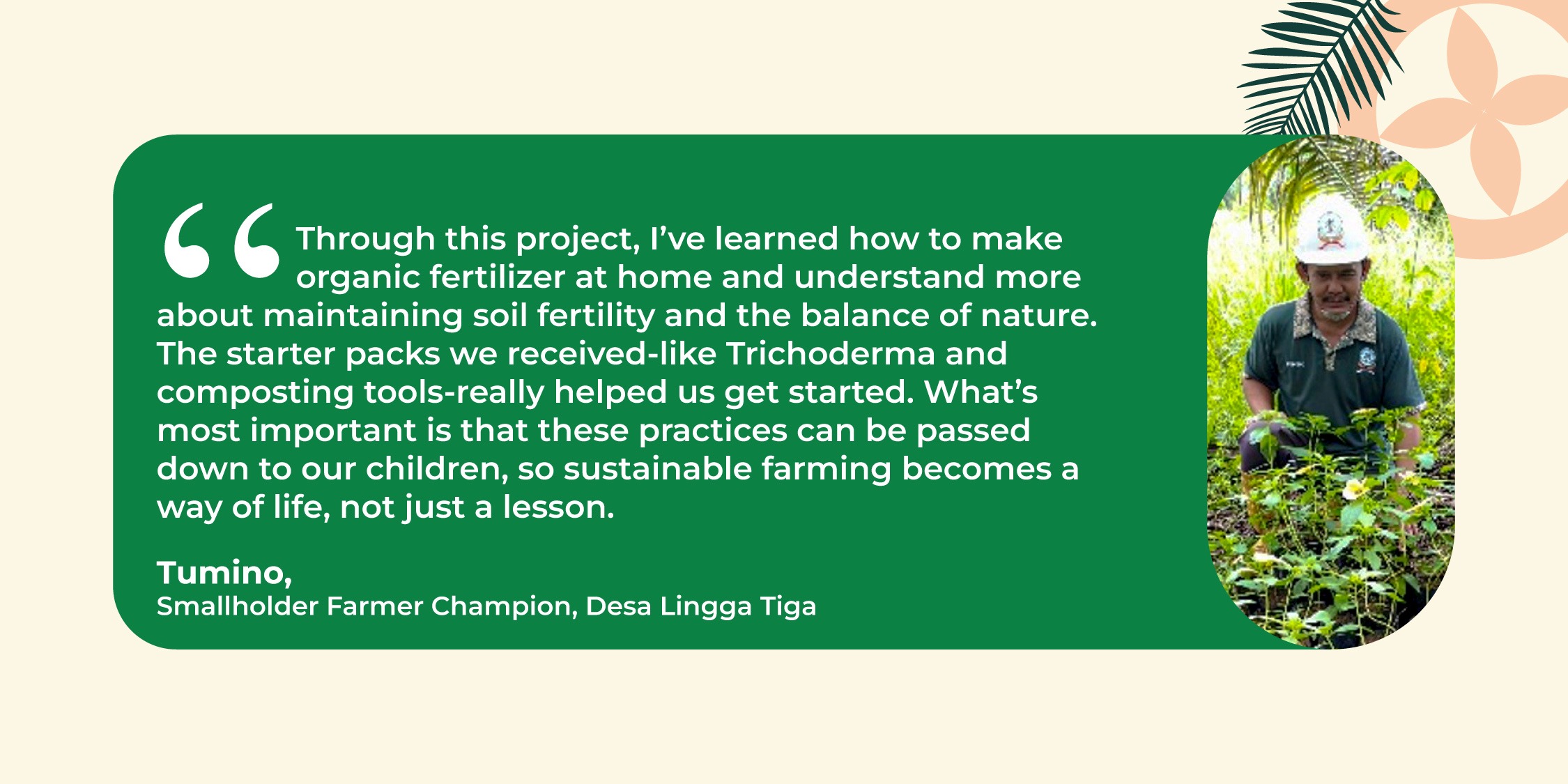
“Through this project, I’ve learned how to make organic fertilizer at home and understand more about maintaining soil fertility and the balance of nature. The starter packs we received—like Trichoderma and composting tools—really helped us get started. What’s most important is that these practices can be passed down to our children, so sustainable farming becomes a way of life, not just a lesson.” — Tumino, Farmer Champion, Desa Lingga Tiga
Final Thoughts
The Composting Unit is not just a by-product of the BIPOSC project—it’s a cornerstone of its success. By integrating business acumen with ecological mindfulness, it exemplifies how community-led initiatives can lead to sustainable, scalable solutions in the palm oil industry.
As the project continues, its lessons and models, like the Composting Unit, will pave the way for similar efforts across Indonesia and beyond. In a world searching for actionable climate solutions, the BIPOSC project shines as a beacon of what’s possible when partnership meets purpose.