Index
- Improving Efficiency While Operating at Scale
- Exporting Renewable Electricity to Strengthen PLN’s Grid
- Circular, Zero-Waste Operations That Enable Renewable Energy
- Reducing Emissions While Lowering Grid Dependence
- Reliable Electricity for Workers and Rural Communities
- New frontiers: Exploring Renewable Energy Through Solar
Electricity access is a cornerstone of inclusive development. While Indonesia has made remarkable progress toward universal electrification, extending reliable power to rural and remote communities across Indonesia’s vast archipelago remains a complex challenge. Indonesia’s national grid is run by Perusahan Listrik Negara (PLN).

Musim Mas focuses on supporting electricity availability for communities surrounding our upstream operations, particularly in rural areas where our plantations and mills operate. Through energy efficiency and renewable power generation, we aim to contribute positively, at a local level, to Indonesia’s broader electrification and decarbonisation efforts.
Improving Efficiency While Operating at Scale
In 2024, Musim Mas’ upstream operations consumed approximately 7.07 million gigajoules (GJ) of energy, broadly in line with 2023 levels. During the same period, we processed a higher volume of fresh fruit bunches (FFB), resulting in improved energy efficiency across our operations.
Our energy intensity declined from 7.53 GJ per tonne of CPO/PK produced in 2023 to 7.45 GJ per tonne in 2024. This improvement reflects ongoing optimisation at our plantations and mills — ensuring that more output is achieved with proportionally less
Greater efficiency reduces reliance on externally supplied electricity and creates capacity within our systems to generate and share surplus renewable power with the national grid.
Exporting Renewable Electricity to Strengthen PLN’s Grid
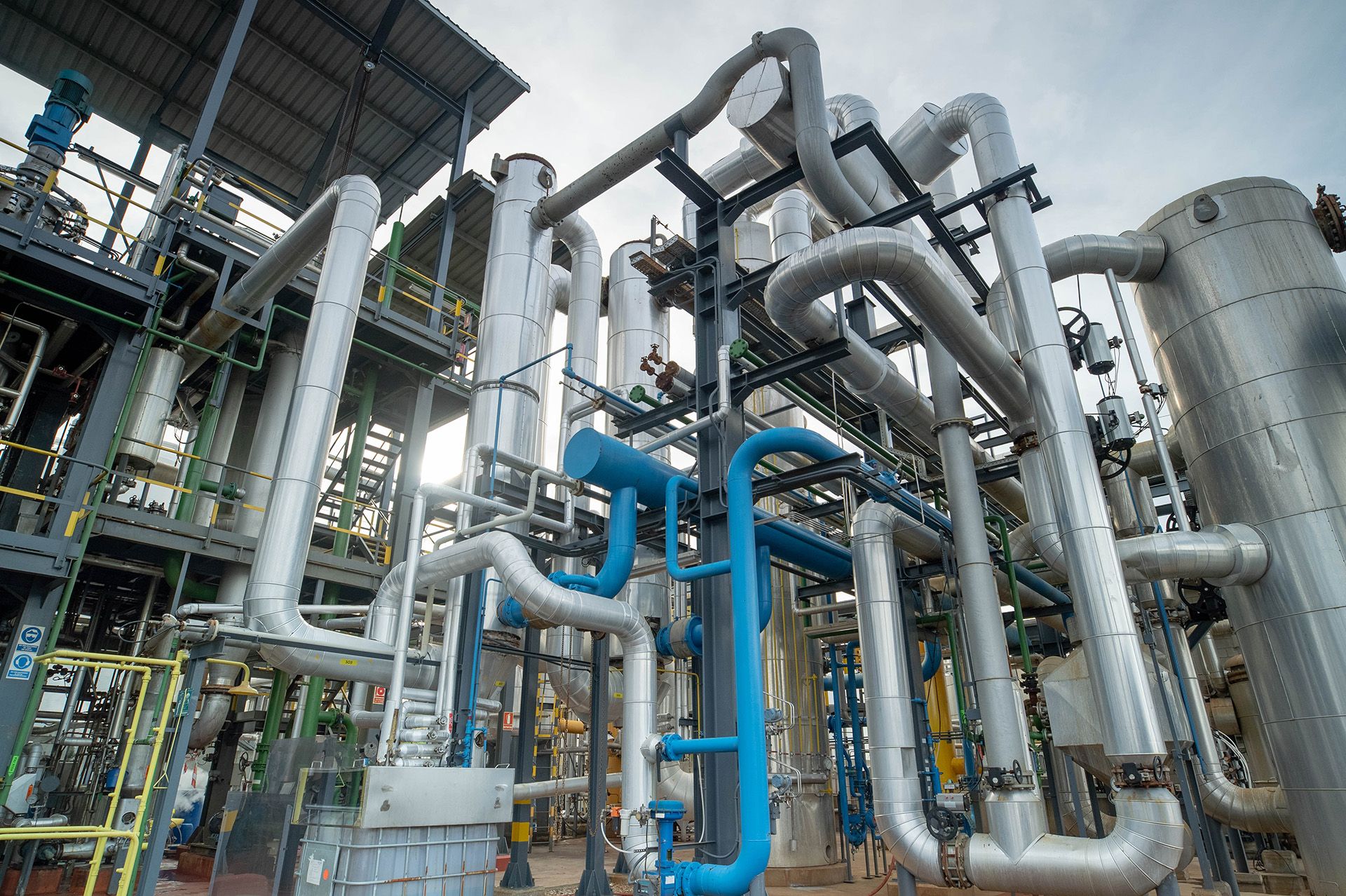
A key way our operations support national electrification efforts is through the export of renewable electricity generated from methane capture facilities at our palm oil mills.
Palm Oil Mill Effluent (POME), which would otherwise release methane into the atmosphere, is channelled into biogas facilities where it is converted into electricity. Methane is a greenhouse gas that is 28 times more potent than carbon dioxide at trapping hear in the atmosphere1. After meeting on-site operational needs, surplus power is exported to the national grid.
In 2024 alone, Musim Mas exported over 33.8 million kilowatt hours (kWh) of renewable electricity to the grid. Because many of our mills are located in rural regions, this locally generated power helps:
- increase available grid capacity in underserved areas
- improve supply stability in regions with limited generation options
- reduce reliance on fossil fuel–based electricity, including diesel generation
This model supports PLN’s efforts to expand electricity access while easing pressure on the grid as it reaches more remote communities.
Circular, Zero-Waste Operations That Enable Renewable Energy
Our ability to generate surplus electricity is underpinned by a zero-waste, circular economy approach across our upstream operations. All non-hazardous waste from upstream processes is recycled or reused.
At our plantations, oil palm trunks and fronds from replanting and pruning are left in the soil and repurposed as organic fertiliser.
At Musim Mas’ zero-waste mills, palm kernel shells (PKS), palm fibre, and empty fruit bunches (EFB) are reused as boiler fuel. Decanter solids and boiler ash are recycled back to plantations as organic fertiliser. POME is processed through methane capture facilities to generate electricity before being treated and reused for irrigation.
In 2024, over 94,000 tonnes of organic waste — including EFB, decanter solids, and boiler ash — were reused across our operations. This integrated system reduces waste, reduces the need for fossil fuels, and enables renewable power generation that directly supports grid capacity.
Reducing Emissions While Lowering Grid Dependence
Our methane capture facilities deliver both climate and energy system benefits. In 2024, our 17 methane capture facilities avoided over 490,000 metric tonnes of CO₂ equivalent (CO₂e) emissions.
By generating electricity on-site, these facilities also reduced our reliance on purchased grid electricity — freeing up capacity that can be used elsewhere in PLN’s system. Capturing methane not only lowers our Scope 1 emissions, but also contributes to a more resilient and efficient national energy network.
Reliable Electricity for Workers and Rural Communities
Electricity access directly shapes quality of life, particularly in rural areas. As part of our upstream employee welfare programme, Musim Mas provides: Housing for nearly 14,000 employees that comes with running electricity and clean water, free healthcare, transportation, childcare and on-site education for school-age children.
Reliable power underpins these essential services, improving living standards for thousands of families in rural communities near our operations.
New frontiers: Exploring Renewable Energy Through Solar
In addition to biogas, Musim Mas is expanding its renewable energy portfolio through a trial of rooftop solar photovoltaic (PV) systems. At one of our downstream plants, we installed the solar facility in December 2024. By August 2024, we created a total installed capacity of 1.1 megawatt-peak (MwP) at the site.
This on-grid system is integrated with the local power network and currently supplies around 4% of the site’s electricity needs, while improving power reliability. The installation is estimated to reduce emissions by approximately 1,191 tonnes of CO₂e per year.
This pilot marks our commitment to broaden our efforts to scale solar and other renewable energy solutions across our operations as part of our transition toward net-zero emissions.
As we continue to scale renewable energy across our operations, we remain committed to supporting Indonesia’s vision of inclusive, reliable, and sustainable electricity access — ensuring that progress benefits rural communities as well as urban centres.
References:
[1]: https://www.epa.gov/gmi/importance-methane