03 October 2018
Improving Access to Safer Water With Safe Water Gardens

According to the Organisation for Economic Co-operation and Development (OECD), agriculture irrigation accounts for 70% of water use worldwide. Within this context, agricultural systems are extremely dependent on the availability of water. A failure to recognize this vulnerability can lead to a mismanagement in water use with severe consequences.
We recognize that water is a finite resource. In order to safeguard water, we strive to minimize the impact of our operations on water resources in and around our concessions. We have developed and implemented a comprehensive water management plan to maintain the quality and availability of surface and ground water for the future security of our business and the benefit of surrounding communities.
Musim Mas is one of the few palm oil companies that employ the Water Footprint Methodology to calculate our annual water footprint and assess water risks.
This provides a concise overview of our measures to preserve the availability and quality of surface water and groundwater for our business and surrounding communities.

To ensure water efficiency, we monitor our water use in estates and mill operations and domestic use. For example, we set the water use intensity target below 1.2 m3/MT FFB processed to ensure water efficiency in our mills’ operation. In 2022, we achieved a water use intensity of 1.17 m3/MT FFB processed. To remain credible and transparent, we conduct annual third-party verification on our mills’ water use intensity figures and disclose the figures through our Sustainability Report.
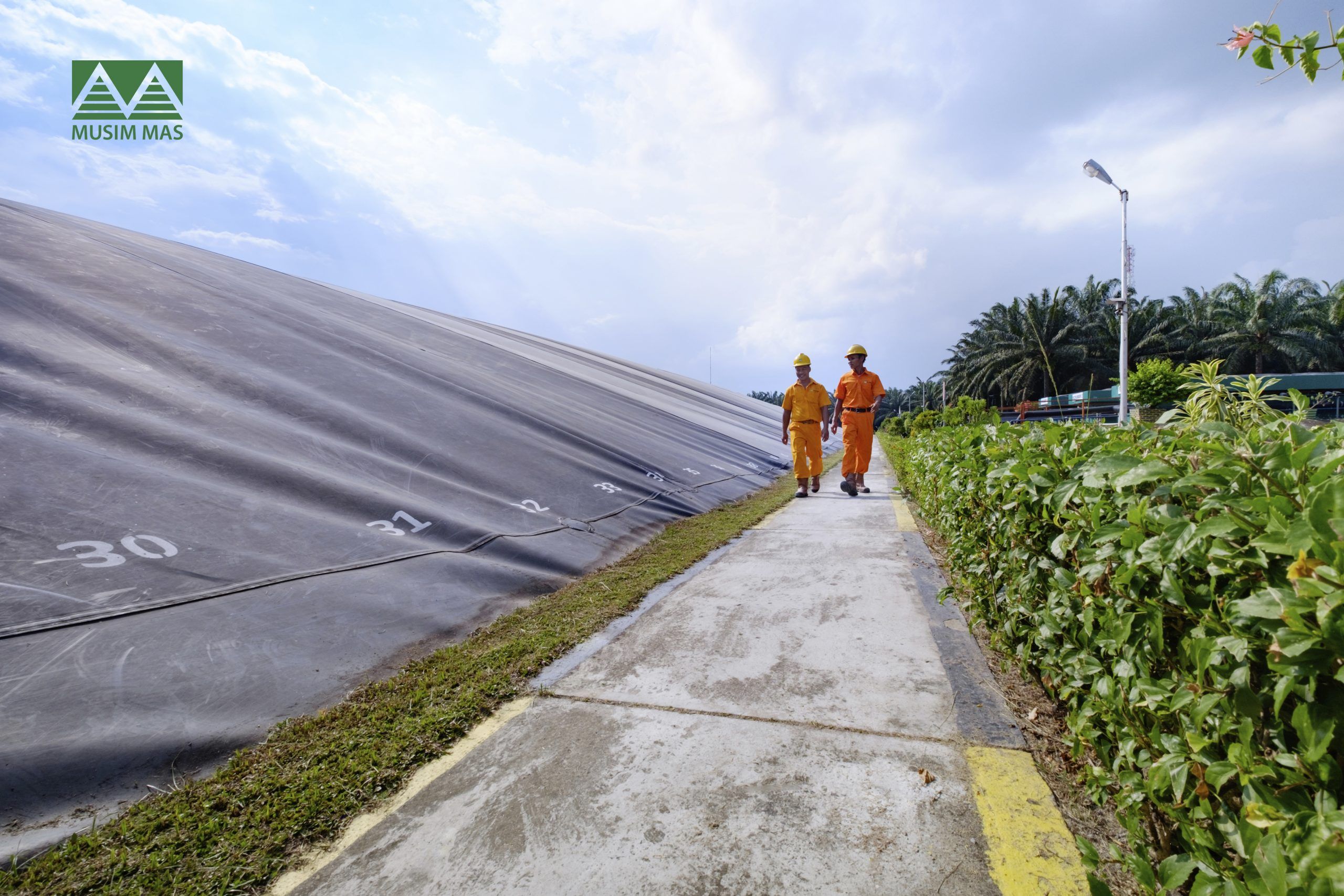
We treat the Palm Oil Mill Effluent (POME), a liquid waste from the mills beyond the required regulatory level. It is a high-strength liquor with a high Biological Oxygen Demand (BOD) and Chemical Oxygen Demand (COD), which is reduced by aerobic and anaerobic digestion in engineered lagoons.
The BOD and COD levels are kept below the national regulatory thresholds of 5,000 parts per million (ppm) for BOD in land applications, 100 ppm for BOD in waterways, and 350 ppm for COD in waterways. This mitigates any impact on groundwater and water sources.
We also perform an annual third-party assurance on our BOD and COD figures for our palm oil mills operations to ensure transparency and credibility. These figures are publicly available in our annual Sustainability Report. We also reviewed the water monitoring points in our operations and included additional points to better reflect inlet and outlet positioning.

Riparian zones provide a buffer between natural waterways and land used for agricultural development. As such, they help to prevent soil erosion and minimize surface runoff. Buffer zones also maintain and enhance biodiversity.
Following legal requirements relating to land development for oil palm cultivation, we maintain 50-metre riparian buffer zones for small rivers, and 100-metre buffers for wide rivers. In addition to these legal requirements and other voluntary codes, we have strengthened our monitoring process by regularly evaluating water quality. We also conduct biodiversity surveys on the incidence of birds, butterflies, reptiles and small mammals in riparian zones.

All our mills perform holistic waste management with the aim of achieving “zero-waste”. We have processes in place to minimize waste production or harness them for use as inputs in other parts of our operations.
|
||
| Solid waste from our mills, including press palm kernel shells, palm fiber, and empty fruit bunches, is used to fuel the boilers at our mills. | ||
| Boiler ash, a waste material generated from our mills, is applied back to the plantation as a soil conditioner. | ||
| Decanter solids from mill processing are used as a fertilizer substitute. |
|
||
| Palm Oil Mill Effluent (POME) is the liquid waste from mills. After treating the POME through aerobic and anaerobic digestion in engineered lagoons to ensure the Biological Oxygen Demand (BOD) and Chemical Oxygen Demand (COD) is are low, it is applied to our plantations, acting as an irrigant land application. |
|
||
| Palm Oil Mill Effluent (POME) treatment releases methane gas, which is captured in our methane capture facilities at our palm oil mills. See the section on Greenhouse Gas Emissions Reduction. |
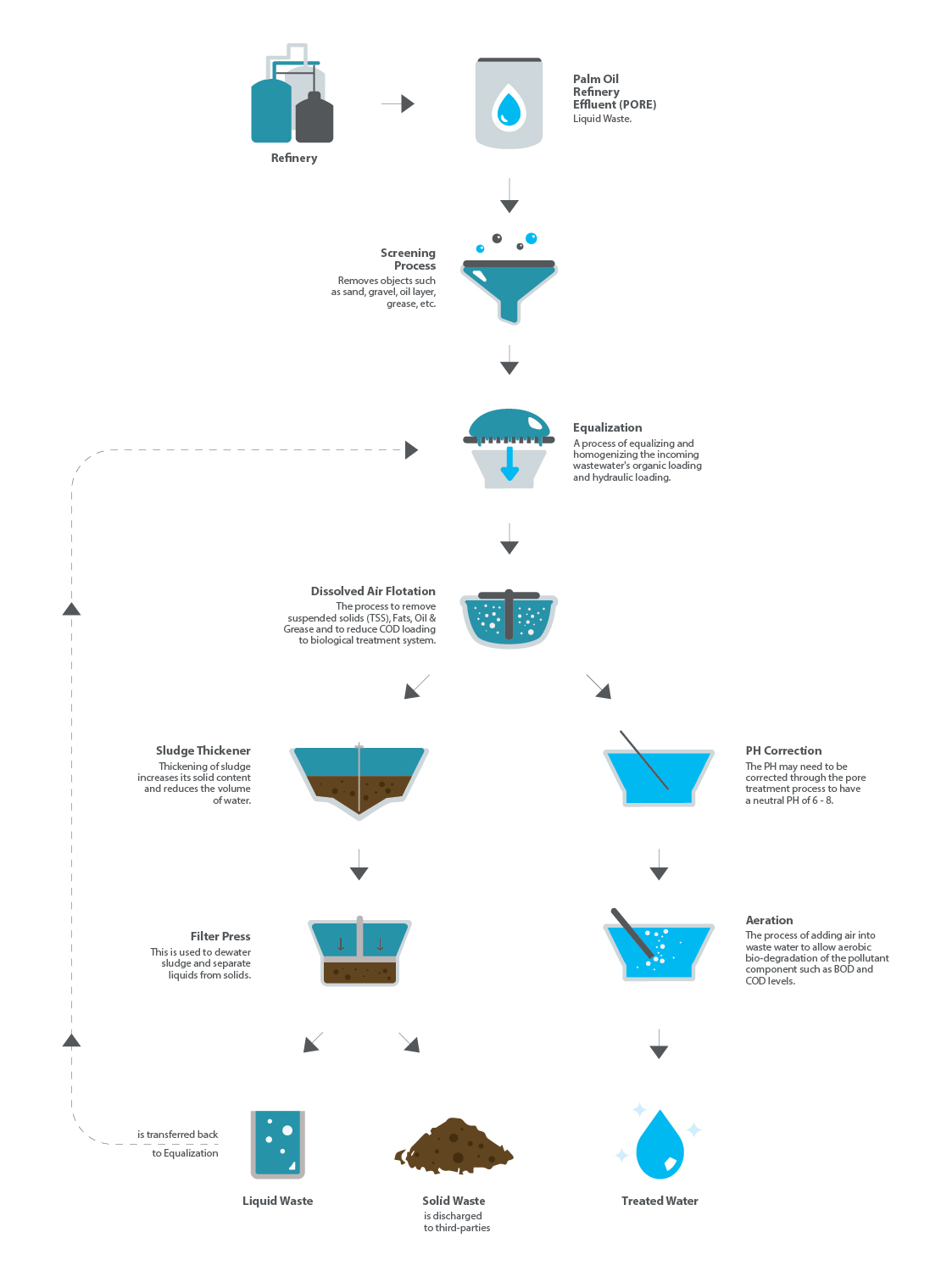
Palm oil refinery effluent (PORE) is a type of wastewater produced by refineries. PORE has high level of chemical oxygen demand (COD) and biochemical oxygen demand (BOD) that are harmful to environment such as aquatic lives. That’s why it is essential to treat PORE before discharging back to environment.
PORE is treated at our wastewater treatment to reduce BOD and COD levels. Learn more about Musim Mas’ PORE treatment system below: